Short answer
First, make sure everyone is safe and police have been called. Leave the scene alone until investigators formally release it, keep people and pets out, and do not clean blood or residue yourself. Then write down the police report number and release time, call your insurer, and ask a victim advocate about support and compensation.
Safety first, then wait for the police release
Safety comes before everything else. If anyone is hurt or in danger, leave and call 911. Do the same if you think someone may still be in the building. Do not go back inside until police tell you it is safe. Medical care for anyone injured comes first. Cleanup can always wait.
If police are already there, follow their instructions. They may ask you to wait outside, to leave the property or to answer a few questions. It can feel frustrating to be kept out of your own home or business. But those first hours matter for the investigation.
Once everyone is safe, take a breath. The next steps are practical. None of them require you to touch the scene yourself.
Until investigators formally release the property, it is part of an active case. Cleaning, moving items or even opening windows could disturb evidence that detectives need. A professional cleanup company will not start work until the scene is released. You should not either.
How long police hold a scene depends on the crime and the agency. A burglary might be processed in a few hours. A serious assault may take longer. Ask the officer in charge how you will be told. Write down the name, badge number and case number they give you. Only the investigating agency can say when your property is released.
You may need a few things while police hold the property. Think of medication, a phone charger, papers or clothing. Ask the officers whether someone can bring them out to you.
Once the scene is released, how do I keep it from getting worse?
After release, the property is back in your hands. But the affected areas still hold blood or other body fluids and residue from the police work. Until the cleanup crew arrives, your only goal is to keep the problem from spreading. You do not need to fix it.
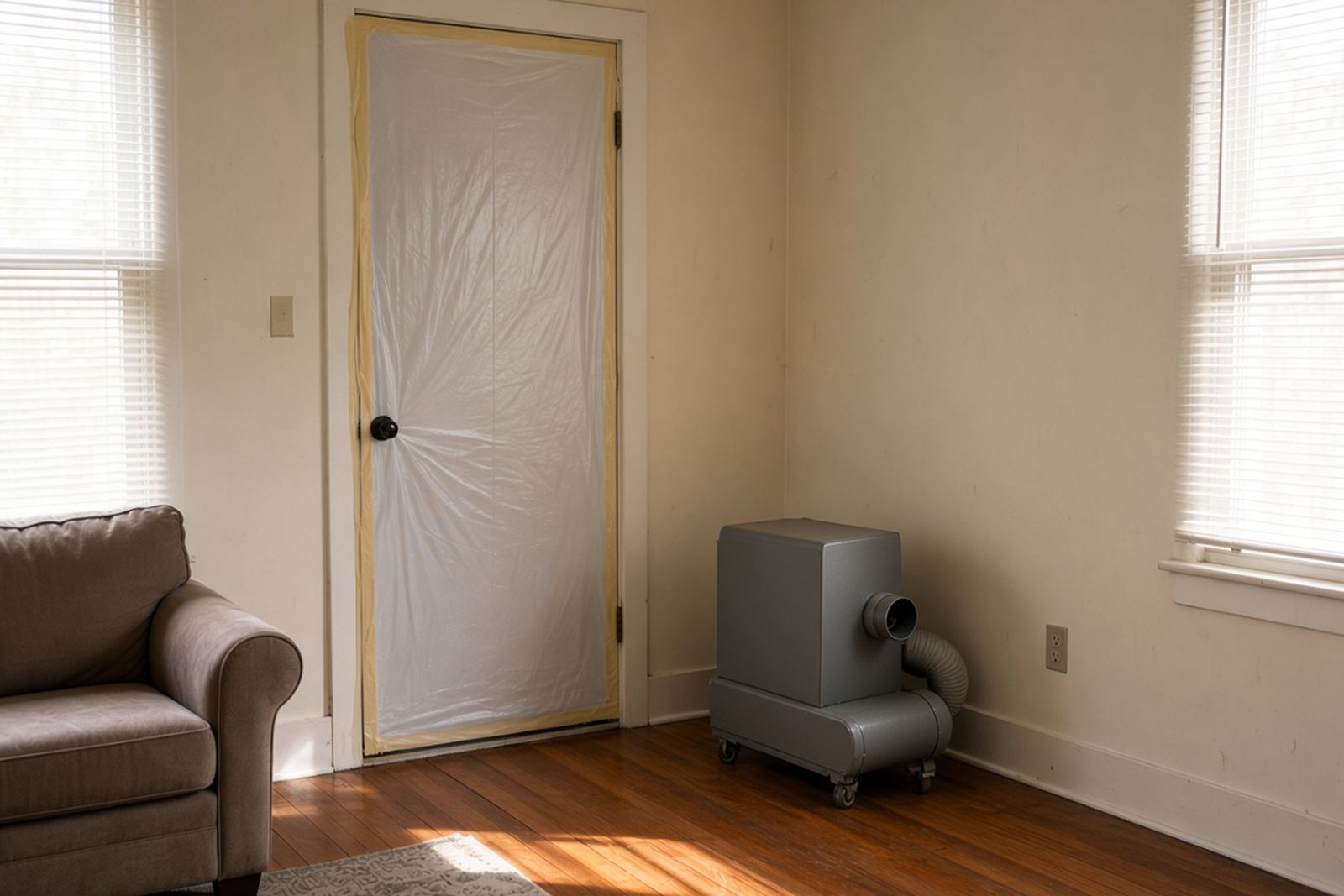
Close doors to affected rooms where you can. Keep children, pets and visitors away. Fans and forced-air heating or cooling can carry odors or particles through the home. You may consider turning them off, but only if you can reach the controls without walking through a dirty area. Ask your cleanup company whether that makes sense for you. Stay out of affected areas, since shoes can track material into clean rooms.
- Close off affected rooms and keep them closed
- Keep children and pets in clean rooms or somewhere else
- Do not walk through stained areas or touch fingerprint powder
- Leave broken glass and damaged items for the crew
- If a door or window is broken, a locksmith or glass company can help you secure it
Should I try to clean up blood or fingerprint powder myself?
No. It is natural to want to erase what happened as fast as you can. But cleaning blood without training and protective gear can expose you to germs carried in blood. Scrubbing soft materials like carpet or couch fabric often pushes the mess deeper and wider. That can make the professional job larger and harder to document for insurance.
Fingerprint powder is also trickier than it looks. Wiping it with a damp cloth can smear it across walls and fabrics. Trained crews use different methods for different surfaces.
You may urgently need a small item that sits in an affected area. Ask the cleanup company to get it and clean it first. Do not grab it yourself.
The same care applies to broken glass and damaged furniture that may have blood on them. Leave them where they are unless they create a danger right now, such as glass on a path children use. In that case, cover the spot with a box or board. Do not sweep it up. Point it out to the crew when they arrive.
Taking photos and notes without making things worse
Photos can help your insurance claim and your own records. They are not worth risking your health or disturbing the scene. Wait until police have released the property. Then, if you feel able, take pictures from doorways and hallways. Do not step into stained areas. Wide shots of each room are usually enough, along with closer shots of damaged doors, windows and belongings.
You do not have to photograph blood or anything else that would be upsetting to see again. The cleanup company will record the affected areas in detail during its first inspection. It can share those images with your insurer. Many people prefer to leave that part to the professionals.
Start a simple written log as well. Note when you found the scene, when police arrived and when they released it. Note whom you spoke with and what each person told you. Keep receipts for any costs right away, such as a locksmith, board-up service, hotel room or replacement medication. These small records often matter later. They are much easier to keep from the start than to rebuild weeks afterward.
If the crime happened at a business, add a few more notes. List any employees or customers who were present. Note any security camera footage you have been asked to keep and any areas you have closed to the public. Police may ask for camera recordings. Do not delete or record over anything until they tell you it is no longer needed.
Details to gather before you call a cleanup company
Having a few details ready makes the first call faster and helps the company plan. You do not need to describe the scene in graphic terms. Practical facts are enough.
- The property address and the best way to get in
- The police case number and the time the scene was released
- Which rooms or areas are affected
- What kind of flooring and furniture is in those areas
- Whether anyone lives or works in the property, and who
- Your insurance company and policy number, if you know them
- Any urgent needs, such as a business that must reopen or children who live there
Does calling after hours change anything?
It can change the price. Some situations truly cannot wait until morning, such as a home where a family must sleep that night or a business that serves the public. Others can safely wait a day. If you are unsure, describe your situation honestly. Ask the company whether you really need someone right now.
After-hours service can cost more. In its 2025 cost guide, Fixr lists a $500 to $1,000 per-visit surcharge for 24-hour emergency biohazard response. Not every company prices this way. But it is fair to ask whether an emergency charge applies. You can also ask whether a first visit just to close off the area could be billed apart from the full cleanup.
If you do need someone right away, ask what they will do on the first visit. Ask what will follow once a full written work plan is ready.
How the first few hours can unfold
Picture how those hours can go for one homeowner. A man comes home late on a Friday to find his front door forced and a neighbor waiting outside. The neighbor saw someone run out, bleeding from a hand. The man calls 911 and waits with the neighbor until police arrive.
Officers check the house and photograph the damage. They dust the door and a jewelry box for prints. They release the home around two in the morning. The man writes down the case number and release time. He closes the hallway door, keeps his dog in the backyard and stays off the stained entry rug.
He calls a cleanup company. He gives them the case number, the affected areas and the flooring type. He agrees to a morning visit instead of paying for an overnight trip. A friend helps him board the broken door panel. He calls his insurer's claims line and leaves a message. By mid-morning, a supervisor arrives to inspect the scene and write a work plan.
This account is an illustration, not a real client's story. Your own experience will depend on what happened and the agencies involved.
Other calls to make in the first day
Report the loss to your homeowners, renters or business insurer and write down the claim number. Ask the police or prosecutor's office for a victim advocate. An advocate can explain your rights, help with a victim compensation application and connect you with counseling. If you rent, tell your landlord or property manager.
It is normal to feel shaken, angry or unsafe after a crime at your home or workplace. Ask a friend or relative to stay with you, or to let you stay with them. Taking care of yourself is part of taking care of the property.
If the crime happened at work, tell your employer or building manager as well, even if the damage seems small. They may have their own insurance, security steps or preferred vendors. Early notice helps everyone work together instead of calling different companies at once.