Short answer
Professional crime scene cleanup usually follows a clear order. Police release the scene. A company inspects it and writes a work plan. The crew closes off the area and puts on protective gear. It removes soiled materials, cleans police residue, disinfects what remains, packs the regulated waste and checks the results. You should get records and a clear account of what was cleaned, removed and left for repair.
When can cleanup actually begin after a crime?
Nothing starts until police release the scene. Investigators need to finish photographing, collecting evidence and examining the space. A cleanup company that went in too soon could get in the way of that work. Once police tell you the property is released, it is back under your control and you can arrange cleanup.
Ask the investigating officer or detective to confirm the release clearly. Write down the date and time. Part of the property, such as a vehicle, shed or back room, may still be on hold. If so, tell the cleanup company so they do not enter that area.
The timing of the release depends on the type of crime and the agency involved. A break-in may be released within hours. A serious assault investigation may take longer. The investigating agency is your best source of information about your case.
The first call and the on-site assessment
Your first talk with a cleanup company is mostly practical. They will ask where the property is, what kind of event took place and which rooms are affected. They will ask what the flooring and furniture are made of, when the scene was released and whether anyone is living there. They should not press you for graphic details.
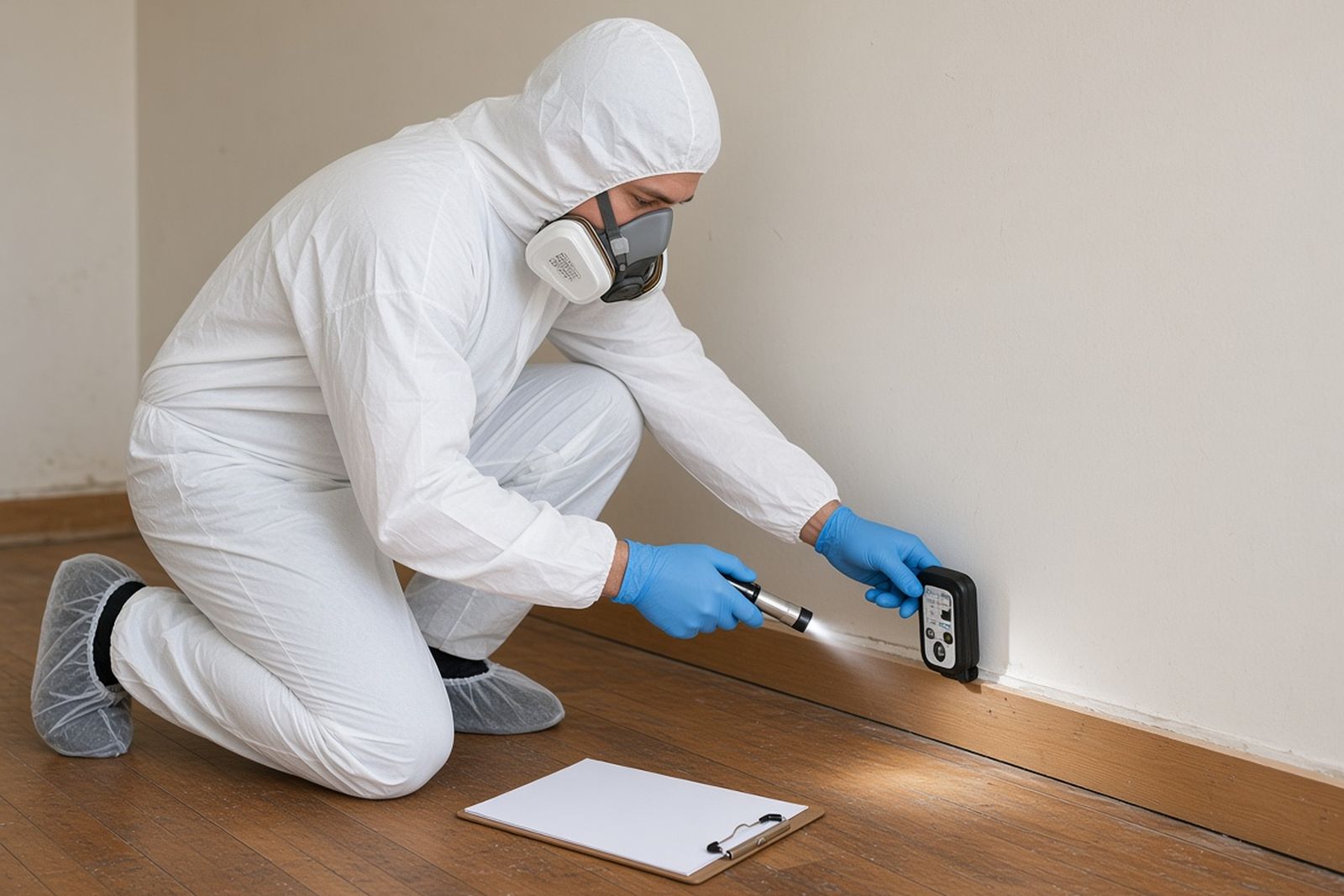
The first visit is usually a walk-through by a supervisor or lead worker in protective gear. They look at the blood and damage that can be seen and check for spread under and behind materials. They note the residue investigators left and pick out items that may be saved. Many companies photograph the scene during this visit, for the written work plan and for insurance.
You do not need to be in the affected rooms. Many people prefer to wait outside or somewhere else entirely. The company can walk through with a trusted friend, relative or property manager in your place.
What a written work plan includes
Before work begins, you should receive a written work plan, which is the work plan for your job. That holds even if the area has to be closed off urgently first. The plan is also the basis for any insurance or victim compensation claim. It should be specific enough that another company could read it and know exactly what will be done.
- Each affected room or area, described on its own
- Which materials will be cleaned in place and which will be removed
- Police residue, such as fingerprint powder, and how it will be handled
- Personal belongings to be set aside, cleaned or thrown away
- How regulated waste will be packed, hauled and recorded
- How the crew will check that the cleaning is complete
- What is left out, such as rebuilding or painting
Protecting the rest of the property
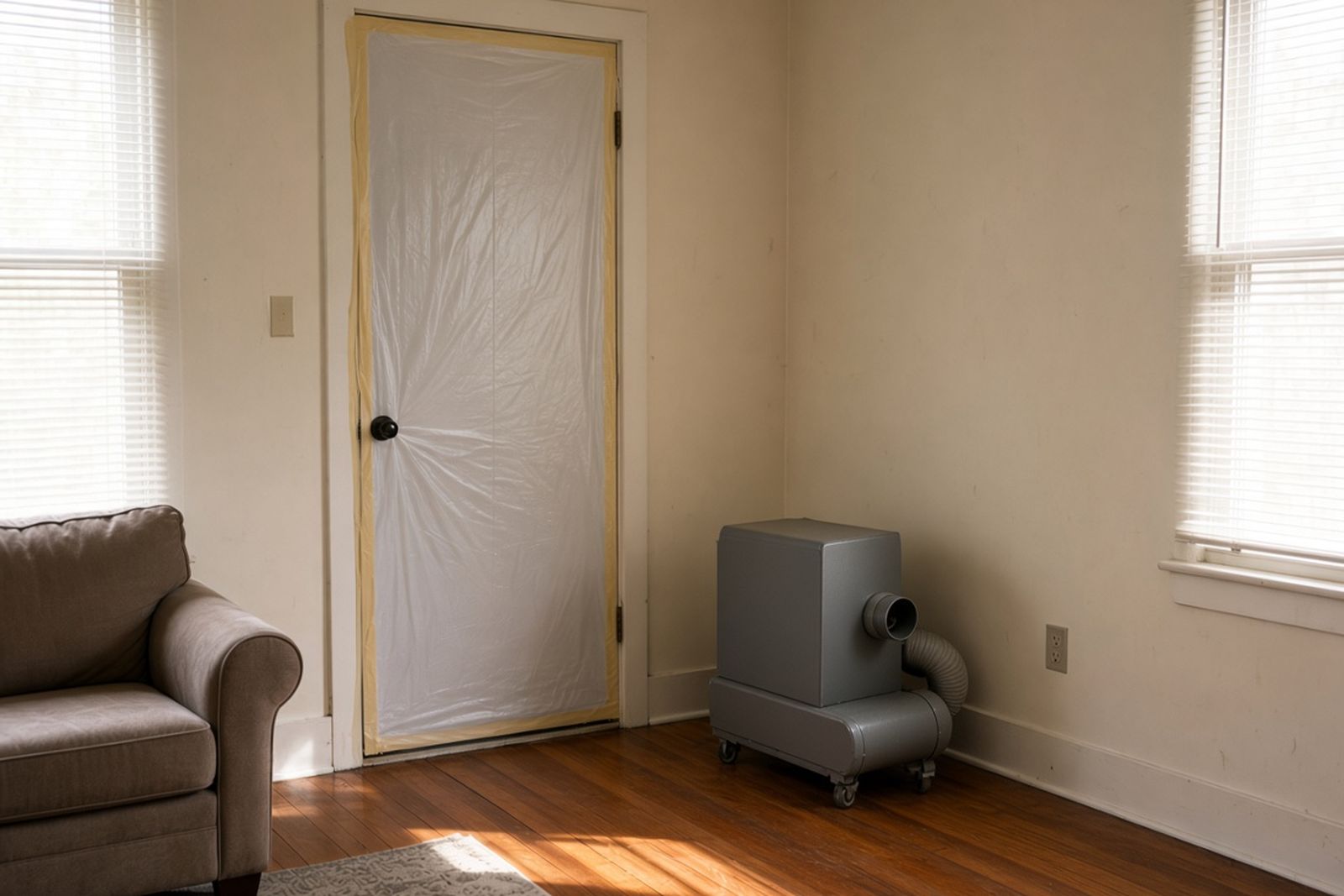
Once work begins, the crew sets up what is sometimes called a work zone. They may lay protective coverings along the path from the entry to the affected area. They may close off doorways with plastic sheeting. They may turn off or seal the vents of your heating and cooling system so particles and odors are not drawn through the home. The goal is to keep the mess inside a set space.
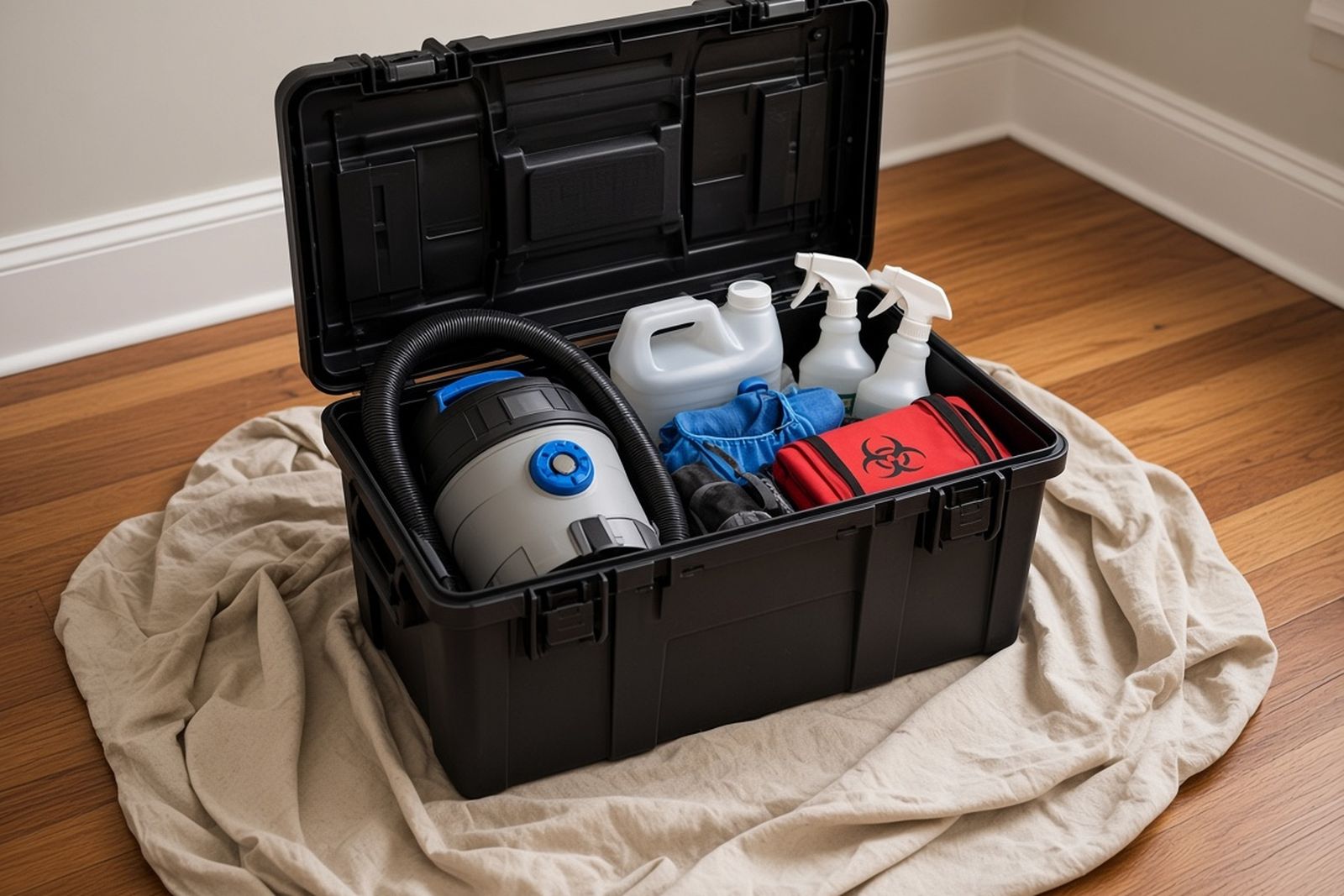
Workers wear protective gear such as throwaway suits, gloves, eye protection and fitted breathing masks. They usually have a separate area where they put on and take off that gear, so nothing is carried into the clean parts of your home. You may see them bring in air-filtering machines and waste containers.
If you are living in the home, the crew should explain which rooms you can use during the work. They should tell you how long the barriers will stay in place.
What does the actual cleanup involve?
Work generally moves from removing the bulk of the material to detailed cleaning. First, the blood and body fluids that can be seen are carefully removed. Soft or absorbent materials that soaked up fluids are cut out and bagged. These include carpet, pad, padded furniture and sometimes drywall or subfloor. Crews check beneath and behind these materials, because the spread is often larger than the stain on the surface.
Next, the remaining hard surfaces are cleaned and disinfected. Crews use products suited to germs carried in blood and keep the surface wet for the time the maker specifies. Fingerprint powder and other police residue are removed with methods suited to each surface. Wiping powder the wrong way can smear it across a wider area.
All through the job, the crew should keep notes and photos. If they find damage beyond the original plan, a good company will stop and tell you before it does more work.
How long will the work take, and can I stay in the home?
The time depends on the size of the affected area, the materials involved and whether parts of the building must be removed. A small, contained scene on hard surfaces may be finished in a matter of hours. A larger scene with carpet removal, subfloor treatment and a lot of fingerprint powder may take more than one day. Your cleanup company should give you an expected timeline in the work plan and tell you promptly if it changes.
Whether you can stay depends on where the work is happening and who lives with you. Staying may be possible if the affected area can be sealed off and you can reach a separate entrance, bathroom and kitchen. It is often wiser to stay somewhere else if the scene is in a central part of your home. The same is true if young children, older relatives or people with breathing conditions live there. Wait until the crew finishes and airs out the space.
Pets deserve a plan too. Animals can track the mess around and may be upset by strangers, equipment and noise. A friend's home or a boarding kennel for a day or two can make things smoother for everyone.
If the scene is in your business, ask whether the work can be scheduled outside your opening hours. Ask whether the company can give you a short written statement to share with staff about when the area will be safe to use again. Clear communication helps employees who may be shaken by what happened.
One job from start to finish
A single illustrative job shows how the pieces connect. A tenant in a duplex is assaulted in her kitchen by an intruder, and she is treated at a hospital. Police release the unit the following afternoon. Her landlord calls a cleanup company that evening, with the tenant's agreement.
The supervisor arrives the next morning and walks through with the landlord. She photographs blood on the kitchen vinyl, a cabinet face, a fabric dining chair and the hallway carpet near the door. Fingerprint powder is on the doorframe, counters and a window. The written work plan calls for cleaning the vinyl and cabinet in place. The chair and a section of hallway carpet and pad will be removed, and powder will be removed throughout.
The crew seals the kitchen and hallway, finishes the work in one day and leaves the unit aired out. They give the landlord photos, a waste record and a list of the items removed. The tenant's belongings from the kitchen, including a phone charger and a coat, are cleaned and returned in a sealed bag.
The tenant and duplex are not real. Your own job will vary with the scene and the company you hire.
How will I know the job is really finished?
At the end, the crew should walk through the space and confirm three things. All the blood and residue that could be seen is gone. Disinfected surfaces were treated correctly. Nothing was missed under or behind materials. Some companies back up their checks with a quick swab test that shows leftover organic residue. That test does not detect germs. Others rely on visual inspection and written procedures. Ask what method they use.
You should receive a closing packet or summary. It should include before-and-after photos, a list of removed materials and belongings, waste disposal records and any advice for rebuilding. Keep these records with your insurance and compensation paperwork.
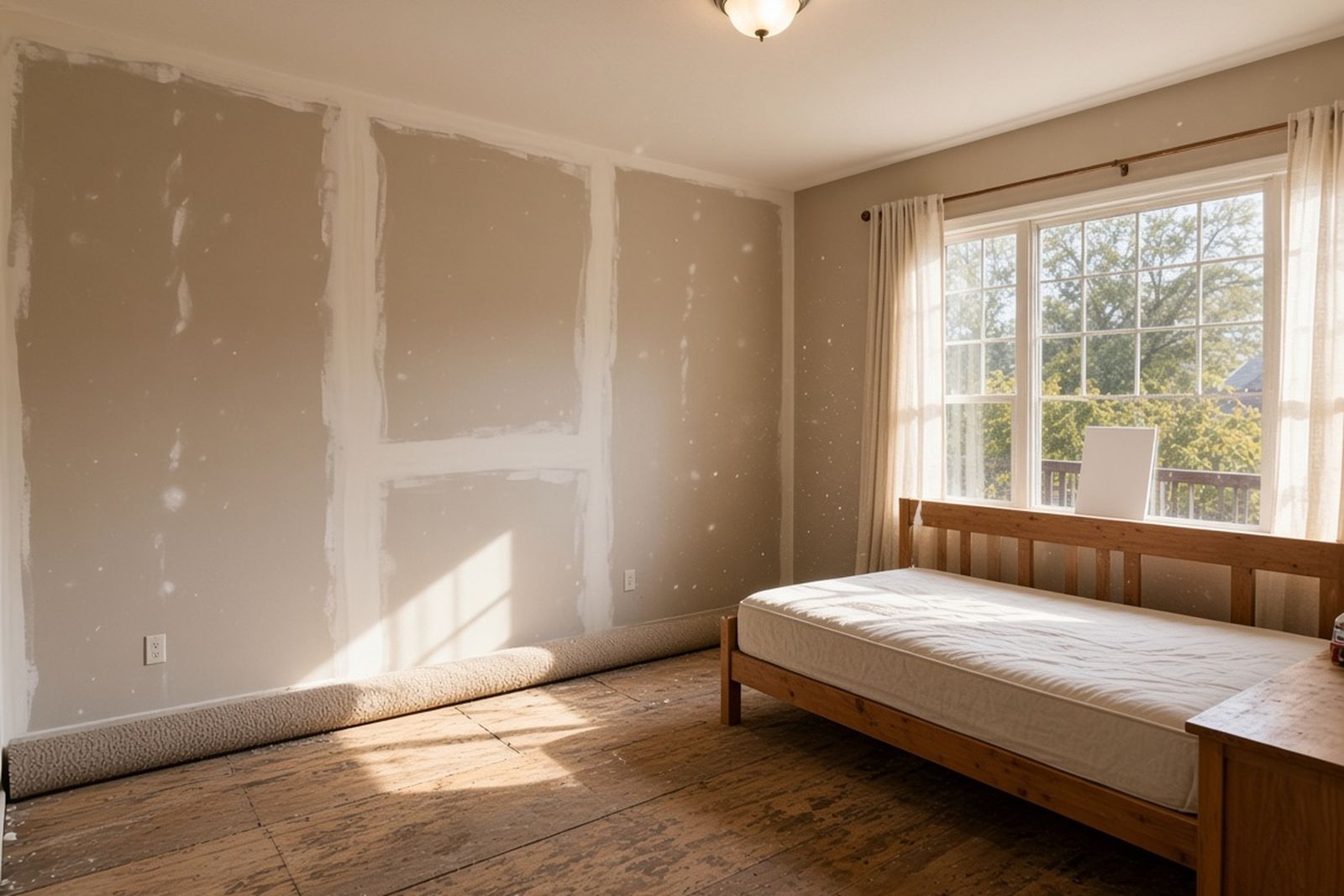
Remember that cleanup and rebuilding are different jobs. When the crew leaves, you may have bare subfloor or open drywall. That is normal. A general contractor usually handles flooring, drywall and paint afterward.
Coping with returning to the space
Coming back into a home or business where a crime took place can be hard, even when every trace has been removed. Feelings of unease, anger or fear are common. Your reaction may be different. But you are not alone if it takes time to feel settled again.
Small steps can help. Some people rearrange furniture, change locks or add lighting. Others ask a friend to be there the first time they walk back in. A victim advocate can connect you with counseling. Your state's victim compensation program may help with those costs as well as the cleanup itself.