Short answer
The time depends less on the crime than on the scene. It matters how many rooms and surfaces are affected and whether fluid got under the flooring. It matters how much police residue remains and whether you need odor treatment or help sorting belongings. The police release, your approval of the work plan and repairs add time outside the cleaning. A company can give a reliable estimate only after it visits.
Why no one can give you an exact time over the phone
When you call a cleanup company, one of the first things you will want to know is how long the work will take. It is a fair question. You may need to get back into your home, reopen a business or tell a landlord when the unit will be ready. But a responsible company will usually answer with a range and a promise to confirm after seeing the space.
That caution is not a dodge. Crime scenes vary widely. Two incidents that sound alike on the phone can look completely different in person. The materials, the layout and the path people walked afterward all change how much work is needed. A small spot on sealed tile is a very different job from the same amount on carpet over a wooden subfloor.
What you can expect is an honest explanation of what drives the timeline, and a written schedule after the visit. Things may change once the crew starts, such as finding blood under the flooring. If so, the company should tell you before it extends the work.
When can cleanup actually start?
Cleanup cannot begin until police release the scene. Investigators may need to photograph, collect evidence and come back for follow-up work. Only the responding agency can tell you when you are allowed back in and whether any area is still off limits.
Once the property is released, the next steps are practical. The person responsible for the property, or someone they choose, contacts a cleanup company. That person agrees to an inspection visit and signs approval for the work. If a landlord, property manager or business owner is involved, their approval may also be needed.
Some families want cleanup done right away. Others need a day or two before they can make any decisions. Both are reasonable. Just keep the affected area closed off and keep children and pets away. Do not clean anything yourself while you wait.
The stages of the work
Most crime scene cleanups follow the same general order, even when the details differ. Knowing the stages helps you see where the time goes and where delays are likely to come from.
The hands-on cleaning is often not the longest part. Planning, approvals, drying, odor work and repairs can each add time before your property is fully back in use.
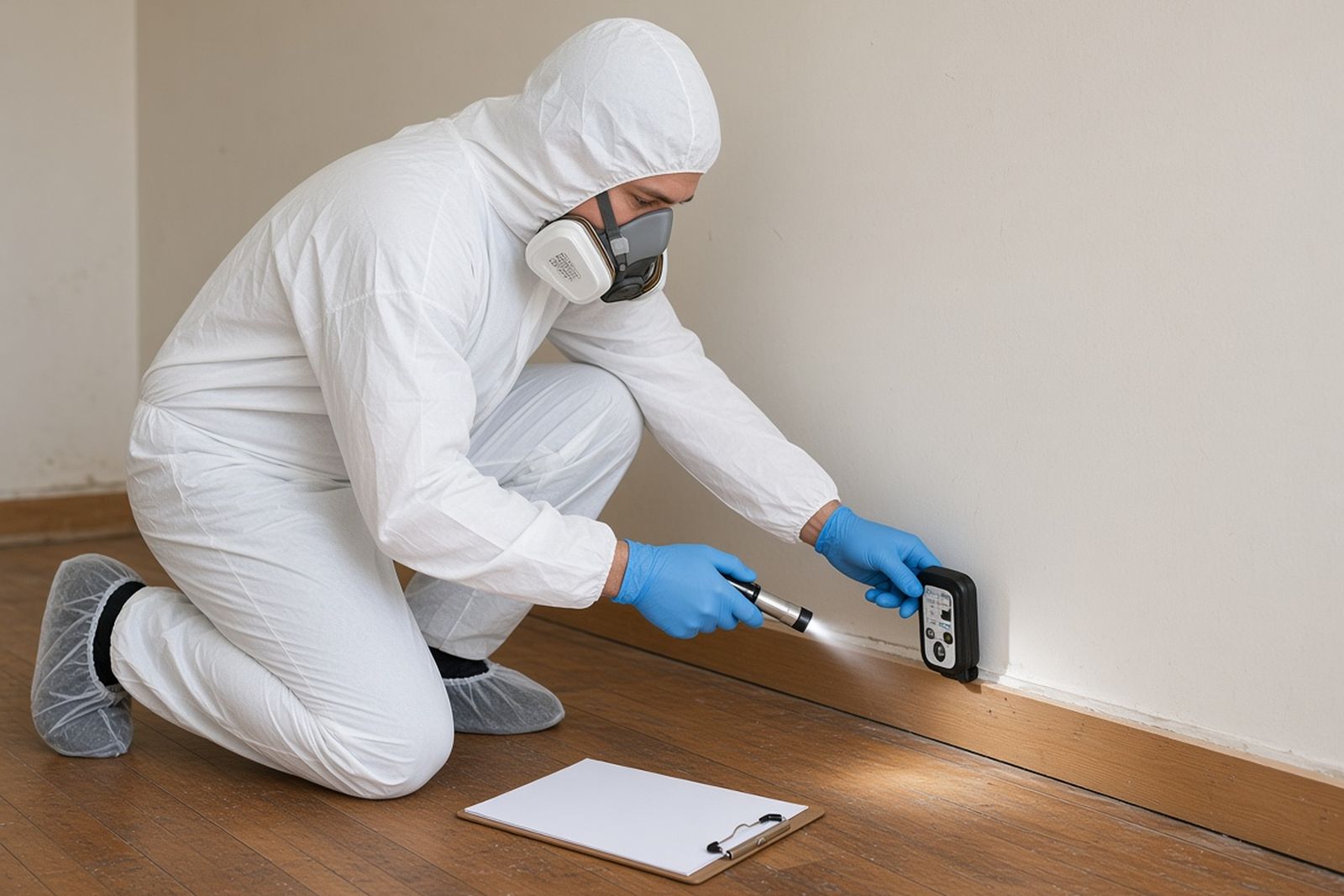
- Inspection: walking the scene, finding the affected materials and writing a work plan
- Approval: you review the plan, sign and arrange access
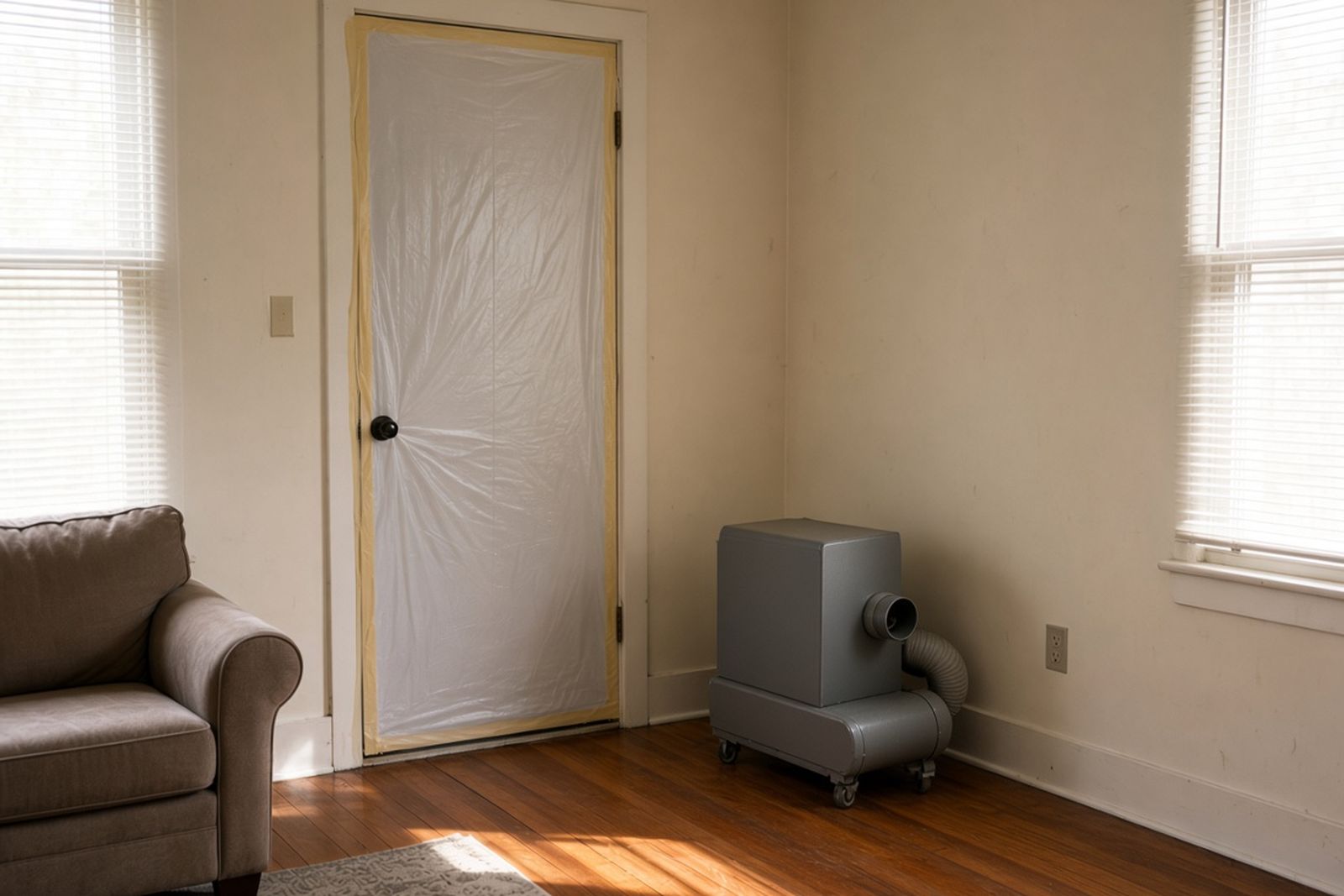
- Setup: barriers around the work area, floor protection and a place to put on and take off gear
- Removal: cutting out and bagging soft materials that cannot be made clean
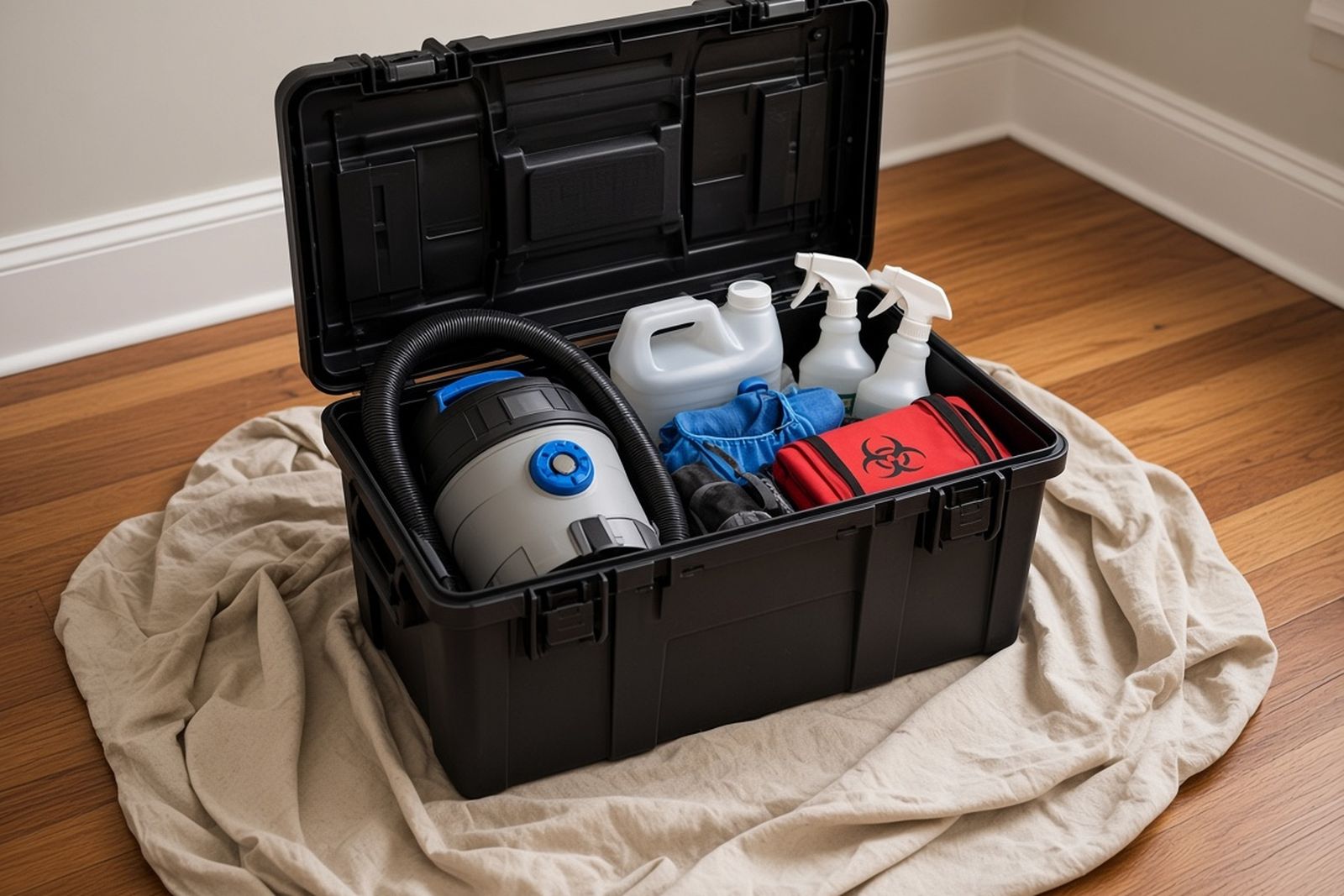
- Cleaning and disinfection: surface by surface, keeping disinfectant wet for the full time on its label
- Odor control and drying, when needed
- Final checks, records and waste hauling
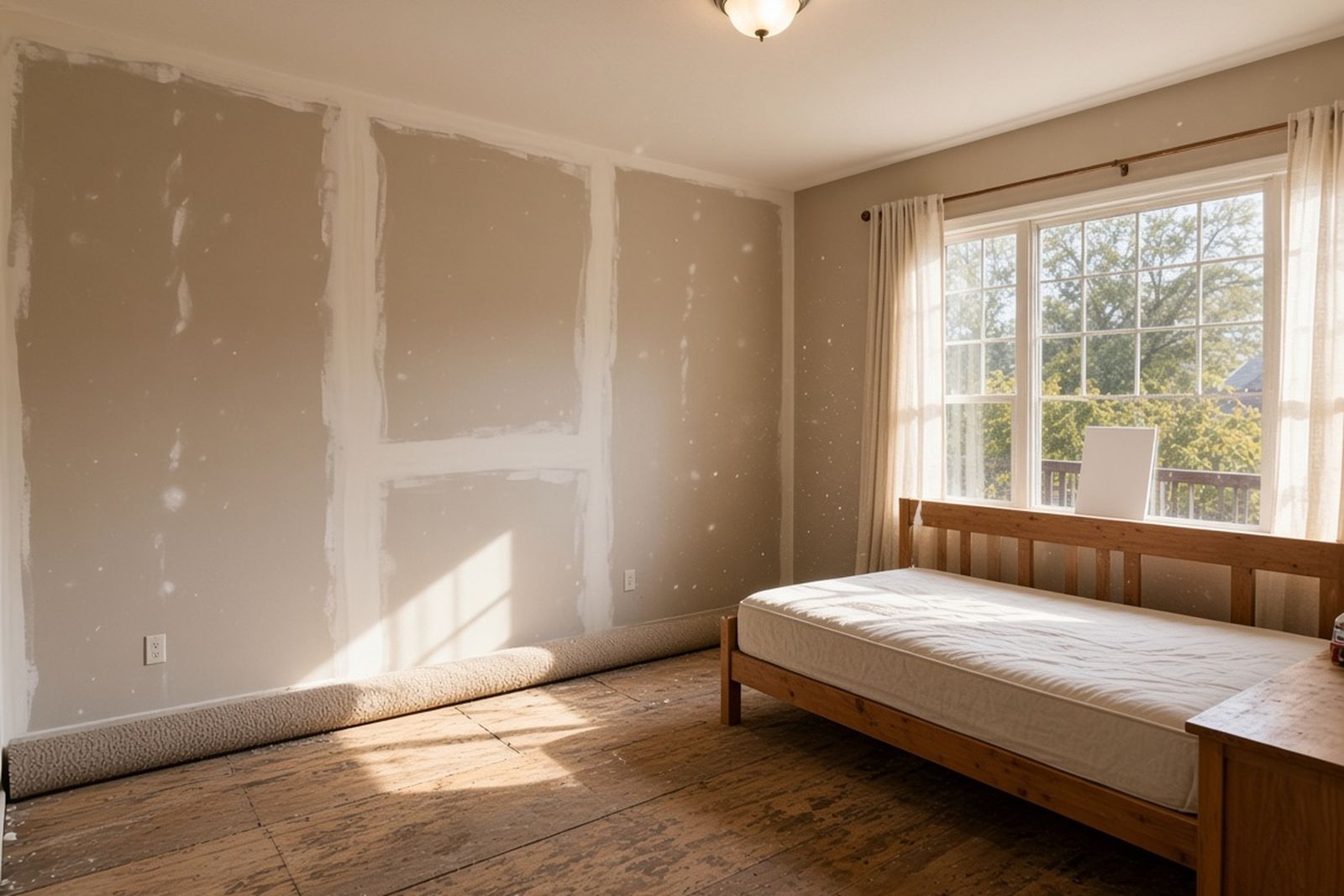
- Repairs and rebuilding, usually by a separate contractor
Materials and spread
The single biggest factor is usually the material. Hard, sealed surfaces such as tile, glass, metal and finished counters can be cleaned and disinfected fairly quickly. Soft or absorbent materials often need to be cut out, which adds labor and waste handling. These include carpet, pad, couch fabric, drywall and unsealed wood.
The number of areas involved matters too. Material may have been tracked into hallways, stairways, bathrooms or vehicles. Each area then needs its own inspection and treatment. Fine droplets on ceilings, light fixtures or blinds take patience to find and clean.
Residue, access and crew size
Police residue can add a surprising amount of time. Fingerprint powder is fine and clingy. It may be on doors, windows, cabinets and furniture far from where the incident happened. Removing it without smearing it or damaging finishes is slow, careful work.
Access affects the pace as well. A second-floor apartment with no elevator, tight parking or building rules about work hours can stretch a job that would otherwise go quickly.
Crew size is a trade-off, not a shortcut. Adding workers can speed removal in a large space. But in a small bathroom or bedroom, more people simply get in each other's way. They also raise the chance of tracking material into clean areas. A good supervisor sizes the crew to the room, not to the clock.
How does the time since the incident change the schedule?
A longer wait usually means a longer job. When cleanup starts soon after release, fluids have had less time to soak in and odor has had less time to build. Sometimes there is a longer gap, because the investigation took time or the scene was found later. Then blood dries and binds more firmly to surfaces. Fluids travel deeper into flooring and walls, and odor may need its own treatment.
Odor treatment in particular can stretch a schedule. Some odor-removal methods require the space to stay empty while equipment runs. The company may also want to recheck the area after it has been closed up, to confirm the source is gone.
The season plays a part as well. Heat speeds drying and odor. Cold, damp weather slows the drying of a cleaned subfloor and of any sealant the crew applies.
A sample timeline
A sample timeline helps. In this illustrative case, a woman is assaulted in her home office by an intruder. She is treated at a hospital and stays with her parents while police process the scene. The house is released two days later, and her father calls a cleanup company that afternoon.
A worker visits the next morning. She finds material on a desk chair, an area rug and the laminate floor beneath it, plus droplets on a bookshelf. She finds fingerprint powder on the front door, the office window and the kitchen back door. The family approves the written work plan by phone before lunch.
The crew works through the rest of that day and part of the next. They remove the chair, the rug and several laminate planks where fluid got into the seams. They clean and disinfect the subfloor and bookshelf. They remove powder from all three doors and the window. After a final inspection, they deliver photos, a disposal record and a note that the floor needs new planks.
A flooring contractor replaces the planks the following week. Here, the cleaning itself took less time than the waiting, approvals and repairs around it. Your own timeline will differ.
Delays that have nothing to do with cleaning
Some delays are outside the cleanup company's control. Your insurer may want to inspect the damage or review the work plan before it approves work. Victim compensation programs may ask for specific paperwork. Landlords and associations may want their own contractor to look at the building's structure. Each review adds time. So it helps to ask early what records each party needs.
Belongings can also add days. The affected room may hold personal papers, electronics or treasured items. The crew may need to sort, clean or photograph them so you can decide what to do. Taking time for those choices is worth it, even if it makes the schedule longer.
Scheduling around people matters too. You may want to be away while the crew works. You may need the job finished before a relative arrives or before a court date. Share that early. Night or weekend work may be possible in some cases. But it depends on building rules and whether a crew is free, so ask and do not assume.
Waste hauling is another step. Regulated waste has to be packed and taken by a proper hauler to a permitted facility. The rules differ by location. Your cleanup company should be able to name the hauler and facility it uses.
How can you help the process go smoothly?
You can make a real difference without going near the affected area. Choose one person to be the contact for the cleanup company. Gather the police report number and any insurance or compensation claim details. Share a list of items you want saved, even if you are not sure where they are.
Ask the company to explain the schedule in writing. When will they start? What will each day cover? When can you expect updates, and when can you safely go back in? Ask what happens if they find more damage than expected, so there are no surprises.
Property damage often goes beyond what cleanup can fix. Plan for repairs such as a broken lock or door frame as a separate step. Ask whether the cleanup company can suggest contractors or work with yours.
When the property is really ready again
Your space is ready when the crew has checked its work, given you the records, removed all waste and confirmed that you can safely enter. The checks may include inspection under bright light and odor checks. Some companies also use quick swab tests that show whether organic residue was removed. Those swabs do not detect germs.
Being ready is also personal. Some people want to rearrange a room, repaint or replace furniture before they feel at home again. There is no deadline for that. Give yourself the time you need. Lean on victim advocates, counselors or trusted friends as you settle back in.