Great Neck, NY

Great Neck Crime Scene Cleanup: Waterfront Homes and Co-ops

What to do, who to contact, and what to ask in Great Neck.

After a violent crime in Great Neck, see how cleanup works in a Sound-side house or a co-op, who must approve it, and which records you should keep.

Get an email reply about crime scene cleanup

Send a short message to the follow-up inbox. A coordinator can reply by email. This form does not send emergency help; call 911 first if anyone is in danger.

Tell us what you need help with. Share a short description; please leave out medical details, access codes, and other sensitive information.

A request does not confirm a booking. For immediate danger, contact local emergency services.

Or email info@scenerecoveryhelp.com

The short answer for Great Neck, NY

In Great Neck, the right cleanup plan after a violent crime depends on whether you live in a house or a co-op. Start once police release the scene, and hire a trained biohazard company. Below you will learn how each works, how damp Sound air slows drying, and which records to keep.

What to do, step by step

  1. 1

    Find out who is in charge: you or the building

    First confirm with police that the scene is released. Then settle who approves the work. In a house, that is the owner or trustee. In a co-op near the station, the board and managing agent control the halls and elevators. If you have a house, list the dock and lower levels for the company. In a co-op, take photos of the bare corridor and elevator cab before any covers go down. Driveway plans do not fit a freight building, and freight plans do not fit a waterfront lot.

  2. 2

    Choose a way out that suits your home

    On a lot facing the Sound, ask the crew to use a screened side door, not the formal door on the water side. In a co-op, ask management to book elevator or stair protection, and make sure sealed bags stay covered as they cross the courtyard. Cancel any temporary fobs when the work ends. If a private road controls entry to your street, give the company the association's truck limits in writing.

  3. 3

    Ask what will be cleaned and what will be removed

    After the heavy soil is gone, a good crew disinfects hard surfaces worth saving with EPA-registered products for their full wet times. Soft materials that fail the check, like carpet or wallboard, leave as sealed medical waste. Fingerprint powder should be lifted with a HEPA vacuum. Ask for each keep-or-remove choice in writing. Your board and your insurer will both want to read it, and it protects you if questions come later.

  4. 4

    Let the Sound air dry out before the last check

    Damp air from the Sound needs real time, so do not push for an early final check. When it is done, ask for one packet: photos, product lists, waste notes and a list of repairs still to do. Store it with your deed or your co-op unit file. You may need it later for sale forms or a board review. If rooms stay closed for repairs, ask which ones and for how long.

What cleanup is like in Great Neck

Great Neck sits on a Nassau County peninsula. About 11,000 people live in the core villages, with more villages and estate pockets facing Long Island Sound. Your home may be a colonial on a bulkheaded waterfront lot, an inland Tudor, a garden apartment or a mid-rise co-op next to the Long Island Rail Road. That matters on day one. A house means driveways and maybe a dock. A co-op means freight elevators and hallway runners. Blood can travel through underlayment and into walls in either one. Damp air along the Sound also makes your rooms dry more slowly than homes a few minutes inland.

How much your neighbors see depends on where you live. Narrow waterfront lots share views across hedges and paths. Co-op lobbies have cameras and people you do not know. On an inland cul-de-sac, any strange box truck stands out. A good crew will use covered carts and bags no one can see into, and any hallway notice should be short and factual. This is not routine janitorial work. Federal blood safety rules apply, and each disinfectant must stay wet for its label time. Warm weekends bring beach traffic onto the main peninsula roads, so a weekday pickup is often quieter for you.

Several people may read your file: a co-op board, a landlord, a trustee or an insurance adjuster. Nassau County health pages and your village website can help with local questions. If you own a house, ask for photos of bulkhead doorways, a basement rec room and any garage apartment. If you live in a co-op, ask that the written plan keep work inside your apartment apart from work in shared halls. That split decides who pays for what. A good packet is one your board treasurer can follow without ever touring the unit.

What to expect for your type of home

  • Bulkheaded waterfront lots: Ask the crew to photograph the dock stairs and lower rec rooms, even if the main stain was upstairs. People often cut through these spots.
  • Co-ops near the train: Your building will likely want padded elevators or stair runners. Ask that sealed carts be timed to pass lived-in landings quickly.
  • Homes on private peninsula roads: Some roads require guest lists and limit truck size. Tell the company these rules early, and keep them in your access notes.
  • Inland garage apartments: These may have their own lease. Find out who can approve cutting out finishes there before any demolition starts, and get that approval in writing.
  • Homes facing the Sound: Damp air off the water slows drying. Ask the company to record humidity and weather with the final check, so no room is called done while wet.
  • Updated colonials with carpeted family rooms: Carpet and pad usually cannot be saved once fluid soaks through. Expect them to be cut out, and plan for new flooring.
  • Co-op basement laundry rooms: The crew has no reason to pass through shared laundry areas unless the route is covered and cleaned afterward. Ask your managing agent what the building allows.
  • Co-ops with a concierge: Fob logs should show each temporary pass. Ask the front desk to cancel every pass the day the project ends, and keep a copy of the log.

Papers and records to keep

  • The police release note and the owner, board or landlord who approved entry.
  • Photos of rooms, lower levels, docks, garage apartments, halls and elevators that apply to you.
  • An access log: private-road passes, freight bookings or driveway setup, and when passes were canceled.
  • A list of what was removed and what was cleaned in place.
  • Products used, wet times kept and the surfaces treated in your house or unit.
  • Notes on powder removal, plus humidity and drying notes for homes near the water.
  • Proof of where each sealed bag went, for your board and your insurer.
  • For co-op claims, notes that split costs between your apartment and shared areas.
  • A note for your family or board listing rooms that stay closed.

Local offices and official help

Common questions in Great Neck

What is the first thing I need to work out?

Work out which kind of property you have. A house on the Sound or inland runs on driveway logistics. A co-op runs on a freight elevator, fobs and hallway covers. Mixing the two stalls jobs. A board may block a truck it never approved, for example. On the first day after release, settle who approves the work, the way out and the waste path. Take photos of that path before demolition. These notes also explain odd line items to your insurer.
Why would the crew check the lower level by the bulkhead?

Because people use lower rec rooms, dock stairs and bulkhead doors as side routes after an incident upstairs. Damp air off the water keeps those spaces wetter, and that can hide odor in stored fabrics. Ask that they go on the sketch even when the stain is somewhere else, with photos of the outdoor paths that link them. A written note that nothing was found still helps you. Do not accept a final check while the level by the water is still damp.

Why does my co-op board want hallway photos before the covers go down?

Boards split costs between your apartment and the shared areas. Photos of the halls and elevator cab, taken before runners and pads go down, give everyone a starting point if a billing dispute comes up. They also show other residents the protection was planned. Keep the photos with the written plan and the freight booking record. Any notice about closed hours should leave out graphic details. This helps when both the building's master policy and your own policy may apply.

What usually cannot be saved in a home near the Sound?

Carpet and pad, fiber underlayment, soaked drywall and soft items that drew up fluid often have to go. Vinyl plank and engineered boards in updated Great Neck colonials may look fine yet trap blood at the joints. Tile can often stay once it is cleaned and a labeled disinfectant sits for its full wet time. What decides it is proof the surface is clean, never the price of the waterfront home. A lingering odor usually means a soaked soft layer was left beside a cleaned hard floor.

What should the final packet for my co-op board include?

It should spell out what was cleaned and what was removed, the disinfectant names with wet times, how powder was handled and the waste records. Ask that it show which work was inside your apartment and which was in shared areas. Hallway or dock photos belong in it when they apply. It should also say which rooms stay empty until repairs close the openings. A fresh scent is not proof. File it with your unit or deed records.

Who approves cleanup in a co-op compared with a house?

In a house, you as owner, or the estate representative, usually approve the work. In a co-op, the shareholder decides what happens inside the apartment. The board or managing agent controls the halls, elevators and any work that opens walls or floors. Call the managing agent early and ask what papers the building needs, such as vendor insurance certificates. Getting that approval before the crew arrives prevents a delay in the lobby.

We live near the water. What should we expect?

Expect drying to take longer. Homes near Long Island Sound often have damp lower levels and bulkheads, and humid air slows things down. If fluid reached a finished lower level, the drywall and carpet there may need to come out. Plan on extra days before the final check. No wall near the bulkhead should be closed until a moisture meter says it is dry. Run dehumidifiers as the contractor advises, and keep belongings out of the lower level until it is cleared.

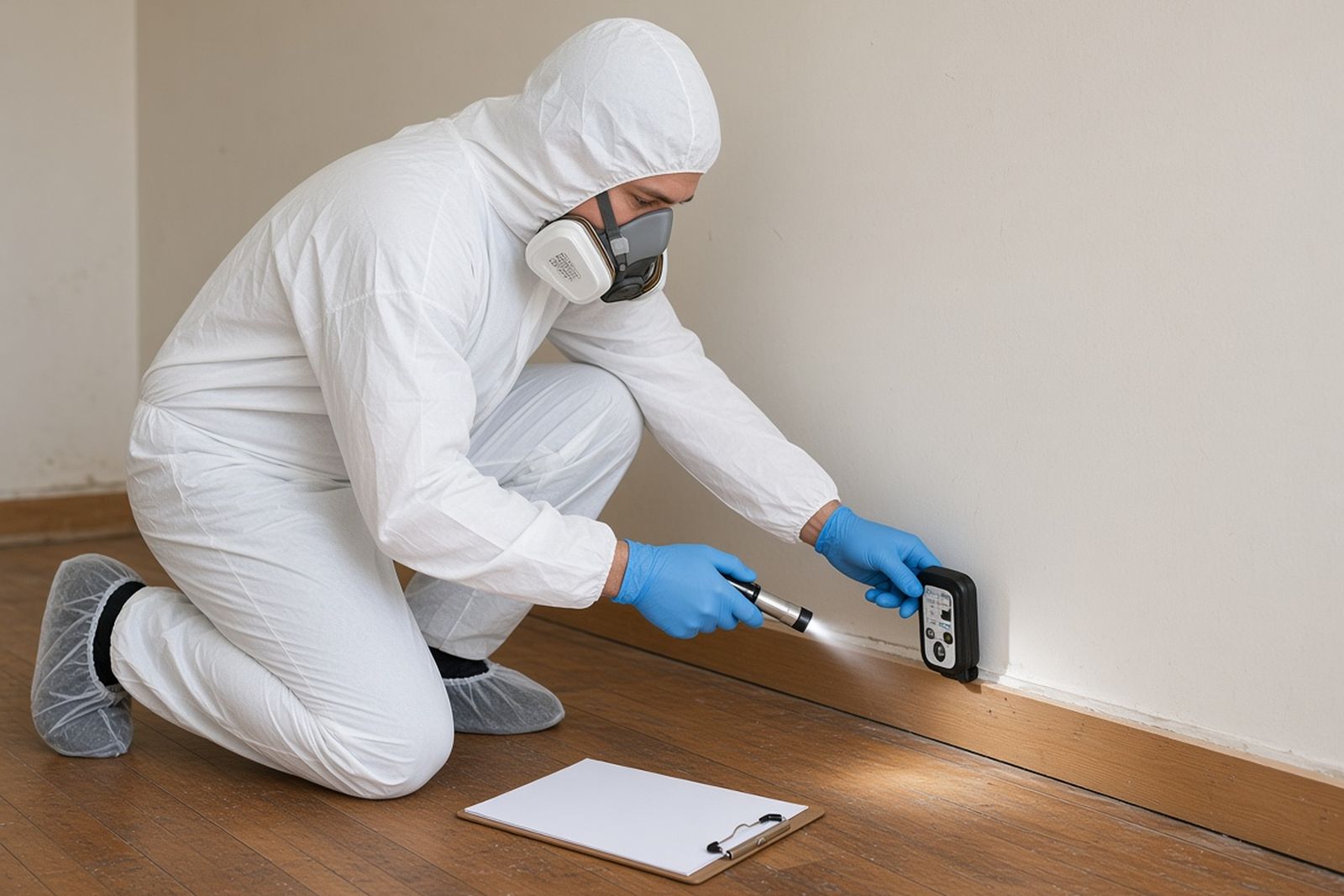
Technician in coveralls and a half-face respirator checking a baseboard with a flashlight and moisture meter
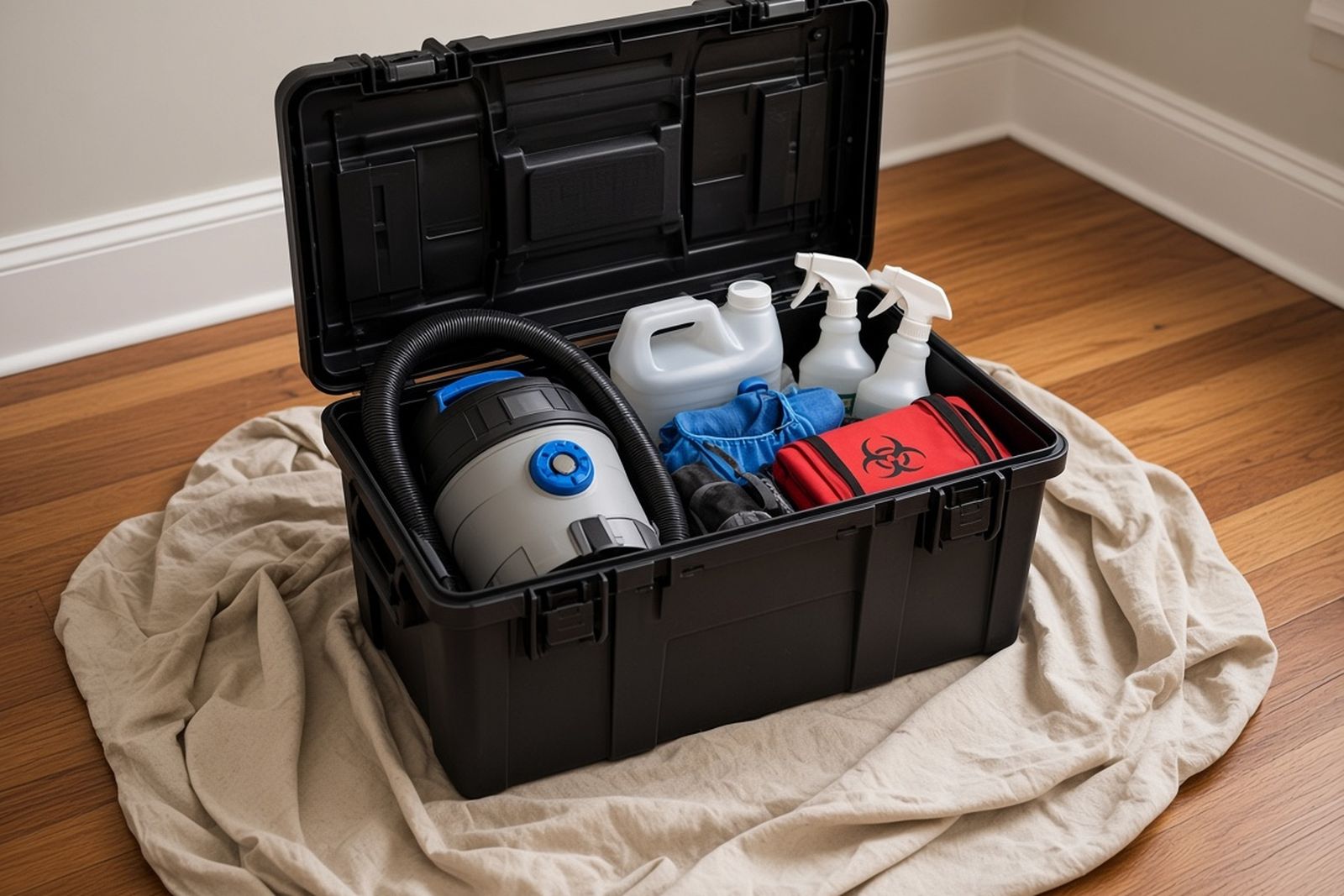
Open equipment case on a drop cloth holding a HEPA vacuum, disinfectant jugs, spray bottles and red biohazard bags

Facts worth knowing

  • Eligible crime victims in California can get up to $70,000 in total repayments for crime-related costs through the state's victim compensation board.

    Why it matters: Cleanup has its own lower limit within this total, so ask the program which of your costs qualify.

    Source: California Victim Compensation Board (CalVCB), 2022

  • Utah's Office for Victims of Crime paid $4,869 in total for crime scene cleanup across all claims in its 2024 reporting year.

    Why it matters: Cleanup help from these programs may go unclaimed, so ask your state's victim program whether you qualify.

    Source: Utah Office for Victims of Crime, 2024

  • Insured flood victims in a study published in 2022 said slow insurance inspections held up their cleanup.

    Why it matters: Ask your insurer how soon an adjuster can come, and whether you may start urgent cleanup after taking photos.

    Source: McKenzie et al., 2022

Tools that help right now

What would you do?

Poll results

Vote to see how other people answered. You can change your answer at any time.

Your experience

What was the hardest thing to figure out in the first day after the scene was released?

Be the first to vote
General

Which type of incident brought you to this topic?

Be the first to vote

Need help in Great Neck?

Send a short message about the property to the follow-up inbox. A coordinator can reply by email with next steps.

Your request is sent to the follow-up inbox. A coordinator can reply by email.

If anyone is hurt or in danger, call 911 first.