Southampton, NY

Crime Scene Cleanup in Southampton's Seasonal and Oceanfront Homes

What to do, who to contact, and what to ask in Southampton.

After a violent crime at a Southampton home, the season and the ocean air shape cleanup. Learn who can approve work and which records to keep.

Get an email reply about crime scene cleanup

Send a short message to the follow-up inbox. A coordinator can reply by email. This form does not send emergency help; call 911 first if anyone is in danger.

Tell us what you need help with. Share a short description; please leave out medical details, access codes, and other sensitive information.

A request does not confirm a booking. For immediate danger, contact local emergency services.

Or email info@scenerecoveryhelp.com

The short answer for Southampton, NY

A violent crime at a Southampton home or estate is not a job for caretakers or seasonal cleaners. Police must release the property first. Then a trained biohazard cleanup company takes over. Here you will find what to expect in summer and winter, how to approve work from far away, and what to keep for your insurer.

What to do, step by step

  1. 1

    Confirm the release and who can approve for you

    Ask police to confirm the house is released. If you live elsewhere, decide who can approve tearing out soft materials: you, a trustee, your estate manager or a lawyer. Write down the caretaker contacts who hold keys. Then list the main house and every guest cottage or pool building someone could have entered, so nothing is missed. Ask for photos before any furniture moves. That matters most if the house was empty when it happened.

  2. 2

    Plan access around the busy season

    Ask the company to pick one route for dirty items and to use your service drive, not the front gate. If your home is near the Job's Lane shops, carts should move early in the morning, before the sidewalks fill. Sealed bins should stay covered the whole way. In summer, a midweek day is usually calmer than a weekend. Log every temporary gate code, and cancel each one after the work.

  3. 3

    Ask what can stay, and allow for slow coastal drying

    A good crew lifts the heavy soil, then keeps a registered disinfectant wet on tile, stone and metal for the full label time. Carpet, pad, mattresses and rental linens that cannot be saved are sealed before they leave any building on your property. Fingerprint powder comes up with a HEPA vacuum. Salt air, wind and low winter heat all slow drying, and a cold, winterized house may need longer still. Ask for honest drying time before the final check.

  4. 4

    Get a file you can read from far away

    Ask for the repair openings to be listed for local carpenters. Then have photos, product lists and waste records bundled into one file. You and your insurer should be able to review it without a trip to the East End. Ask the company to state plainly which buildings are cleared and which still wait on floor or wall repairs. Give your caretaker a copy too, so the house is ready before the season starts.

What cleanup is like in Southampton

Southampton is an East End village of about 3,800 year-round residents, and the wider Town of Southampton holds many more seasonal estates and rentals. Your property may be an oceanfront or dune compound, a historic village house, a farm-lane home or a guest cottage that fills up in summer. The season changes your cleanup. The house may have sat empty all winter, or be full of guests in July. You may be far away while a caretaker holds the keys at the end of a long private drive. Blood still soaks into wood, carpet and drywall.

Summer brings jammed roads, houseguests and busy village sidewalks. Winter can mean empty streets and an incident found late in a closed house. If your heat was turned down, rooms will dry more slowly. Ocean wind and salt air also affect how rooms can be aired out. Privacy needs thought even behind hedges, because a gap may face a neighbor's tennis court or a shared lane. A good crew will use bags no one can see into and a screened service route. Please do not let your caretaker or seasonal cleaners try this work on their own.

Your paperwork may travel a long way. Owners who live off the island, estate managers, trustees, high-value insurers and sometimes summer tenants with their own leases may all need it. Town and village websites and Suffolk County health resources cover local health questions. Ask the company to photograph guest cottages, pool houses and outdoor showers, not just the main house. Have the notes say whether your house was lived in or shut down for winter when the incident happened. A clear file lets your adjuster and lawyer follow the job from the city.

What to expect for your type of home

  • Houses left empty for the season: Your caretaker or estate manager may be the only local person able to approve things. Write down who okayed entry and the removal of soft materials.
  • Oceanfront and dune homes: Ask for a check of outdoor showers, decks and sandy doorways, even when the main scene was a bedroom inside. People track through these spots after the beach.
  • Compound lots: If anyone walked between buildings, ask that each guest cottage and pool house be listed and checked as its own building, with its own photos.
  • Hedge-lined lanes: Tall privet hides your house, but anything left at the lane edge is on full view to summer traffic. Ask that bins stay inside the gate.
  • Historic village homes near the shops: Foot traffic is heavy on summer weekends. Ask the company to set up midweek or early in the day when it can.
  • Winterized houses: Shut-off pipes and low heat can leave wall spaces damp after wet cleaning. Ask the crew to record the indoor temperature and drying conditions.
  • Media rooms and summer guest rooms: These are often fully carpeted, and soaked wall-to-wall carpet rarely comes back. Expect it to be removed and replaced.
  • Gated estates with cameras: Your gate system keeps a record of who came in. Log each temporary code you give out, and shut it off after the work.

Papers and records to keep

  • The release date and the caretaker or estate manager who opened the house.
  • A sketch of your lot with each building marked and photos tied to it.
  • Notes on whether the house was winterized, caretaker visits and who held keys at release.
  • What was removed from the main house, each cottage and the pool house.
  • Products used in each building, with the EPA number and the wet time allowed.
  • How fingerprint powder was removed from painted trim and glass in each building.
  • Who hauled the sealed bins off your property, and when.
  • An access and privacy log: gate codes, seasonal timing choices and curb setup.
  • A memo for you and your caretaker separating cleared buildings from those awaiting repairs.

Local offices and official help

Common questions in Southampton

The house was empty for the winter. How does that change things?

It can change who approves the work and how rooms dry. An incident in a closed house may be found late, with the heat left low. Your caretaker or estate manager may have to act for you. Ask that the check note whether the house was winterized, since cold, damp rooms dry slowly after wet cleaning. Write down who held keys at release and who approved removing soft materials. The need for a police release, protective gear and waste tracking stays the same in any season.
Why do the guest cottage and pool house need to be checked?

On a Southampton compound, people move between the main house and the outbuildings after an incident, most of all in summer. Residue and footprints can turn up in a cottage even when the stains seem limited to the main bedroom suite. Leases or guest setups can also muddle who approves what. Checking every building means later summer guests do not find odor or residue. Ask for photos of the paths that link the buildings.

How do we keep this private on a summer weekend?

Village sidewalks and estate lanes are busier in summer, so timing helps most. Ask the crew to wrap everything and keep it off the road edge. Service gates are better than the main entrance, and midweek moves draw fewer eyes than Saturday ones. Anyone who asks can simply be told the work schedule. These steps cut attention and gossip while cleanup goes on. They sit on top of the blood safety steps and never replace them.

Do the outdoor shower and deck need attention too?

They may. Outdoor showers, decks and sandy doorways often become a casual way out after an incident inside. Beach towels and robes hung near the shower can pick up residue. Ask that these spots go on the work map and be photographed before cleaning. Cedar decking, composite boards and bluestone each need a different approach. Wind can move dust during powder cleanup, so a HEPA vacuum should be used with care. Outdoor findings belong in your insurance package.

I live off the island. What should the file sent to me include?

It should include dated photos of each building, what was cut out and the products used. It should say whether the house was heated or winterized during the work. Cottage and pool-house photos belong in it when those buildings were checked. Ask for a plain statement of which buildings can open for the season and which cannot yet. A fresh smell is not proof of success. Store copies with your property file so lawyers, insurers and future buyers need not rely on the caretaker's memory.

I am away most of the year. Who do I call first?

Start with whoever holds keys locally, often your caretaker or property manager. Ask them to keep the house locked until the release is confirmed. Next call your insurer, because many policies want to be told before work begins. After that, a cleanup contractor can look at the property and send you photos and a written plan. You can approve work from afar. Just make sure one person on the East End is in charge of letting workers in and locking up.

How do salt air and ocean wind affect the cleanup?

They slow drying and can carry odor. Wind may push smells from an open door toward neighbors and your outdoor living areas. During work, windows on the windy side should stay closed, and the crew should use equipment that filters the air it blows out. Outdoor furniture and cushions near the affected area can soak up residue and may need checking. Build extra drying days into your plan, most of all in spring and fall when fog hangs along the coast.

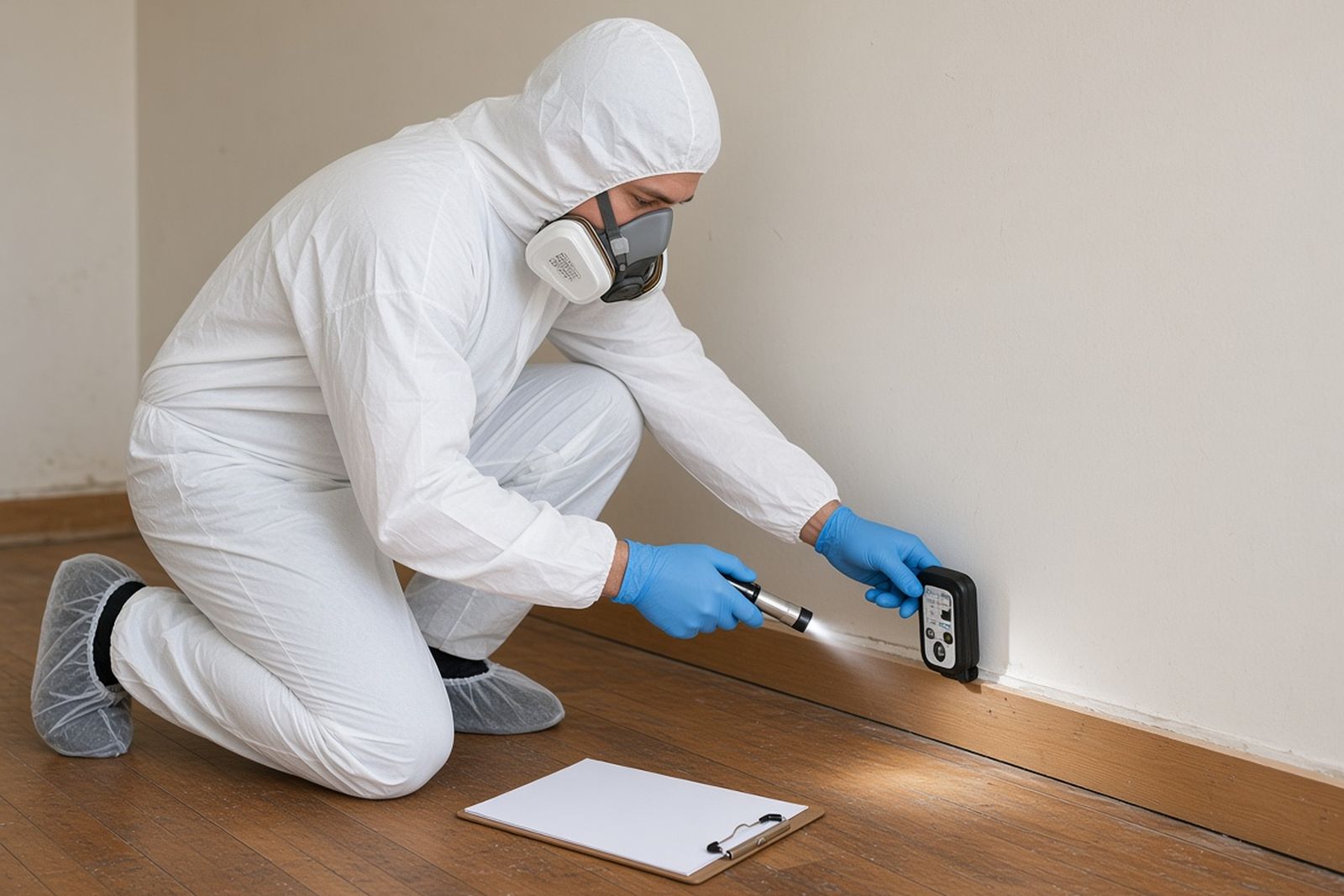
Technician in coveralls and a half-face respirator checking a baseboard with a flashlight and moisture meter
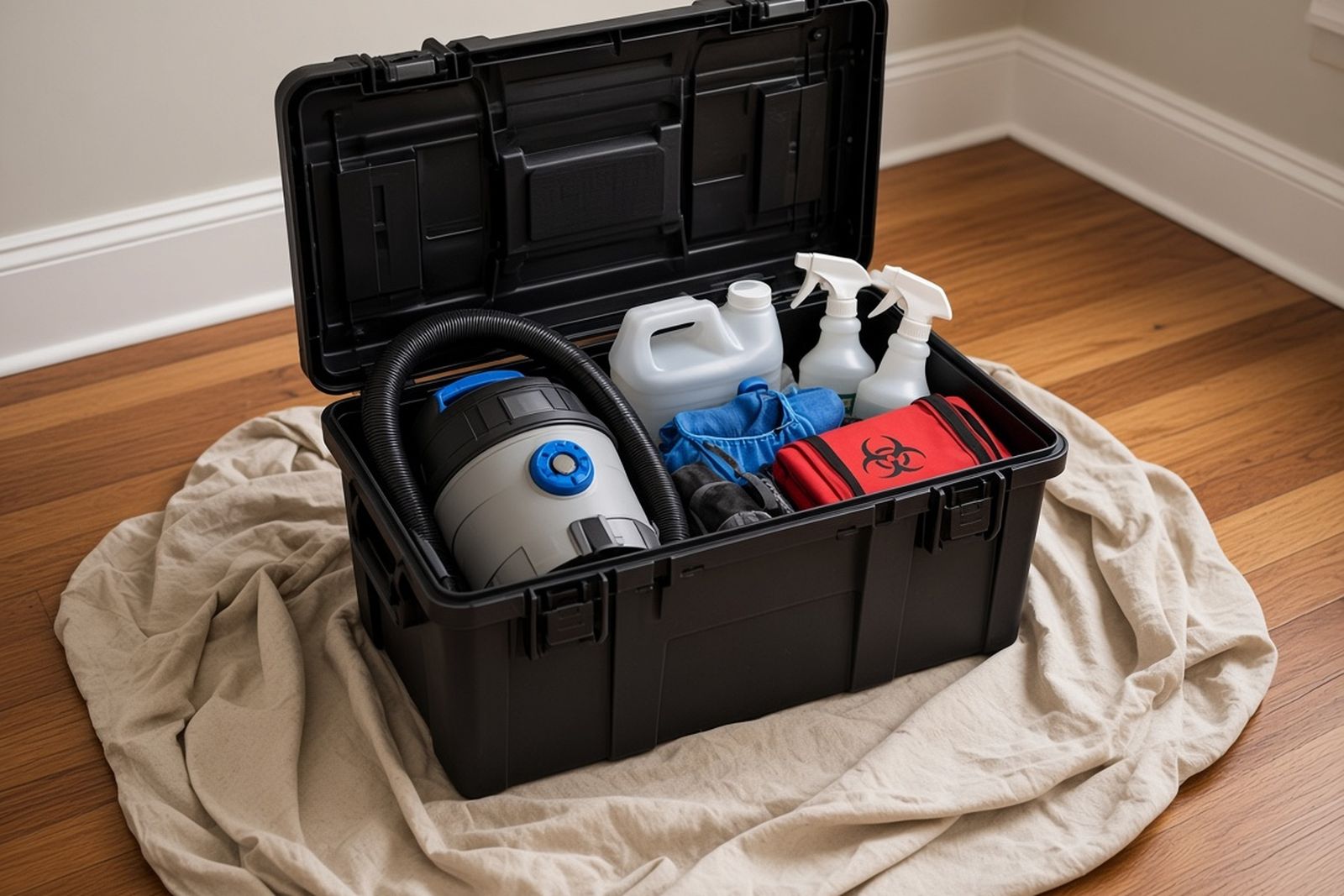
Open equipment case on a drop cloth holding a HEPA vacuum, disinfectant jugs, spray bottles and red biohazard bags

Facts worth knowing

  • In a survey of burglary victims in three English areas, published in 2005, quick help making the home secure was one of the main practical needs.

    Why it matters: Ask whether the company you call can board up or secure broken doors and windows on the first visit.

    Source: Victim Support et al., 2005

  • In interviews with 18 people in Germany who lost someone to suicide, some said others with a similar loss understood them without long explanations.

    Why it matters: If explaining yourself is tiring, you may find a suicide-loss support group easier than talking with people who have not been through it.

    Source: Marek et al., 2024

  • In interviews with 15 grieving German adults, some valued company that came with no pressure to talk.

    Why it matters: If you are supporting someone, you may help just by sitting with them; you do not have to find the right words.

    Source: Marek et al., 2025

Tools that help right now

What would you do?

Poll results

Vote to see how other people answered. You can change your answer at any time.

Your experience

What was the hardest thing to figure out in the first day after the scene was released?

Be the first to vote
General

Which type of incident brought you to this topic?

Be the first to vote

Need help in Southampton?

Send a short message about the property to the follow-up inbox. A coordinator can reply by email with next steps.

Your request is sent to the follow-up inbox. A coordinator can reply by email.

If anyone is hurt or in danger, call 911 first.