New York, NY

New York City Crime Scene Cleanup: Walk-Ups, Co-ops and Boards

What to do, who to contact, and what to ask in New York.

After a crime in your New York City apartment, see when cleanup can start, who must sign off in a co-op or condo, and what records to keep.

Get an email reply about crime scene cleanup

Send a short message to the follow-up inbox. A coordinator can reply by email. This form does not send emergency help; call 911 first if anyone is in danger.

Tell us what you need help with. Share a short description; please leave out medical details, access codes, and other sensitive information.

A request does not confirm a booking. For immediate danger, contact local emergency services.

Or email info@scenerecoveryhelp.com

The short answer for New York, NY

When a violent crime happens in a New York City apartment, cleanup waits for the police release and, often, for your co-op board or managing agent. Then a trained biohazard company does the work. Here is what to ask about stairs, stoops, freight elevators and privacy, and what your building will want on file.

What to do, step by step

  1. 1

    Get the police release and your building's sign-off

    First confirm the police release. Then find out whether a shareholder, deed owner, managing agent or board must approve cutting into floors or working in shared hallways. In a co-op, relying on a roommate or broker by mistake can stop the work when the alteration desk objects. Write down who holds the keys and who controls the elevator. Do this before any demolition tools enter your apartment. A short written okay from the right person can spare you a stalled job.

  2. 2

    Book the elevator and plan the curb handoff

    Trace the route from your apartment door to the curb with the company. Ask for the freight elevator if there is one, or a padded passenger elevator at quiet times. When you can, avoid school dismissal and busy tourist blocks for stoop loading. Sealed bins should stay out of package rooms and off lobby benches. Workers should put on clean gear on a controlled landing, not beside the doorman's desk. If a sidewalk shed narrows your curb, ask for a backup loading spot in writing.

  3. 3

    Expect built-ins, plaster and floors to be opened

    A good crew checks the closets, baths, radiator covers and floor seams typical of New York apartments. Carpet, pad and soaked plaster get bagged inside your apartment, so they are sealed before they reach a shared stair or elevator. Hard surfaces worth saving are cleaned only after heavy soil is gone, and each product gets its full label wet time. Powder mixed with plaster dust calls for a HEPA vacuum. Ask for photos of what was opened. Your insurer and the later alteration contractors will need them.

  4. 4

    Hand your managing agent a clear file

    Ask the company for before-and-after photos, product lists, waste route notes, and photos of how the shared paths were protected. Add a statement listing the rebuild work still to come. Make it plain that the biohazard work is done and stands apart from any board-approved remodel that restores finishes later. Keep one copy yourself as the unit owner and give one to the managing agent. If you rent, send the agent a dated note and ask for your own copy of the file.

What cleanup is like in New York

About 8,340,000 people live in New York City, most stacked on top of each other in tenement walk-ups, prewar elevator co-ops, condo towers and lofts in old factory buildings. So after police release your apartment, soiled materials rarely leave by a private driveway. They share stairs, passenger elevators, sidewalk sheds and curb lanes with strangers. Built-in closets, cast-iron radiator covers, old dumbwaiter shafts in some prewar buildings, and decades of layered floors can hide how far fluid soaked in. A surface wipe will not reach it. Your first question is who can sign for a co-op alteration or for work in a condo's shared areas.

In a city this crowded, your privacy takes planning. Courtyard windows and air shafts put a neighbor's kitchen a few feet away. Doormen and package rooms see every cart. School and tourist rush hours put stoop loading on display. If your building has a freight elevator, ask for booked times and padding. If not, a padded passenger elevator at quiet hours is the only real option. Sealed bins no one can see into, quick curb handoffs, and notices that list only hours and closed floors protect your dignity. The work itself follows OSHA's blood safety rules and EPA label wet times.

Your paper trail will likely pass through a shareholder or deed owner, a managing agent, a board, an insurer, and sometimes an estate lawyer. Boards ask whether hallway runners went down, whether fingerprint powder was left on shared trim, and whether sealed waste left with a record of who took it. So photograph your apartment and the shared path before covers go on. Winter steam heat dries the air in a different way than humid summer weeks with the windows shut. Ask that the final check rest on real dryness. Any later remodeling under the alteration agreement is a separate job, done by contractors your building approves.
What to expect for your type of home

  • Tenement and brownstone walk-ups: Sealed bags must go down the stairs and out the stoop. Ask the crew to protect the handrails that other households use all day.
  • Co-op and condo towers: You need a freight booking or a padded passenger elevator plan. Get your managing agent's written okay before any hallway is closed.
  • Prewar apartments: Plaster, built-in closets and cast-iron radiator covers can hide residue. Expect a good crew to open them past the edge of the stain you can see.
  • Apartments on a courtyard or air shaft: The neighbors across the gap are close. Ask that airing-out be timed with them in mind and that carts stay covered.
  • Buildings with compactor rooms and package desks: These are never an okay place to hold biohazard waste. Ask where sealed bins will wait until they leave the building.
  • Doorman buildings: Work with your doorman and super on keys, alarm panels and quiet hours. Keep any talk in the lobby to access times, with no graphic detail.
  • Blocks with sidewalk sheds or scaffolding: A shed can shrink the space at the curb. Ask for other loading times when one blocks the best stoop in front of your building.

Papers and records to keep

  • The police release, plus the managing agent's or board's approval naming who may work in shared areas.
  • A sketch and photos of your apartment, including built-in closets, baths and radiator covers.
  • Photos of hallway runners and elevator pads taken before the first sealed cart moved.
  • Notes on stoop or curb handoffs, including any sidewalk shed that changed the loading spot.
  • A list of soft items thrown out, tied to room names in the apartment.
  • EPA-registered disinfectant names and the timed wet periods on hard surfaces that were kept.
  • How powder or test chemicals were removed, with notes on plaster dust control.
  • Waste packing and hauler records fit for your insurer and board files.
  • A statement of rooms to keep empty and finish work still needed under the alteration agreement.

Local offices and official help

Common questions in New York

How should our co-op board handle approvals after a violent crime?

Confirm the police release first. Then decide whether the work stays inside the unit or touches shared areas that need board or managing-agent approval. Your written approval should keep biohazard cleanup apart from later remodeling under the alteration agreement. Ask for photos of hallway and elevator covers, product lists with wet times and waste route notes. Tell residents only the hours and closed floors. Do not assign supers or porters to blood cleanup unless they have bloodborne pathogen training and a proper way to pack the waste.

I live in a walk-up. How does waste get out without a freight elevator?

Every sealed bag goes down the stairs to the stoop, where neighbors, delivery workers and passersby meet. That is why stair runners, covers no one can see through, and quick curb handoffs matter so much in a New York walk-up. Ask the crew to avoid commute rush hours when it can. Workers should change gear on a controlled landing, not on the open sidewalk. Have the stair covers photographed for your claim file. These steps limit exposure and ease friction when carts pass other apartment doors.

Where does blood hide in a prewar apartment?

It hides in built-in closets, gaps in plaster walls, layered wood floors, cast-iron radiator covers and bath thresholds. Some buildings also have unused dumbwaiter shafts or odd gaps behind old trim. Ask the crew to check edges and under any built-in that can be moved safely. Clothes and fabrics in a closet may fail the check even when the living room looks better. Anything that cannot be confirmed clean should be thrown out. Ask for photos of openings so the alteration contractors know what to close.

My windows face a courtyard or air shaft. How do we keep this private?

Kitchens and bedrooms across the gap are only a few feet away, so strangers can see open windows and carts. Ask the crew not to set up next to open courtyard windows. Keep talk with your doorman to access times. Sealed bins should stay out of package rooms and move to the curb quickly under covers. Store photos in your private claim file, not on a building portal. Care like this protects your family's dignity and draws fewer onlookers at the curb.

What should the managing agent keep on file once the work ends?

The agent should keep the release proof, the apartment sketch and photos, and photos of how shared paths were protected. Add the list of soft items thrown out, disinfectant names with wet times, powder removal notes, waste route records, and a statement tied to any pending alteration work. In a New York co-op, looking spotless does not prove a blood scene is safe. Share copies with the unit owner. That packet answers later sale or refinance questions without drama.

I rent a rent-stabilized apartment. What should I do?

Send your managing agent a dated note with the release date and ask when work begins. If you must leave for a while, track each night away and every bill it costs you. Get the move-back plan in writing. City and state tenant resources can explain the rules for rent-stabilized units. Before anything of yours is removed, ask for photos and a list of your belongings, and approve that list first.

Our building has steam heat. Does that matter?

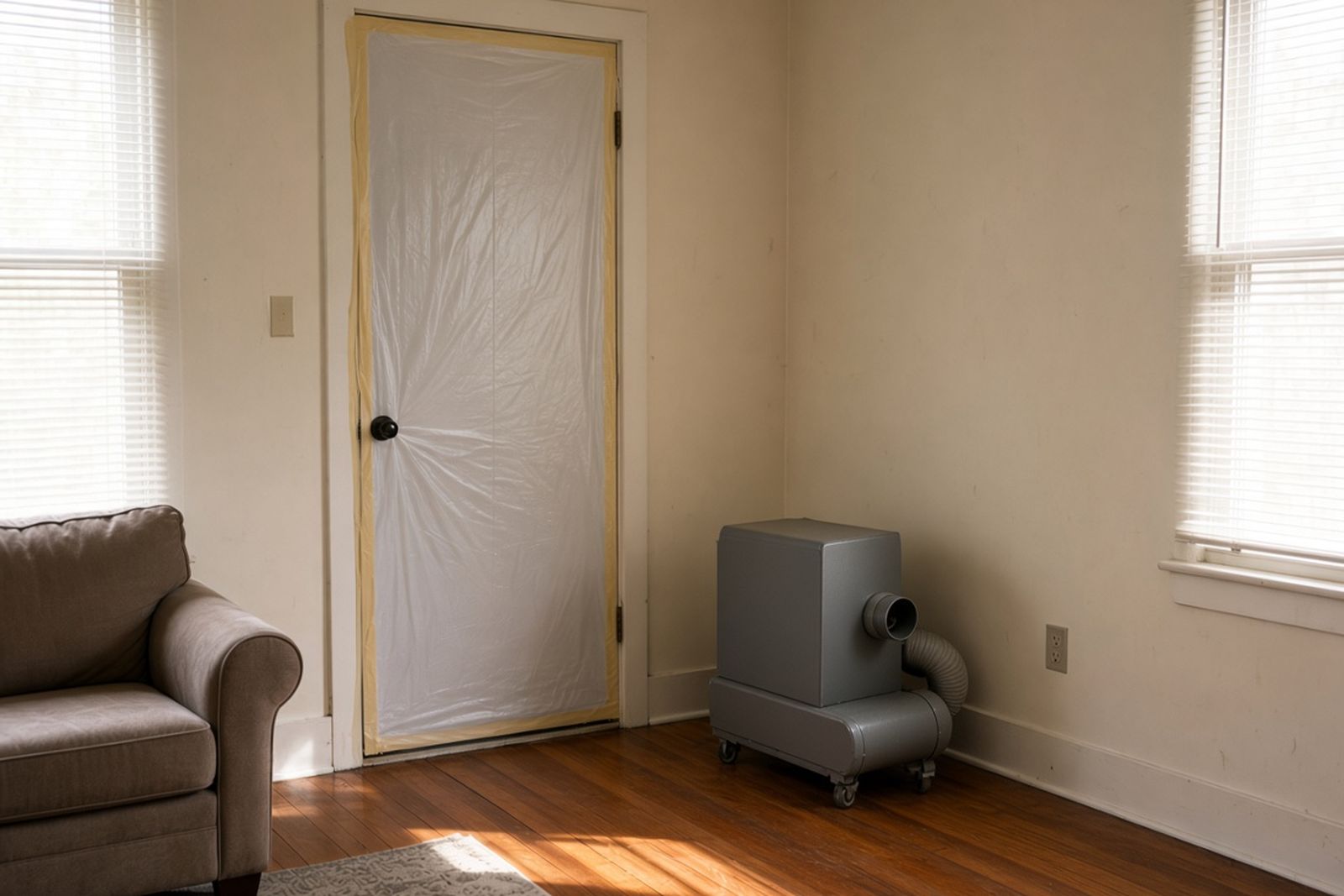
Yes, steam radiators run hot in winter and often cannot be turned down in one room. Heat can dry residue into dust and make odors spread faster. Ask the contractor to cover or protect the radiators in the affected room and to check behind them, where fluid often collects. Wood or metal radiator covers may need to be cleaned or replaced. Filtered air machines help keep dust contained while the crew works in your apartment.

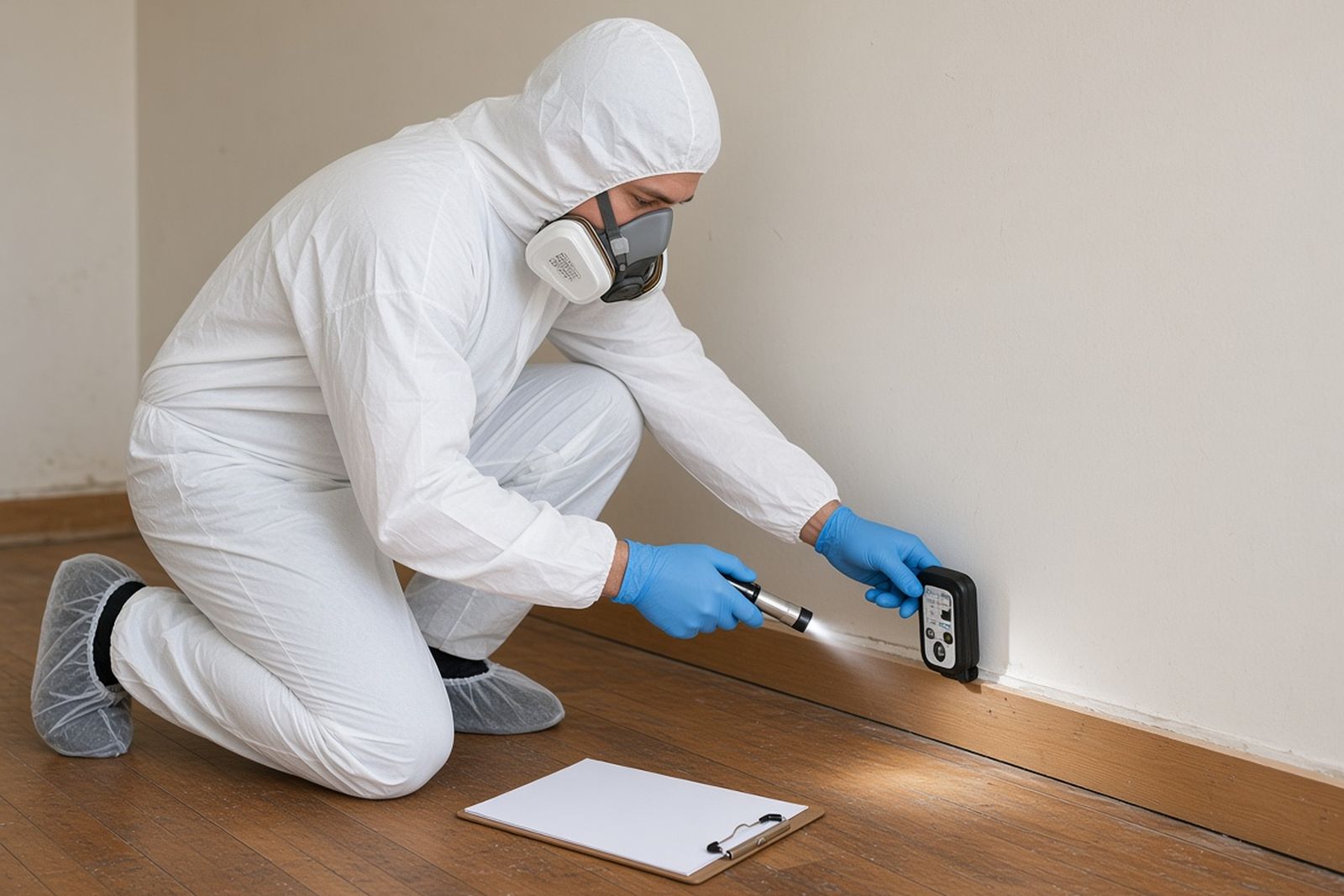
Technician in coveralls and a half-face respirator checking a baseboard with a flashlight and moisture meter
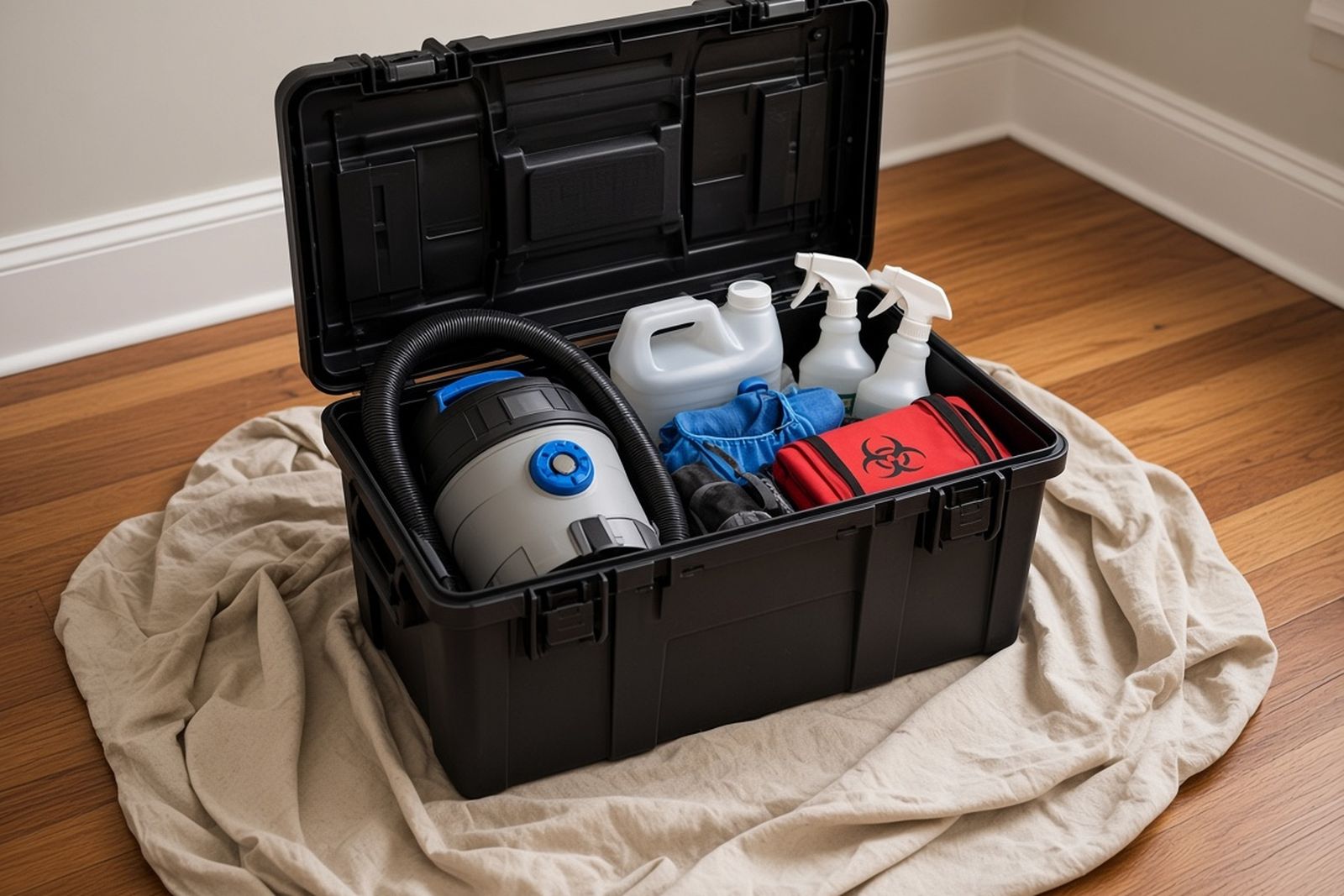
Open equipment case on a drop cloth holding a HEPA vacuum, disinfectant jugs, spray bottles and red biohazard bags

Facts worth knowing

  • In interviews with 18 people in Germany who lost someone to suicide, some said others with a similar loss understood them without long explanations.

    Why it matters: If explaining yourself is tiring, you may find a suicide-loss support group easier than talking with people who have not been through it.

    Source: Marek et al., 2024

  • In interviews with 15 grieving German adults, some valued company that came with no pressure to talk.

    Why it matters: If you are supporting someone, you may help just by sitting with them; you do not have to find the right words.

    Source: Marek et al., 2025

  • In a survey of burglary victims in three English areas, published in 2005, 18% of those who claimed on insurance said it did not cover their loss well enough.

    Why it matters: A claim may not pay for everything, so check your policy limits and what it leaves out before you plan around it.

    Source: Victim Support et al., 2005

Tools that help right now

What would you do?

Poll results

Vote to see how other people answered. You can change your answer at any time.

Your experience

What was the hardest thing to figure out in the first day after the scene was released?

Be the first to vote
General

Which type of incident brought you to this topic?

Be the first to vote

Need help in New York?

Send a short message about the property to the follow-up inbox. A coordinator can reply by email with next steps.

Your request is sent to the follow-up inbox. A coordinator can reply by email.

If anyone is hurt or in danger, call 911 first.