Palm Beach, FL

Palm Beach Crime Scene Cleanup for Island Estates and Staff Wings

What to do, who to contact, and what to ask in Palm Beach.

A violent crime at a Palm Beach estate needs trained cleanup. Learn about bridge access, staff wings, stone floors and the records insurers want.

Get an email reply about crime scene cleanup

Send a short message to the follow-up inbox. A coordinator can reply by email. This form does not send emergency help; call 911 first if anyone is in danger.

Tell us what you need help with. Share a short description; please leave out medical details, access codes, and other sensitive information.

A request does not confirm a booking. For immediate danger, contact local emergency services.

Or email info@scenerecoveryhelp.com

The short answer for Palm Beach, FL

On Palm Beach Island, a violent crime at an estate can reach staff wings, pantries and cottages as well as the main rooms. Household staff should never be asked to clean it. Once police release the estate, bring in a trained biohazard company. Here is what to ask about the bridges, the service court, stone floors and trust approval, and what to keep for insurers.

What to do, step by step

  1. 1

    List each wing and confirm who approves

    Ask police to confirm the release. Then list the main suites, staff wings, guest cottages, butler's pantries and any garage apartment for the company. Ask for photos of the covered walks and elevators before furniture is moved. If a family office holds title, confirm in writing who can approve cuts. On an island estate, the person with the keys and the person with authority may not be the same.

  2. 2

    Load in the service court, away from the ocean drive

    Ask for one dirty path through your service court. The crew should stay out of the formal arrival courts that face coastal traffic. Bins stay covered, and workers suit up where no one can see through the hedges. If you can, have carts move outside the weekend beach rush, since the same few bridges carry everyone. A midweek morning is usually the calmest time on the island.

  3. 3

    Ask how stone and woodwork will be treated

    After the heavy soil is cleared, your marble and coquina should get only stone-safe disinfectants, used as the label allows. Carpet, silk rugs and upholstery that fail the check are bagged in the service court. Powder is vacuumed off the woodwork with a HEPA machine. Ask the company to test any product on a small patch of stone first. Then have each keep-or-remove choice recorded for your trustee and insurer.

  4. 4

    Wait out the humid air, then get the trustee file

    Let your rooms dry in the humid coastal air before anyone writes up the final checks for baths, kitchens and exits. Ask for a list of the finish work still to come and the wings that stay empty until it is done. Your trustee or family office should receive the whole file. Keep the air conditioning running in the meantime, and do not rush rugs or furniture back onto the stone.

What cleanup is like in Palm Beach

Palm Beach is a barrier island with about 9,000 year-round residents and an unusual number of estates between the Atlantic dunes and the Intracoastal. Your home may be an ocean mansion, a Midtown compound with a staff wing or a North End lot behind hedges. Almost every truck has to cross one of the bridges, which shapes the timing of your cleanup. Once your property is released, ask the crew to check where marble meets other floors, the butler's pantry and any elevator inside the home. Staff cottages linked by covered walks should be on your list too.

Bags at your curb on the ocean drive draw eyes. Midweek mornings are often quieter than the weekend beach rush, so ask about timing. A good crew loads covered bins deep in your service court. This is work under OSHA's blood safety rules, done with EPA-labeled disinfectants. It is not estate housekeeping, and your staff should not be asked to do it. Salt spray and overnight coastal moisture also stretch out honest drying. You may wait longer for the final check than the look of the rooms suggests.

A trustee, a family office, your estate manager and a high-value insurer may all read the file later. Town websites and Florida health pages can help with local logistics. Ask for photos of your staff wings and guest cottages before any covers go on. Humid island nights slow everything, so sign-off has to wait for rooms that are truly dry. Polished stone can shine while the seams beside it still hold damp, so do not judge by looks. A complete file also spares your staff and family from being asked the same questions again and again.

What to expect for your type of home

  • Estates reached by the bridges: Beach traffic shares the bridge lanes. Ask that loading happen deep in your service court, not at the ocean drive curb, whenever possible.
  • Staff wings, butler's pantries and guest cottages: Each needs its own list. Service halls carry residue more than formal front halls do, so do not leave them out.
  • Marble, limestone and thick rugs: Residue can hide at the seams. Ask the crew to check where floors meet, even when the stain you can see looks small.
  • Estates with private security gates: The gate keeps a record of passes. Cancel every temporary pass after the work, and keep a list of who held each one.
  • Homes with an elevator: The cab can carry soil to each landing. Ask for photos of the cab and the doorways on every floor it serves.
  • Hedged North End lots: Hedges hide the house but leave the service court in view of the neighbors' staff. Ask that bins stay covered there at all times.
  • Homes held by a trust: A trustee may have the final say over your on-site manager about what gets cut. Have it recorded who signed off on each demolition choice.
  • Homes after a storm: Humidity makes a fresh scent useless as proof, and shiny polished stone is not a final check either. Ask for written results before rooms reopen.

Papers and records to keep

  • The release date and the trustee or estate manager who okayed entry.
  • Photos by wing: main suites, staff areas, guest cottages, butler's pantries and elevators.
  • A sketch that ties photos to covered walks and service halls.
  • For each wing and staff cottage, what was cut and what stayed.
  • The name, label and wet time of each disinfectant used on the estate.
  • How powder was removed, plus drying notes for the humid coast.
  • Notes on bridge timing and service court setup, plus passes given out and canceled.
  • Waste tracking papers for every sealed bin that left the island.
  • A hand-off list for rebuilders naming the wings that stay empty.

Local offices and official help

Common questions in Palm Beach

Why do the bridges matter for moving waste?

Almost every truck shares a few bridge lanes with beach traffic, so loading at the ocean drive curb is very visible to visitors and to the neighbors' staff. Loading deep in the service court with covered bins draws less notice. No one can promise arrival times around bridge traffic. Ask that the route and hour be noted in the access log, so your insurer understands the privacy reasons. Salt spray changes how long drying takes, not what a disinfectant label requires.
It happened in the main suite. Do the staff cottages need checking?

Yes. On a Palm Beach estate, service halls often carry residue on shoes toward the pantries, laundry and cottages, even when the formal rooms look untouched. Leaving those wings out can leave odor for staff or guests and confuse a high-value claim. Ask for photos of the doorways, the elevator and the covered walks. The final check should follow a dry-out over the humid nights, not one wipe of polished stone.

A family office holds title. Who approves the cuts?

After the release, learn which trust or family member holds title. Then have it recorded who can approve demolition in the guest cottages and who can approve it in the main house. Product names and wet times should be given to you in writing. Clear authority stops your manager and your trustee from giving the crew different orders. It also keeps work from stalling while people on and off the island trade phone calls.

Which estate finishes usually cannot be saved?

Wall-to-wall carpet in the bedroom wings, its backing, wet wallboard and silk or cotton that wicked blood tend to go. Stone can look clean while its seams hold residue, so the bottoms of the woodwork deserve a check as well. Sealed metals and some hard finishes may stay if the soil is gone and the wet times are met. Ask to see each item on a list before it leaves the estate.

What belongs in the claim packet?

It should have photos by wing, removal lists, disinfectant wet times, how powder was removed and waste records. A trustee who never flies in should be able to read it. Ask that it say what was found in staff wings and guest cottages, even when nothing was. It should name the wings that stay closed and the trades still due in each. A fresh scent or a gleaming marble floor proves nothing after a blood scene.

Staff live on our estate. What do we tell them?

Tell staff who live in cottages or wings which areas are closed and for how long. You can leave out what happened. If anyone moved through their rooms after the incident, ask that those rooms be included in the check. Never ask staff to clean affected areas themselves. Give them one contact for questions, and let them know when work trucks will be on the property.

How do salt air and stone affect the cleanup?

Both call for patience. Salt air and humidity slow drying. Marble and coral stone are common on the island and can soak up fluid, and some disinfectants may etch or dull them. Ask the contractor to test products on a small area first and to confirm the label allows them on that surface. Keep the air conditioning running to control humidity, and allow extra time before the final check.

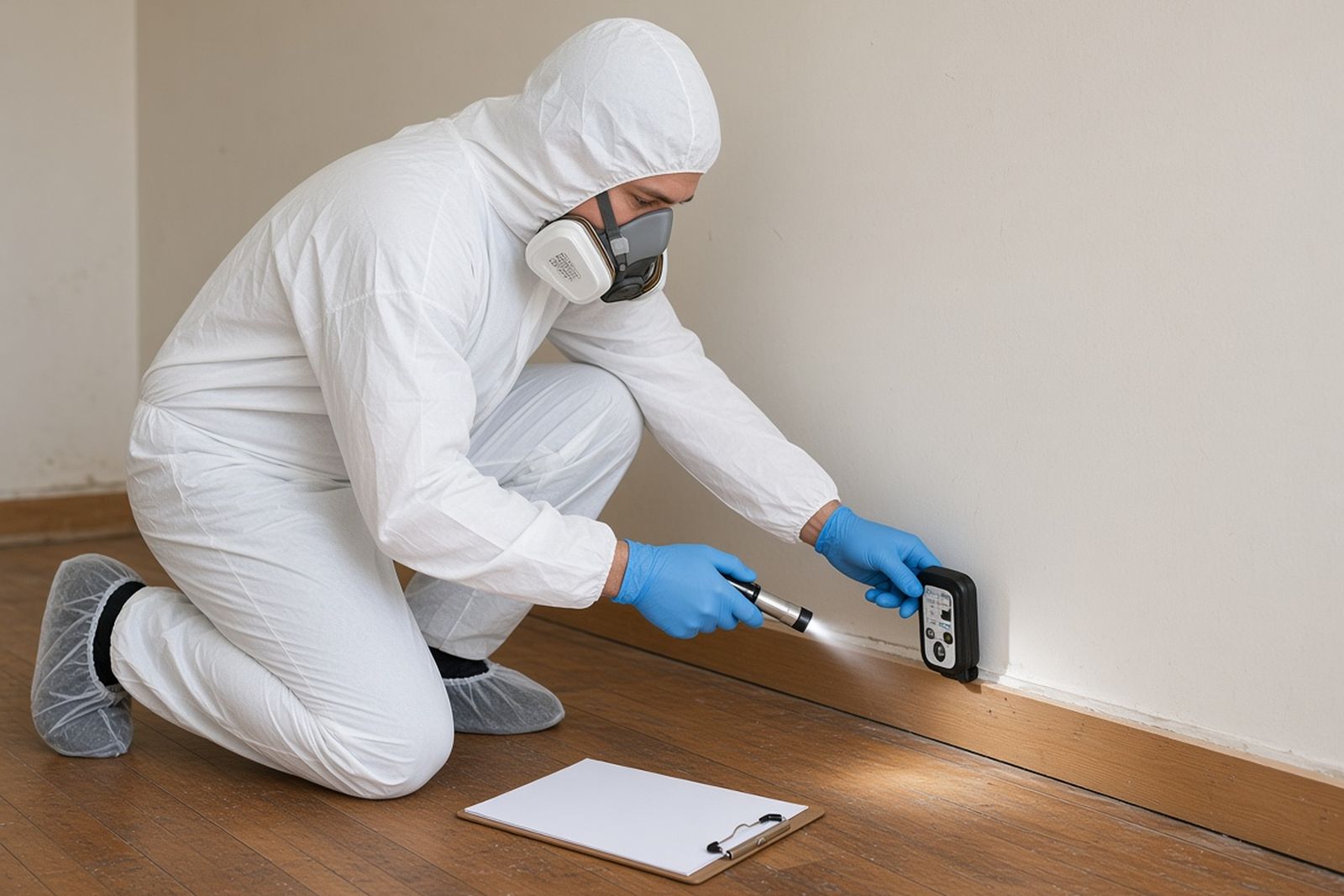
Technician in coveralls and a half-face respirator checking a baseboard with a flashlight and moisture meter
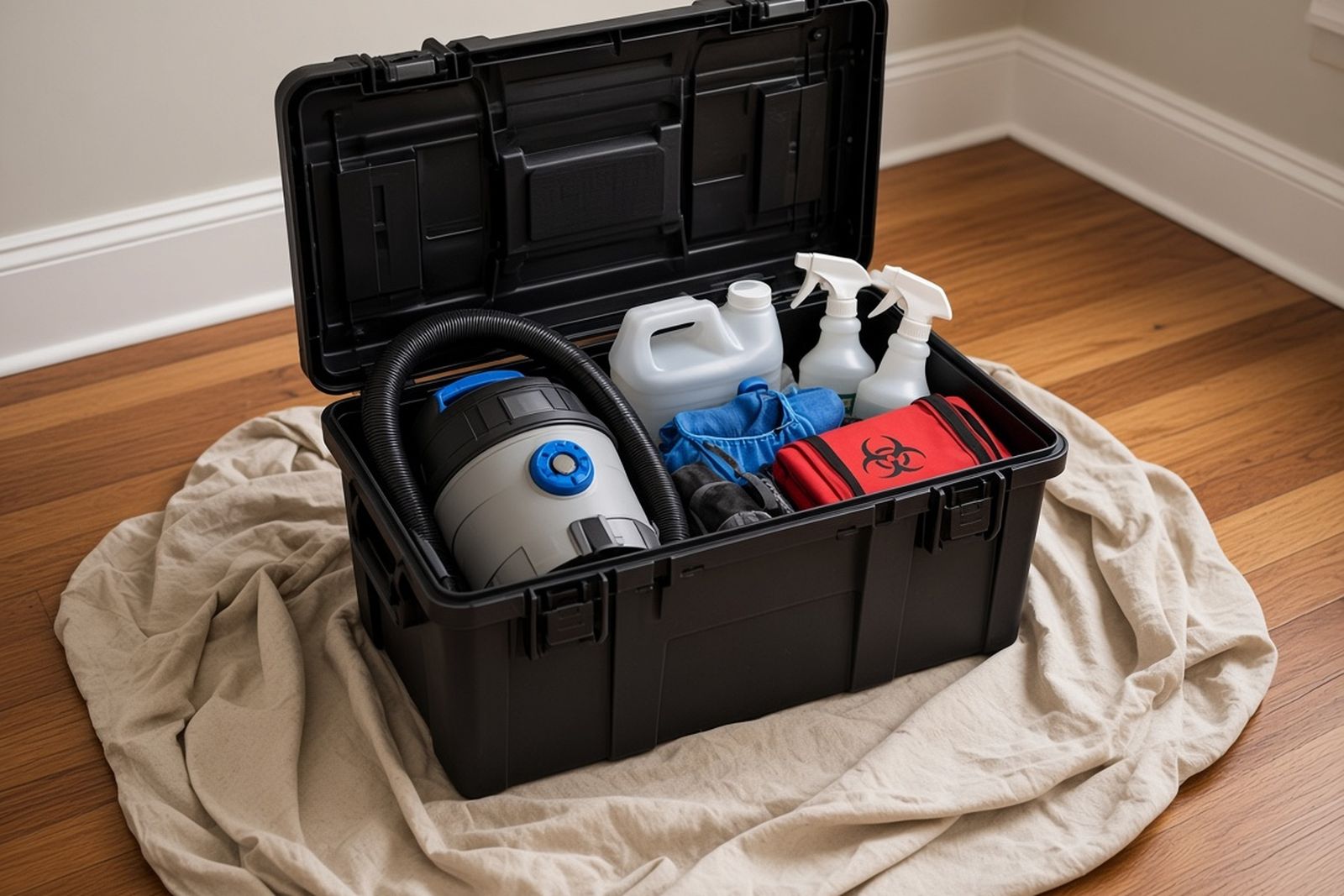
Open equipment case on a drop cloth holding a HEPA vacuum, disinfectant jugs, spray bottles and red biohazard bags

Facts worth knowing

  • Crime scene and after-death cleanup is usually billed at $400 to $600 per hour, according to a 2025 cost guide from Fixr.

    Why it matters: Local prices vary widely, so ask for a written estimate with the hourly rate and expected hours before you agree.

    Source: Fixr, 2025

  • In a UK survey of adults bereaved in 2020, 56% of those who sought help from bereavement services had trouble getting it.

    Why it matters: Support can be hard to reach, so you may need to ask more than once or try more than one service.

    Source: Harrop et al., 2021

  • Eligible crime victims in California can get up to $70,000 in total repayments for crime-related costs through the state's victim compensation board.

    Why it matters: Cleanup has its own lower limit within this total, so ask the program which of your costs qualify.

    Source: California Victim Compensation Board (CalVCB), 2022

Tools that help right now

What would you do?

Poll results

Vote to see how other people answered. You can change your answer at any time.

Your experience

What was the hardest thing to figure out in the first day after the scene was released?

Be the first to vote
General

Which type of incident brought you to this topic?

Be the first to vote

Need help in Palm Beach?

Send a short message about the property to the follow-up inbox. A coordinator can reply by email with next steps.

Your request is sent to the follow-up inbox. A coordinator can reply by email.

If anyone is hurt or in danger, call 911 first.