Arlington, VA

Hoarding Scene Cleanup Planning in Arlington, VA

What to do, who to contact, and what to ask in Arlington.

Arlington, VA hoarding cleanup help: open bedroom paths, book the dock and freight elevator, track key fobs, and keep the tenant or owner in charge.

Get an email reply about hoarding scene cleanup

Send a short message to the follow-up inbox. A coordinator can reply by email. This form does not send emergency help; call 911 first if anyone is in danger.

Tell us what you need help with. Share a short description; please leave out medical details, access codes, and other sensitive information.

A request does not confirm a booking. For immediate danger, contact local emergency services.

Or email info@roombyroomrecovery.com

The short answer for Arlington, VA

Most Arlington cleanups happen in towers along the Metro, where the building controls the dock, the elevator, and the key fobs. Your first task is an open path out of every occupied bedroom. After that, ask management for its written move rules, and make sure the tenant or owner decides what stays. Arlington's public health pages can answer questions.

What to do, step by step

  1. 1

    Start in every bedroom and head for the door

    Start in every bedroom that's in use and head for the apartment door. Then walk to the booked freight elevator, a padded passenger elevator, or the walk-up stairs. Take pictures where you can't get through. Smoke alarms buried under paper get uncovered. An open entry hall helps little if your relative's bedroom is still boxed in. Settle the route your bags will take before the most packed rooms are opened.

  2. 2

    Book dock time around the Orange and Silver Lines

    Bags are filled in your unit and moved only when the dock is yours. A rush at the Metro can take away the freight elevator slot you wanted. Have a second slot or loading spot on paper before any bag heads down. The package room stays off the route. Neighbors on your floor only need the work hours and which elevator will be in use. Rolling bins should be measured against the narrow service lanes.

  3. 3

    Name who decides and track the key fobs

    Put the name of the person with legal say in writing before the first load heads to the dock. If you're the tenant, that's you. A key fob or master key lets staff in. It doesn't let them throw things out. Albums in dispute are photographed, dated, and boxed. Ask for a log of when fobs are handed out and turned off, for the association's files. Heirs who come by without gloves or a mask can sort albums and leave the nests alone.

  4. 4

    Have nests checked near the wall units and ask for plain words

    Before the dock run, bags are split by where they're going, so your building's trash compactor only gets ordinary trash. Nests are soaked before anyone touches them. That matters most near shared air returns. Hire a licensed pest-proofing company if nesting goes on. Carpet your landlord may need to replace gets noted. The report should claim open bedroom routes and packed special waste, and nothing grander. Don't accept a made-up county clearance stamp. In a corridor tower, perfume doesn't equal clean.

What cleanup is like in Arlington

Think of windy skybridges in Rosslyn, elevator banks in Ballston, dock turntables in Pentagon City, and courtyard walk-ups in Clarendon. In each, your sealed bags ride a booked freight elevator or a padded passenger one. A back bedroom fills up while the lobby still looks ready for a listing. Crowds boarding the Orange and Silver Lines cut down your dock time. In tall buildings, drip pans in the wall units and the air returns of fan-coil units can blow nest dust back into rooms once they're uncovered. That's why a tower job needs its own plan.

Arlington County public health and the Virginia Department of Health can help you with questions about blocked exits and health in the home. County pages explain the property condition topics that boards expect you to know. No department labels residents or chooses what stays. A building super's key ring doesn't let anyone throw out belongings. Check any notice on the official sites. Only someone with legal authority can sign away the belongings.

When a condo is being sold, heirs in DC or Maryland, an estate lawyer, and the board may all want updates from you. Along the Metro line, work moves at a steady pace with modest daily goals. Military papers or albums that relatives argue over wait in dated boxes. Your relative's medicine and walker are bagged together at the start. Rodent droppings are wet first. Dry sweeping would push them into the shared air returns. Your building adds details of its own, like underground walkways in Crystal City, storage cage lockers on Columbia Pike, and the association's key fob records.

Most Arlington cleanups take place in apartment and condo towers. They line the Metro from Rosslyn to Ballston and from Pentagon City to Crystal City. In those towers, the building sets dock times, pad rules, and insurance needs for any crew you hire. Older garden apartments and single-family streets in north and south Arlington use curb or driveway loading. Ask management for its written move and vendor rules early, and keep them in your property file. Arlington County can answer permit and disposal questions.
What to expect for your type of home

  • Rosslyn and Ballston towers: Before keepsakes come out, make sure people can walk from each bedroom and bathroom to the unit door. Ask the crew to protect the shared halls.
  • Pentagon City and Crystal City buildings: Get the building's move-out rules before the first dock booking. Ask how temporary key fobs for the crew will be handed out and logged.
  • Clarendon courtyard walk-ups: Bags go down the stairs here. Ask for a way down that fits your real building, and never let unsorted debris sit on exit stairs.
  • Garden apartments along Columbia Pike: Storage cages can hide paint and needles. Have the cage gone through on a different day than your unit, so nothing gets mixed.
  • Single-family streets in north and south Arlington: Loading happens at the curb or driveway. Tell the company so it doesn't arrive with a plan built for a tower dock.
  • Older garden apartments and houses: Floors can flex under heavy stacks. Cracked drywall or a sticking door is the sign to stop in that room.

Papers and records to keep

  • The tenant's or owner's signed sorting rules, with a copy for management
  • Bedroom-path and freight-route photos, taken before and after
  • The association's notes on hours, floor covers, dumpsters, and temporary key fobs
  • A signed list of the sealed tote: prescriptions, IDs, devices, and lease papers
  • A dock run log showing what left your building and where it went
  • Nest notes from walls near the wall units or shared air returns
  • A record of the boxed albums and military papers on hold
  • Management's written move rules and dock times for your building, plus open repairs

Local offices and official help

Common questions in Arlington

Why open the bedroom route before we sort keepsakes in a Rosslyn tower?

Because firefighters and EMTs in a Rosslyn or Ballston high-rise come up by elevator and need to reach your relative fast. A blocked bedroom or bathroom slows them down when it matters most. Those routes open first. The hallway to the service elevator stays clear too. Keepsakes can wait until the unit is safe to move through.

How does Metro rush hour change loading at a Pentagon City dock?

It makes the dock and curb harder to use. Around Pentagon City and Crystal City, rush-hour Metro crowds and heavy street traffic get in the way. Ask management for mid-morning or early afternoon dock times, and agree on a backup slot. Bags move quickly from the elevator to the truck, covered. They should never sit in the lobby, at the elevator landing, or in a garage drive lane.

Can our building manager decide what leaves my mother's unit?

No. Property management can let crews into a unit and set building rules. Only the tenant, the owner, or someone with legal authority over the belongings can approve what's thrown away. Family pieces in dispute should wait in dated boxes. Medicine is always packed first. If the lease doesn't make authority clear, pause those items until it's settled.

How should key fobs for the crew be tracked?

In writing. Many Arlington buildings use key fobs for entry, and a crew may need temporary ones during a cleanout. Ask for a record of when fobs were handed out and returned. Keep it with the freight elevator bookings and the before and after photos of your unit. That shows management that access was handled properly. A fob is only a way in.

Why check the wall heating and cooling units after a high-rise unit is cleared?

Because they can spread what was just cleaned up. Many high-rise units use heating and cooling units set in the wall, called PTACs, or shared return vents. If fans run while piles are moved, dust and droppings can get pulled in and blown back into clean rooms. Ask for the units to be off during heavy work when possible. Filter changes go on your follow-up list.

My son has fallen behind on keeping his apartment clean. How do we help?

Start with the basics, and leave blame out of it. Arlington has many young professionals living alone, and busy jobs, stress, or depression can let things pile up. Help him clear the path to the door, empty the trash, and clean the kitchen and bathroom. Small steps count. A counselor or therapist can help with the stress underneath. Many employers offer private support programs that make a good first stop.

What about pest control in the building afterward?

Ask management to schedule treatment for the unit and, if needed, the ones next to it. In apartment buildings, pests move easily between units through walls, pipes, and hallways. Seal food in containers and keep the trash emptied. Report any new signs quickly. Management usually arranges building-wide treatment. Your part is keeping the unit clear enough for it to work.

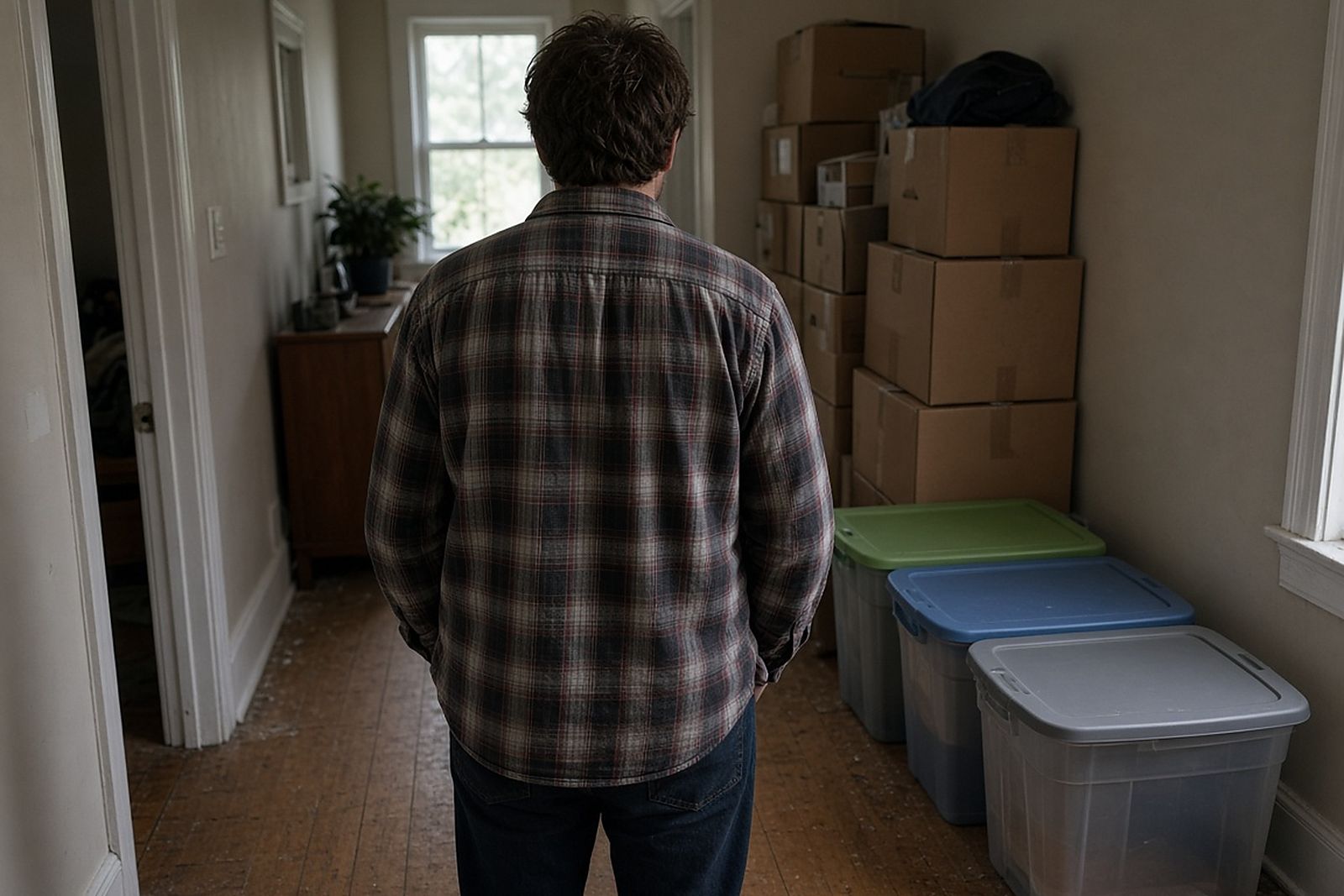
Person seen from behind in a hallway beside stacked boxes and three colored sorting bins
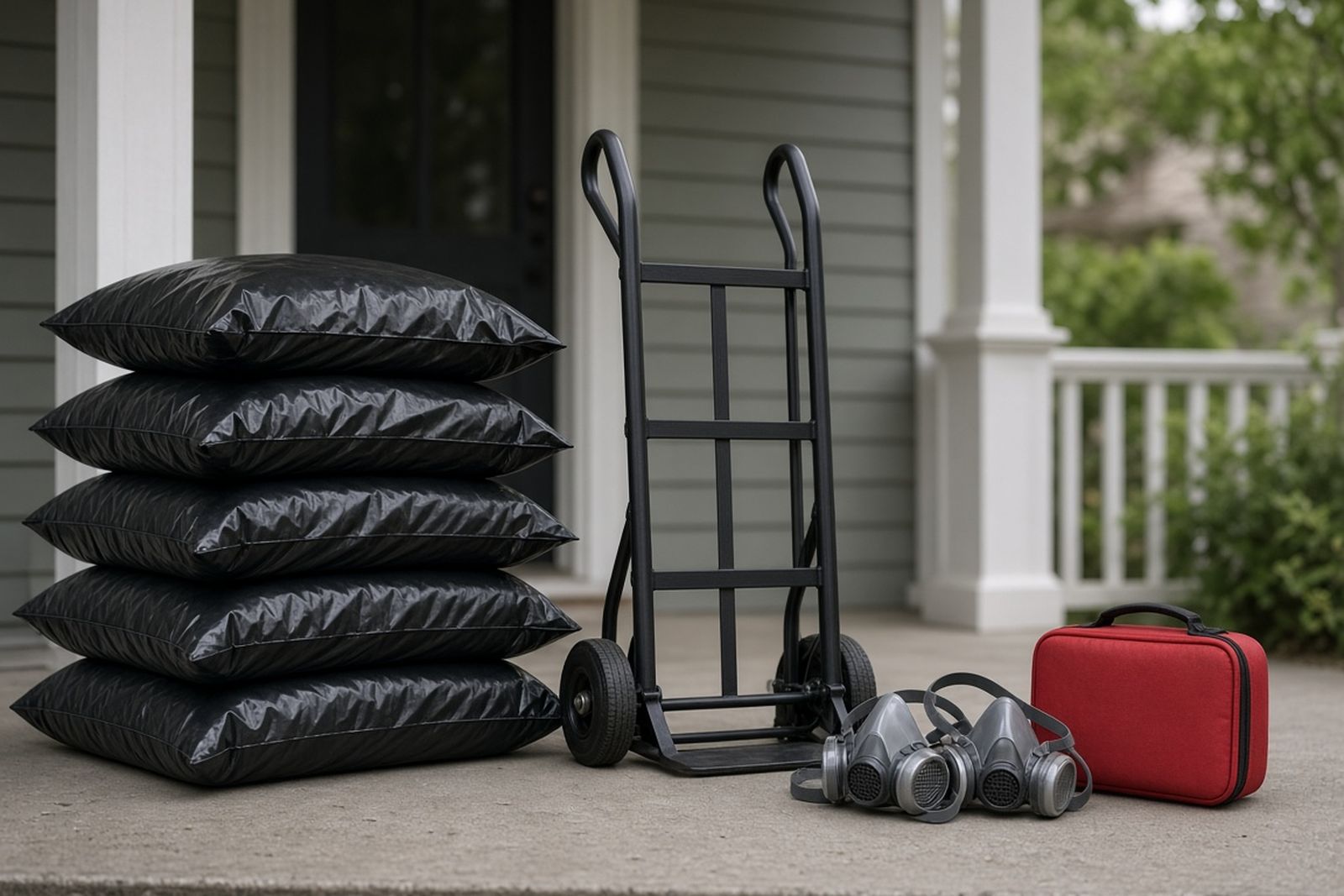
Contractor bags, a hand truck, respirators and a first-aid kit staged on a porch

Facts worth knowing

  • In a large online survey about hoarding, 0.1–3.0% across groups reported that a child or older adult had been removed from the home.

    Why it matters: It is uncommon, but if children or older adults live in your home, making it safe for them should come first.

    Source: Tolin et al., 2008

  • At one New York City eviction-prevention group, 20% of the 25 clients with hoarding said they had been evicted before.

    Why it matters: Eviction over hoarding does happen, so take your landlord's written warnings seriously and keep copies of them.

    Source: Rodriguez et al., 2012

  • In a small UK interview study published in 2022, some bereaved families said they were given less than one week to clear the home.

    Why it matters: Ask the landlord or housing office early what the clearance deadline is, and whether you can have more time.

    Source: Hansford et al., 2022

Tools that help right now

What would you do?

Poll results

Vote to see how other people answered. You can change your answer at any time.

Your experience

If a relative's home had become unsafe, what would be your first step?

Be the first to vote
Process

How much control should the occupant keep over what leaves the home?

Be the first to vote

Need help in Arlington?

Send a short message about the property to the follow-up inbox. A coordinator can reply by email with next steps.

Your request is sent to the follow-up inbox. A coordinator can reply by email.

If anyone is hurt or in danger, call 911 first.