Cambridge, MA

Hoarding Scene Cleanup Planning in Cambridge, MA

What to do, who to contact, and what to ask in Cambridge.

Cambridge, MA hoarding cleanup help: clear bedroom routes first, seal loads for stairs or elevator, and keep landlord letters and consent on file.

Get an email reply about hoarding scene cleanup

Send a short message to the follow-up inbox. A coordinator can reply by email. This form does not send emergency help; call 911 first if anyone is in danger.

Tell us what you need help with. Share a short description; please leave out medical details, access codes, and other sensitive information.

A request does not confirm a booking. For immediate danger, contact local emergency services.

Or email info@roombyroomrecovery.com

The short answer for Cambridge, MA

In Cambridge, a cleanup has to work around bike lanes, the Red Line, and neighbors on shared stairs. Start by clearing a way out of every bedroom that's in use. Then have loads sealed before they go down the stairs or elevator, and keep the landlord's letters on file. The city's own health department can answer your questions.

What to do, step by step

  1. 1

    Walk from each bedroom to the stairs or elevator

    From each bedroom in use, walk to your unit door, and then to the stairs or freight elevator. Take photos where you can't get through. Smoke alarms get uncovered. Stacks that lean into the hall are eased back. A tidy bay window doesn't prove there's a way out at the back. Tell the company whether you're in a walk-up or an elevator building, so its file matches yours. That matters most near Kendall, where freight elevators are in plain view.

  2. 2

    Time the loads around bikes and the Red Line

    Loads are sealed inside your flat. They then move in written time slots that respect bike rush on Memorial Drive, tourist loading in Harvard Square, and Red Line boarding. Use a freight elevator if your building has one. If not, the passenger elevator can be padded at quieter times near Porter or Central. Ask for a backup handoff in case Volpe fencing or Alewife overflow takes the curb. The mailroom stays off the route.

  3. 3

    Get the landlord's letter and name the signer

    Name the legal signer before any cart rolls. A roommate's key or the super's key ring opens doors, and that's all. Medicine and student or work IDs go straight into a zip pouch. Lab notebooks in dispute go into dated trays with photos. Friends pitching in without protective gear should keep away from nests. Log each disputed item that's let go, with the date and time, so your landlord or a later sublet can't raise doubts.

  4. 4

    Ask for a report without lab language

    Trash, recycling, giveaways, needles, and cleaners each go in separate bags. Any nest is dampened before it's moved, as health officials recommend. The report you get should be modest. It says your bedroom routes are clear and any held items are boxed. Don't accept a made-up city stamp. And no one should claim lab-grade sterilizing for your apartment just because it sits next to a biotech sidewalk.

What cleanup is like in Cambridge

Cambridge homes include Porter Square wood-frame walk-ups, Inman Square mixed flats, rentals near Fresh Pond, and Cambridgeport flats. There are also elevator buildings toward Kendall and Alewife. All of them share curbs cut up by bike lanes, loading zones, and Red Line rush hours. Rooms near the river stay clammy under boxes after the spring melt. Windows sealed for winter trap odor in back bedrooms. Lab-group sublets and postdoc turnover squeeze your calendar, and basement storage cages mix solvents with paper. You may share a sidewalk with a research campus, but your stairway isn't a lab.

Cambridge runs its own public health department. It and the city's inspection staff are a first stop for both landlords and tenants. The Massachusetts Department of Public Health adds statewide advice. Neither office labels anyone or chooses what stays. Your building super's ring of keys doesn't let anyone throw out a tenant's things without proper written authority. If you get a notice, check it against the City of Cambridge's own website. Only the person legally responsible for the belongings can let them go.

Roommates, families who speak several languages, and heirs far away often clash over lab notebooks and immigration files. A gentle pace sets small daily goals for you. Ask for dated trays for photos, disks, and drives you disagree about. Prescriptions and ID cards go into a secure pouch on day one. In a small flat, droppings are sprayed and wiped, never swept dry. Your block shapes the loading hours as well. Kendall biotech sidewalks, Memorial Drive bike rush, tourist curbs in Harvard Square, construction fences at the Volpe site, and overflow from the Alewife garage all change them.
What to expect for your type of home

  • Porter Square wood-frame walk-ups: Floors in older frames can feel springy under paper. Cracked plaster or a sticking door means that room should wait for now.
  • Elevator buildings toward Kendall and Alewife: Ask whether you'll get a booked freight elevator. Your neighbors across the courtyard can see the loading, so ask for covered loads.
  • Cambridgeport and Inman Square flats: Stairs are shared here. Ask the crew to cover the handrails, and never to leave an unsorted load on the exit stairs.
  • Rentals near Fresh Pond: Ask your landlord which hours and entrances the crew may use. Get the answer in writing, so nobody argues about it on moving day.
  • Buildings with basement storage cages: Solvents and needles turn up next to paper. Ask that they be kept apart from living-room paper and from any lab notebooks.
  • Flats near the river: Walls can stay clammy after the spring melt. Ask for a wide path from each bedroom to the door first, then for damp spots to be noted.

Papers and records to keep

  • A letter from the signer approving what is kept, given away, let go, or held
  • Photos of the bedroom paths leading to your stairs or freight elevator
  • Your landlord's or condo's notes on hours, floor covers, and elevator pad rules
  • A list of what's in the secure pouch: prescriptions, ID cards, and devices
  • A plain record of where each bag from your Cambridge flat went
  • Notes on rodents and clammy spots found along walls near the river
  • A dated list of the trays holding binders and lab notebooks in dispute
  • What still needs fixing in the flat, written up for your landlord

Local offices and official help

Common questions in Cambridge

How do bike rush and Red Line crowds change moving bags to the curb?

They cut the time your crew can legally stage there. Bike rush on Memorial Drive, tourist loading in Harvard Square, and Red Line boarding all take a share. Loads get sealed inside. Pick quieter times near Porter or Central, and have a backup handoff written down before bags leave your unit. Nothing should drift into a traffic lane or past the Volpe fencing. Ask for a photo of the limit for your file.

Why set lab notebooks aside so early?

Because they're easy to lose in a pile. Many Cambridge households include researchers and students, and stacks of paper may hold lab notebooks, unpublished work, immigration papers, or IDs mixed in with junk mail. Have these set aside early in labeled boxes, so you or the heirs can look through them. If a notebook belongs to a university lab, the lab or department may need it back.

Can my roommate decide to throw out my things in our Cambridgeport flat?

Usually not. A key to a shared Cambridgeport flat gives a roommate access. It doesn't give them the right to throw away your things. Written approval has to come from the person the items belong to, or from someone with legal authority over them. If the lease is unclear, disputed items get set aside until it's sorted out. A building manager or landlord can help with logistics, and no more.

Our neighbors work in labs. Should the building notice say "decontaminated"?

No. Some neighbors work near Kendall Square, where strict cleaning rules apply, and it's tempting to borrow that language. But an apartment cleanout has other goals: clear exits, hazards removed, and clean surfaces. A building notice should say only when the work will happen. Words like "sterilized" or "decontaminated" can mislead your neighbors and a future landlord.

What belongs in our file when the flat is done?

Start with signed approval from the tenant or owner. Add two dated pictures of each bedroom route, one from the first day and one from the last. Include notes on how the stairs and halls were protected, a record of what left and where it went, and a list of repairs still needed. Keep it factual and leave out personal details. A receipt for air fresheners isn't proof of cleaning. Counseling, including through a university, is separate.

Does the September 1 lease turnover matter?

Yes, plan around it if you can. Many Cambridge leases end on September 1. Streets fill with moving trucks, loading zones and parking get scarce, and trash and bulky items pile up on sidewalks across the city. If you can't avoid that date, reserve a truck well ahead. Ask the city whether you need a temporary no-parking sign for your block.

I'm a grad student and my apartment has gotten away from me. Where do I start?

Start with safety. Clear the path from your bed to the door, and make sure you can use the kitchen and bathroom. Busy school and lab schedules let apartments fill up with papers, books, and lab materials, and it happens to many people. Put your research files in labeled boxes. If you feel overwhelmed, university counseling services can offer support. A professional organizer or cleaning company can help with the physical work.

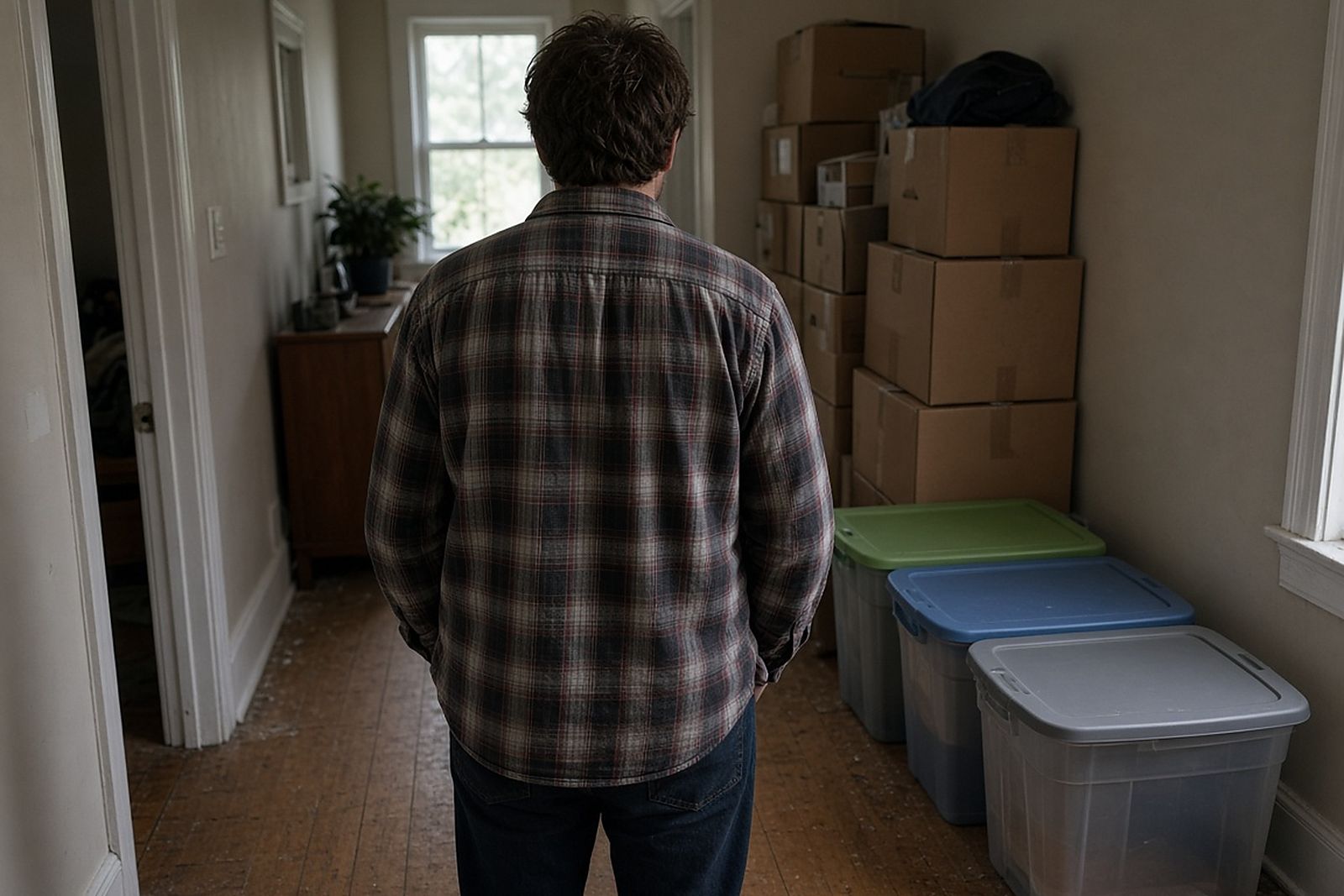
Person seen from behind in a hallway beside stacked boxes and three colored sorting bins
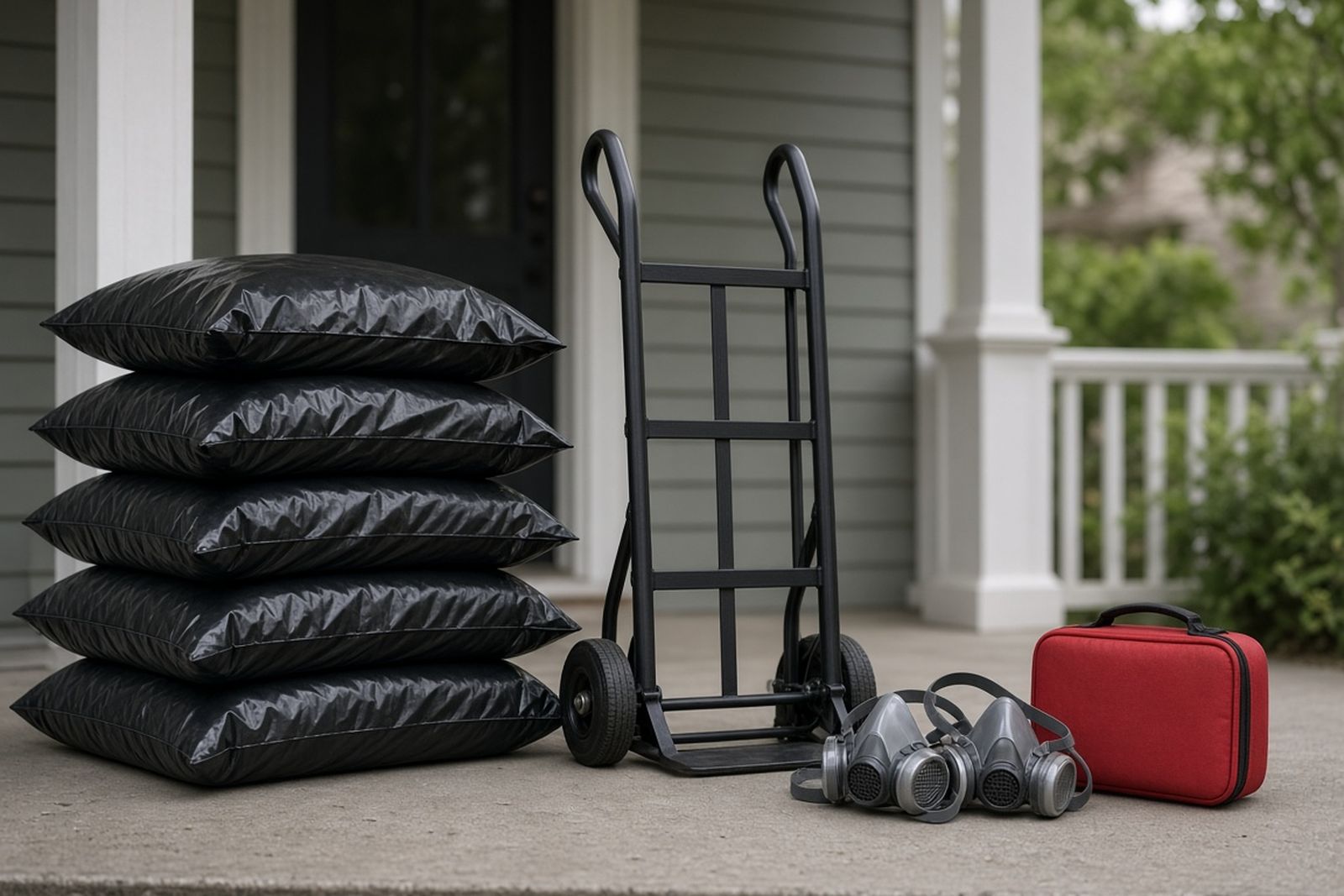
Contractor bags, a hand truck, respirators and a first-aid kit staged on a porch

Facts worth knowing

  • In focus groups with 17 English housing, health and care professionals, participants said forced clear-outs were traumatic for some residents.

    Why it matters: A forced clear-out can do harm, so you may want a company that works at the person's pace where safety allows.

    Source: Haighton et al., 2023

  • In one online survey of 864 people who hoard, 8 to 12% had been evicted or threatened with eviction because of it.

    Why it matters: If you rent, hoarding may put your housing at risk, so starting cleanup before a landlord notice arrives may help.

    Source: Psychiatry Research (Tolin et al.), 2008

  • At one New York City eviction-prevention group, 20% of the 25 clients with hoarding said they had been evicted before.

    Why it matters: Eviction over hoarding does happen, so take your landlord's written warnings seriously and keep copies of them.

    Source: Rodriguez et al., 2012

Tools that help right now

What would you do?

Poll results

Vote to see how other people answered. You can change your answer at any time.

Your experience

If a relative's home had become unsafe, what would be your first step?

Be the first to vote
Process

How much control should the occupant keep over what leaves the home?

Be the first to vote

Need help in Cambridge?

Send a short message about the property to the follow-up inbox. A coordinator can reply by email with next steps.

Your request is sent to the follow-up inbox. A coordinator can reply by email.

If anyone is hurt or in danger, call 911 first.