Weston, MA

Hoarding Scene Cleanup Planning in Weston, MA

What to do, who to contact, and what to ask in Weston.

Weston, MA hoarding cleanup help: clear a way out of the house and barn loft, keep bins off the septic field, and wait for the estate's signer.

Get an email reply about hoarding scene cleanup

Send a short message to the follow-up inbox. A coordinator can reply by email. This form does not send emergency help; call 911 first if anyone is in danger.

Tell us what you need help with. Share a short description; please leave out medical details, access codes, and other sensitive information.

A request does not confirm a booking. For immediate danger, contact local emergency services.

Or email info@roombyroomrecovery.com

The short answer for Weston, MA

On Weston acreage, the person you're worried about may sleep in a barn loft or tack room apartment, not the main house. Find every bed in use and make sure each has a way out. Then ask where a bin can sit without harming the septic field or well, and wait for the estate's signer before anything leaves.

What to do, step by step

  1. 1

    Find every bed and walk its way out

    From each place someone sleeps, whether your main house, a barn loft, or a tack room apartment, walk to its outside door. Then follow the gravel lane under the maples, past the stone walls, to the road. Take photos where you can't get through. Have the smoke alarms uncovered. Leaning stacks get eased back. Tree cover and Chapter 61A meadow edges hide your house from the street, but they aren't exits. A cleared front hall doesn't prove anyone can reach the loft bathroom.

  2. 2

    Pick a pad that spares the septic field and well

    Bags are tied inside and carried out only when your driveway is clear enough for a fire engine to pass. Soft road edges, septic field setbacks, well heads, and propane cages can wipe out the spot you wanted for the dumpster. Ask for a shuttle plan ahead of time. Open piles shouldn't sit out overnight for deer, or at all during tick season. Neighbors on your private lane only need to know when trucks will come through. Get a photo of each limit for your property file.

  3. 3

    Name the signer for the trust

    Name the legal signer before any cart rolls. Your groundskeeper's key ring grants entry and nothing more. Medicine and ID are locked away first, without discussion. Barn tools, keepsakes, and money binders in dispute go into dated review bins. Distant heirs look at photo sets by a deadline you set. No answer means the item is held. Helpers who lack masks and gloves can photograph tools. They shouldn't touch nests in the barn or cellar.

  4. 4

    Have barn waste handled and get a clear report

    Barn fuel and bug killers get their own containers, apart from your trash, recycling, and donations. Barn and cellar nests are soaked before they're lifted, and the emptied rooms are cleaned. Ask the crew to note any low, wet ground near the house that may be feeding basement damp. The report you want is short. Every building someone uses has a clear exit, and the hazards are gone. Repairs are a separate matter, and they belong on their own list.

What cleanup is like in Weston

Long lanes under maple trees near the Case Estates meadows, kettle-hole wetlands, and land beside conservation areas can hide where someone really sleeps. It may be a barn loft, a tack room apartment, or an unused carriage loft, while your front hall still looks neat from the road. Hauling gets hard on one-way gravel drives and soft road edges. Septic field and well setbacks limit where your bin can go, and open piles draw wildlife. Fallen leaves hide nests against the foundation, and heating oil rooms sit next to tunnels of paper. These are year-round problems, so plan for them in any season.

Weston's town website and the state health department cover local contacts and questions about wells and septic systems. No agency will label the person who lives there or sort belongings for you. Your groundskeeper's key doesn't let anyone throw out trust property. He can arrange the dumpster. He can't decide about your family's papers. That stays with the person who lives on the land, when they're able, and with the signer named in the trust or estate papers. Tell the company who that is at the start.

Sibling signers, heirs in other states, and lawyers often disagree about barn tools, hunting keepsakes, or decades of paper files. Work room by room, sort at tables in the house, and give faraway relatives photos and a deadline. A small lockbox holds your relative's medicine and ID from the start. Droppings get misted with water first. When you pick a spot for the bin, think about Chapter 61A meadow edges, buffers around vernal pools, and wildlife paths along the stone walls. Propane cages, woodstove ash bins, and the space around your well head matter too.
What to expect for your type of home

  • Main houses on maple acreage: Gravel lanes and soft road edges limit the truck. Ask for a dumpster sized to fit the lane, the septic field setbacks, and the space around your well head.
  • Barn lofts: If anyone sleeps up there, put the loft on the first walk. Old loft floors can sag, so ask the crew to stop wherever boards bow.
  • Tack room apartments: These need the same care as a bedroom in the house. Ask for paths to the bed and bathroom to be opened before any big day of sorting barn tools.
  • Farmhouses with old floors: Years of paper are heavy. If a door starts to stick or a board bows, that room should wait until someone qualified has looked at it.
  • Barns and sheds with fuel: Generator fuel, heating oil, and bug killers stay apart from living-room paper. Ask who will take them and how they'll be logged.
  • Lots that back onto meadows or woods: Deer and ticks are part of life here. Ask for loads to stay sealed indoors until a short move to the pad.

Papers and records to keep

  • The trustee's written approval for the barn and house contents
  • Exit photos for the main house, plus any loft or tack room with a bed in use
  • Notes on the gravel-lane pad: soft edges, septic field, well head, and propane limits
  • A list of what's in the lockbox, starting with medicine and ID
  • A record of the barn chemicals, fuel, and household waste removed from your land
  • Notes on nests and kettle-hole damp found along walls near the foundation
  • A list of review bins, with times, for heirs who live far away
  • The contractors to call after the work, listed building by building

Local offices and official help

Common questions in Weston

Why check the barn loft and tack room before we sort the old tools?

Because a tidy front hall can hide the fact that someone sleeps up in the loft. Paramedics on a long gravel lane lose precious time if the person they need is behind a blocked door, in the house or in the barn. Ask for photos of the house, the loft, and any cottage, both blocked and cleared. Smoke alarms get uncovered early. The tools will still be there next week.

How do the septic field, well, and propane tank change where the dumpster goes?

Setbacks and soft road edges can wipe out the spot you had in mind, so measure before hauling day. Check the limits through official local channels and your own property file. If there's no safe spot for a large bin, ask about pickup truck runs to a smaller container by the road. The fire truck path stays clear. Everything stays sealed inside, so wildlife never gets into open piles along your lane.

Can our groundskeeper get rid of barn tools and trust belongings?

No. Approval to discard has to come in writing from the legal signer, never from a caretaker alone. Keys only give access. Tools and keepsakes in dispute go into dated review bins. Whatever your family decides about them, the medicine and IDs stay in the lockbox. When it's unclear who chooses, hold those items until the estate lawyer makes it clear.

The company mostly works at beach rentals. Will its plan fit Weston acreage?

Probably not without changes. A weekend beach compound deals with dune pads, catering trucks, and guest turnovers. Your maple acreage deals with gravelly glacial soil, septic field edges, and kettle-hole damp. It may also have someone sleeping in a loft, deer nosing into open piles, and ticks. Ask the company to measure the real pad against your well head and propane cage, and to plan the loft apart from the tack room.

When is a Weston clear-out really finished?

It's finished for safety when every building someone uses, including a barn apartment or guest cottage, has a clear way out. Bathrooms work, and fuel and bug killers are gone. Your property may still need floor repairs, mouse-proofing, or basement drying before it feels comfortable. Keep dated photos for each building. If your relative is struggling, their doctor or therapist is the right person for that part.

How does winter change things on our lane?

Snow, ice, and spring mud can make Weston's long gravel drives hard for heavy trucks. A dumpster placed in winter may freeze to the ground or block the plow. Plan your big hauls for dry weather, and keep the drive open for emergency vehicles. Sorting inside the heated house can go on all winter. Have the walkway from the door to the loading spot salted and sanded.

What do we do with the tractor, mowers, and old tools in the barn?

Get written approval before any equipment is sold or removed. Barns and sheds on larger Weston properties may hold tractors, mowers, antique tools, fuel, and fertilizer. Fuel and chemicals need proper disposal. Working equipment may be sold or donated, and antique tools may be worth something to collectors. Ask for the larger items to be photographed and listed for the person who signs.

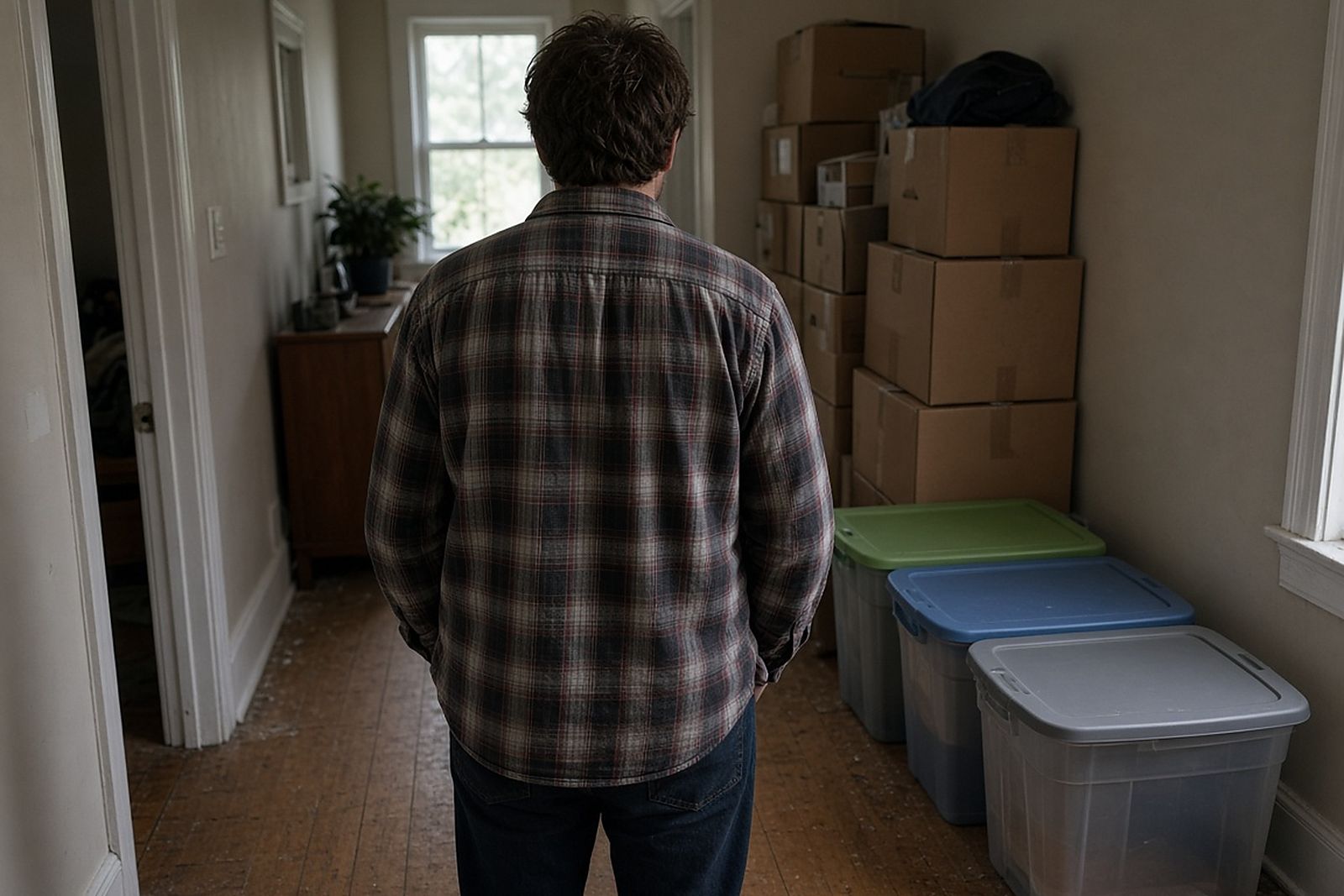
Person seen from behind in a hallway beside stacked boxes and three colored sorting bins
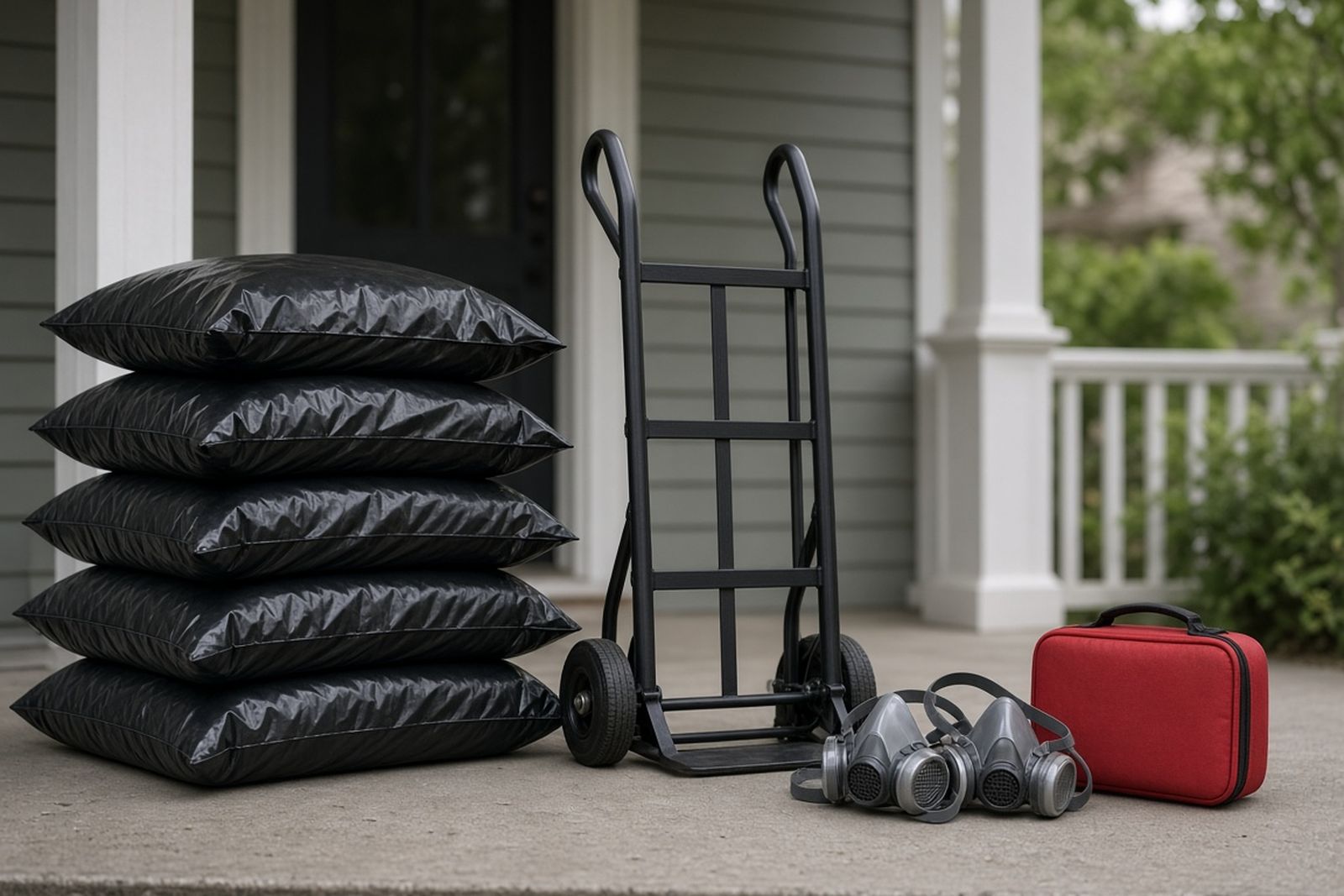
Contractor bags, a hand truck, respirators and a first-aid kit staged on a porch

Facts worth knowing

  • At one New York City eviction-prevention group, 32% of the 25 clients with hoarding were in legal eviction proceedings at the time.

    Why it matters: Hoarding can put a tenancy at risk, so if you get a notice, act quickly and ask for help before a court date.

    Source: Rodriguez et al., 2012

  • In one English council's 38 recorded hoarding cases in 2021, 34% were noted as a fire and environmental risk.

    Why it matters: Ask that your cleanup starts with exits, walkways and areas near heat sources, where fire risk may be highest.

    Source: Porter et al., 2022

  • In a small study of 14 adults in a nine-month case-management program, those who finished reported only a modest drop in hoarding severity.

    Why it matters: Expect slow progress, and plan for ongoing support for your relative or tenant rather than a quick fix.

    Source: Millen et al., 2020

Tools that help right now

What would you do?

Poll results

Vote to see how other people answered. You can change your answer at any time.

Your experience

If a relative's home had become unsafe, what would be your first step?

Be the first to vote
Process

How much control should the occupant keep over what leaves the home?

Be the first to vote

Need help in Weston?

Send a short message about the property to the follow-up inbox. A coordinator can reply by email with next steps.

Your request is sent to the follow-up inbox. A coordinator can reply by email.

If anyone is hurt or in danger, call 911 first.