Washington, DC

Hoarding Scene Cleanup Planning in Washington, DC

What to do, who to contact, and what to ask in Washington.

Washington, DC hoarding cleanup help: clear bedroom exits first, seal bags before the alley, check dumpster permits, and keep the owner's written say.

Get an email reply about hoarding scene cleanup

Send a short message to the follow-up inbox. A coordinator can reply by email. This form does not send emergency help; call 911 first if anyone is in danger.

Tell us what you need help with. Share a short description; please leave out medical details, access codes, and other sensitive information.

A request does not confirm a booking. For immediate danger, contact local emergency services.

Or email info@roombyroomrecovery.com

The short answer for Washington, DC

In a District row house or co-op, you share walls, alleys, and trash rooms with your neighbors, so a cleanup takes care and timing. Step one is a clear exit from every bedroom that's slept in. After that, have bags sealed before they reach the alley, and gather the letters your co-op board will ask for. DC Health and FEMS post advice you can check.

What to do, step by step

  1. 1

    Walk from each bed to the alley or elevator

    From each place someone sleeps, including a home on an alley, walk to the unit door. Then walk to the alley entrance, the trash chute, or the booked freight elevator. Take pictures where you can't get through. Smoke alarms buried under paper get uncovered. In a narrow row-house hall, leaning stacks should come down a few boxes at a time, so they don't topple onto the stairs. A clear front room doesn't help if the path to your back bedroom is still blocked.

  2. 2

    Time loads around Metro rush and trash days

    Bags get filled inside and carried to the alley only on collection day. Boarding rushes and trash set-out times can take away the stoop or gate you planned to use. Settle on a fallback gate or curb spot before any bag leaves your flat. Your row-house neighbors only need the work days and alley times. Have the alley measured before you order a dumpster, since many are too narrow for a standard one. The package room stays off the route.

  3. 3

    Gather what the co-op board needs and seal the essentials

    Your super's keys open doors. They don't decide what goes. Ask the owner, the co-op shareholder, or the estate's representative to put that in writing. Pills and ID are packed away first, before any sorting. Family members without gloves and masks should keep clear of rat and mouse nests. Keep a dated record of each disputed item, since probate or your co-op board may ask to see it later. The board sets building rules. It has no say over what's inside your home.

  4. 4

    Have shared walls checked and special waste sorted

    District trash and recycling go out on set days, so bags are sorted by type inside, with needles and chemicals in their own containers. Where a shared wall is damp, the crew checks for nests and wets them down before removal. Rats move along District alleys and party walls. If they're still active once your house is clear, call a licensed pest company. Stained subfloor and damp plaster go to a separate contractor. Expect your row house to be described as passable and free of hazards. Don't expect "renovated."

What cleanup is like in Washington

Railroad flats on the parlor floor near Eastern Market, co-op shares in Dupont, and small homes on alleys can hide a blocked back bedroom behind a tidy front. Shared walls let odor and pests pass between your home and the next one. A vault under the stairs or a trash room chute can serve as a back route that never touches your front hall. Red Line boarding, school dismissals, and alley trash times cut the time you have to move things. Mid-Atlantic dampness swells boxes against plaster, and storm windows trap stale air in closed dens.

DC Health and FEMS can help you with questions about blocked exits, things that could burn, and health in the home. DOEE covers waste topics that many boards already expect you to know. None of those offices labels people or sorts their things. Your super's key ring doesn't give anyone the power to throw things out. Only the person with legal authority over the home can approve discards, and that approval should be in writing.

When a District home is being sold, relatives in other states, an estate lawyer, and a co-op board may all be waiting on you. Go slowly anyway. Sort at tables inside, and crate service medals, immigration records, or photo albums in dispute, with dates. On the first visit, gather your relative's medicine, glasses, ID, and cane into one sealed box. Rats are common in District alleys, so droppings get soaked with disinfectant and never swept. Once the home is cleared, plaster work, floors, and rat-proofing each go on your list as a separate job.

District cleanups reach well beyond Capitol Hill and Dupont. Your home might be an alley mews in Navy Yard, a walk-up along the H Street corridor, or a Georgetown house with a basement near the canal. It might have stacked porches in Petworth, or sit by the freight docks on the Southwest waterfront. Each one changes how your bags leave and how long the work takes. Tell the company your neighborhood and building type in the first call, and ask whether it has worked on a block like yours.

District row houses bring their own limits. Many have no driveway, so loading happens from the street or a back alley. Alleys in Capitol Hill, Shaw, and Petworth can be too narrow for a large truck. A dumpster on public space may need a permit from the city's transportation agency, so check with the District before you book one. Co-op and condo buildings add board rules about elevator time and weekday hours. Write these limits into your property file, and take any permit or fine question straight to the District government.
What to expect for your type of home

  • Capitol Hill row houses: Halls are narrow and there's often one staircase. Ask for a wide path from each bedroom to your unit door before any keepsakes are pulled.
  • Dupont and Columbia Heights co-ops and condos: Move hours can be strict. Get them from management first, along with the rules for the trash chute and freight elevator.
  • Alley homes: Bags may leave through a narrow gate. Have the gate measured before the company picks a way out. Ask what size truck fits your alley.
  • Row houses with a vault under the stairs: That vault can hold fuel, solvents, and needles. Have it looked through on its own pass, well before the parlor papers are bagged.
  • Homes with shared stairs: Your neighbors climb them all day. Ask the crew to protect the stairs, and never to leave unsorted debris where people need to get out.
  • Century-old row houses with heavy stacks: Old floor beams can sag. If a floor dips or plaster starts to crack, ask the crew to stop in that room.

Papers and records to keep

  • A signed go-ahead from whoever owns the row house or co-op shares, or from the estate
  • Way-out photos of your bedroom paths and of the alley or freight elevator route
  • Your managing agent's notes on hours, floor covers, dumpsters, and trash chute rules
  • What the day-one box holds, including any federal ID badge
  • An alley pickup log for your District address, by type and date
  • Party-wall damp and nest findings, written down as each wall was exposed
  • A dated list of the crated medals, records, and albums your family hasn't settled
  • The alley, street parking, and co-op board limits for your address, plus repairs still owed

Local offices and official help

Common questions in Washington

Why reopen the bedroom route before we sort the medals in our Capitol Hill flat?

Because in a narrow row house with one staircase, a blocked upstairs hall can keep paramedics from reaching the bedroom at all. Ask for photos of the stairs and halls, blocked and then opened. Smoke alarms get uncovered early, and leaning piles get steadied. Your back gate and alley path have to stay open too. Drawing the curtains keeps things private, but it doesn't make a blocked house safe.

How do Metro rush hours and alley trash days change loading?

Both affect when your alley or curb is free. Pick loading times outside rush hour and away from collection mornings. Plan a second time in case a delivery or a parked car blocks the first. Loads should be brief and bags covered. Nothing should ever be left in the travel lane or in a front hall you share with neighbors.

Our Dupont super has the keys. Who approves what's let go?

Not the super. A building super or manager can open the door but can't choose what's thrown away. Get written permission from the owner, the estate's executor, or another person with legal authority before anything goes to the alley. Items heirs disagree on should be photographed and set aside in dated crates. If the lease or ownership papers are unclear, wait for a lawyer.

We're in a small alley home. How is that different from a parlor stoop?

In an alley home, sealed bags often have to go through a narrow gate or a shared trash chute. A parlor floor may use a stoop with railings your neighbors climb all day. A stoop plan used in an alley, or the reverse, stops the job cold. Have the company check the width of the stairs and the back gate, pad any shared railings, and bag everything inside.

When is a District row house or co-op really done?

It's done for safety when every bed connects to the stairs and the door, the bathroom can be used, and hazardous items are gone. Comfort may still need plaster repairs, floor work, and rat-proofing along the alley side. Dated photos help your family and any co-op board see what was done. If your relative needs support with their mental health, their own clinicians handle that.

There are rats in our alley. How does that affect the cleanout?

It means bags stay sealed and inside until pickup, since open bags in an alley draw rats. Many DC neighborhoods have active rats, and a cluttered row house can give them food and shelter. Before clearing, look for burrows near the back of the house and droppings in the basement or kitchen. Afterward, ask a pest control company about sealing entry points. Contact the District's rodent control office if the problem reaches the alley.

We found government and military papers in the house. What do we do with them?

Don't put them in the trash. Many District residents have worked for federal agencies, the military, or embassies, and a home may hold old work files, ID badges, or documents. Set them aside in a sealed box for the person with authority to look over. Keep personal records like pension or benefits papers. Anything that looks official or sensitive may need to go back to the agency or be shredded securely.

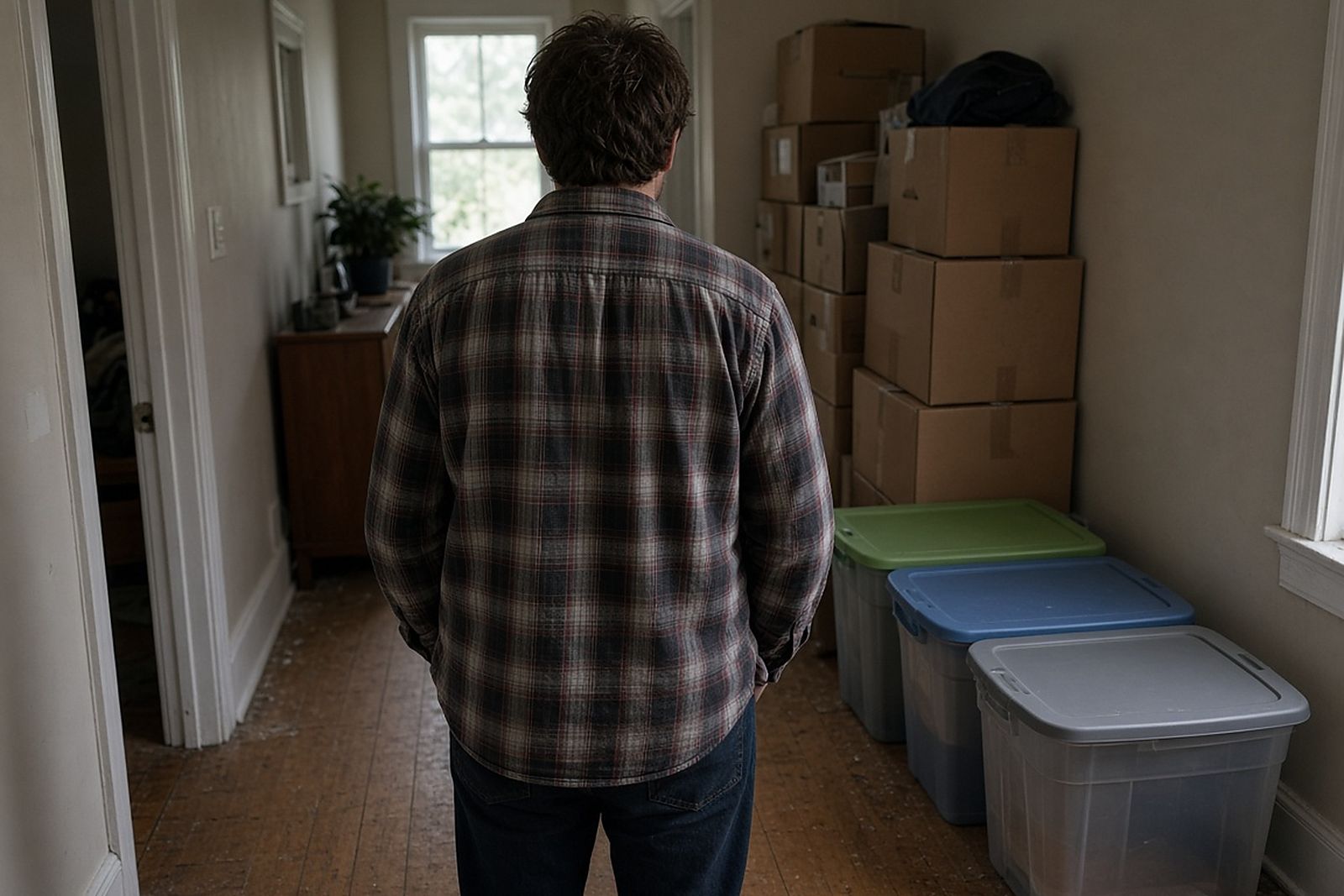
Person seen from behind in a hallway beside stacked boxes and three colored sorting bins
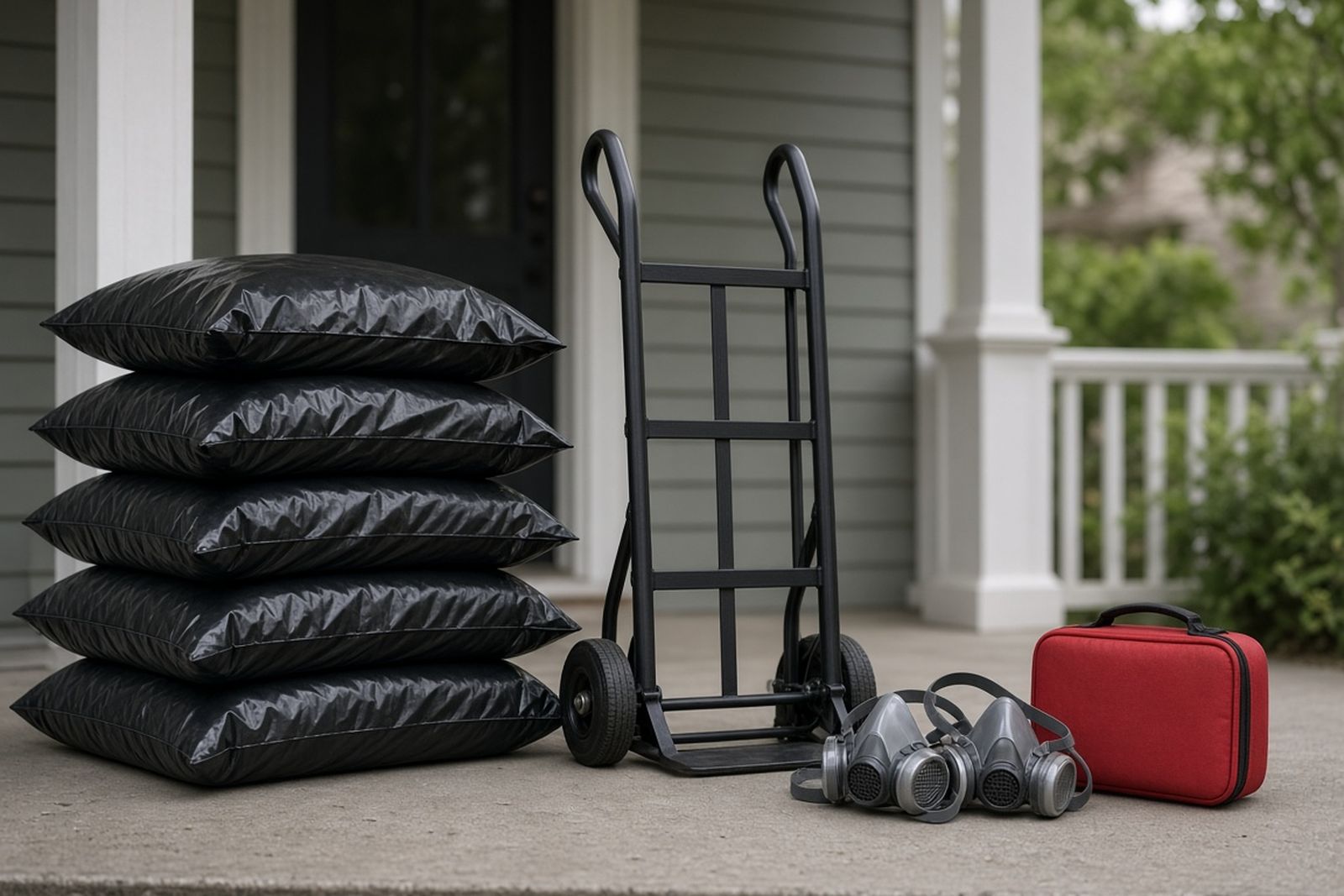
Contractor bags, a hand truck, respirators and a first-aid kit staged on a porch

Facts worth knowing

  • In focus groups with 17 English housing, health and care professionals, participants said forced clear-outs were traumatic for some residents.

    Why it matters: A forced clear-out can do harm, so you may want a company that works at the person's pace where safety allows.

    Source: Haighton et al., 2023

  • Employers must offer the hepatitis B vaccine within 10 working days of putting an employee in a job with exposure to blood.

    Why it matters: Before asking your own employees to clean up blood, check whether this duty and other OSHA rules apply to you.

    Source: OSHA, 2024

  • Only 26% of hoarding homes in a Melbourne, Australia fire study had a working smoke alarm.

    Why it matters: Check that your smoke alarms work today; it is a small step you can take before any cleanup begins.

    Source: Worcester Polytechnic Institute / Metropolitan Fire Brigade (Lucini, Monk & Szlatenyi), 2009

Tools that help right now

What would you do?

Poll results

Vote to see how other people answered. You can change your answer at any time.

Your experience

If a relative's home had become unsafe, what would be your first step?

Be the first to vote
Process

How much control should the occupant keep over what leaves the home?

Be the first to vote

Need help in Washington?

Send a short message about the property to the follow-up inbox. A coordinator can reply by email with next steps.

Your request is sent to the follow-up inbox. A coordinator can reply by email.

If anyone is hurt or in danger, call 911 first.