New Canaan, CT

Meth Lab Cleanup in New Canaan, CT: Inland Estates, Barn Conversions, and DPH Protocols

What to do, who to contact, and what to ask in New Canaan.

Meth residue in a New Canaan home, studio, or converted barn? See the CT DPH guideline target, why each building is tested, and what trustees keep.

Get an email reply about meth lab cleanup

Send a short message to the follow-up inbox. A coordinator can reply by email. This form does not send emergency help; call 911 first if anyone is in danger.

Tell us what you need help with. Share a short description; please leave out medical details, access codes, and other sensitive information.

A request does not confirm a booking. For immediate danger, contact local emergency services.

Or email info@propertydeconguide.com

The short answer for New Canaan, CT

If a studio, barn, or house on your New Canaan lot has a meth history, close that building and have each one tested on its own. For meth, the state's stated goal in the Connecticut DPH cleanup guidelines is below, or less than, 0.1 µg/100 cm². Use it as guidance for the job, not as a made-up town rule.

What to do, step by step

  1. 1

    Walk every heated building and set the pass level

    Walk each heated building with your trustee or property manager and the testing company. Ask them to write the pass level from the CT DPH guidelines into the plan. For meth, that is below, or less than, 0.1 µg/100 cm² when you follow the published cleanup target. If the cooking method hints at other chemicals, those are added to the plan. No town law has its own number, so none should appear in your papers. Before you leave each building, note who had keys and what was stored there.

  2. 2

    Have each outbuilding closed off on its own

    A good crew treats the barn, the studio, and the house as separate jobs. Soft materials that hold residue are removed from each one. Ask for a list of the contents of each building. If your barn held cooking chemicals, that waste is profiled, or lab checked, before it leaves. Ask that no one dry sweep the stone floors, since that throws dust toward open French doors. Keep those doors shut during the work, and keep family, guests, and pets away from the building until it has been cleared.

  3. 3

    Ask about the heat in each building and how tools are cleaned

    Your outbuildings may each have their own heating and air equipment. All of it should stay off during tear-out. Ask how tools and carts are cleaned before they move from the barn to the studio or the house, so one building does not soil the next. You can also ask about the workers. Their chemical hazard training and breathing protection should match the leftover solvents and fine dust on your lot. Write down which system serves which building, and keep that note with the test results.

  4. 4

    Get a clearance packet that states the law honestly

    A failed wipe in a barn or studio means the crew washes or removes more, then tests again. Ask for final results mapped by building. The packet should say that the DPH guideline target was used, and that mandates for ordinary houses are narrow, as DPH explains. It should not claim that a state or town law forced the cleanup, unless an order was in fact issued. Keep the final packet with your trust records, where the next trustee or a buyer's lawyer can find it.

What cleanup is like in New Canaan

Inland Fairfield County lots here often pair a main house with detached studios, converted barns, pool houses, or rooms over the garage. Stone walls and long drives hide many of them from view, so a problem in one can go unnoticed for a while. Your residue issue may come up during a trust sale, when an empty studio shows use debris, or when a consultant hired for due diligence asks for wipe tests. When you describe the standard to anyone, cite the guideline target correctly. Nobody should invent a town ordinance number, and you should not repeat one if a contractor offers it.

Connecticut DEEP may get involved when chemically tainted materials leave your parcel. That is one reason to let trained people sort and pack the waste, and to keep the records they give you. EPA's voluntary guidelines help shape the questions you ask a company. Still, CT DPH's published target comes first, not the EPA advice. If you are comparing bids, ask each company which document it follows and what pass level it will write into your plan. A clear answer tells you a lot about how careful the rest of the work will be.

Trustees and buyers often ask for lab PDFs, even when cleanup follows a guideline. So before any New Canaan listing prep, ask how each barn and outbuilding will be sealed off. A good plan includes HEPA vacuums, which trap fine dust, and a file ready for disclosure. Painting a studio is not enough to justify moving back in. You need lab results compared to the CT DPH target of below, or less than, 0.1 µg/100 cm². Testing first also means you will not repaint a room that later has to be cleaned again.
What to expect for your type of home

  • Lots with studios and barn conversions: List every heated space before wipes are mapped. That means your main house, the barn conversion, the studio, and any room over the garage.
  • Properties following state methods: Take your pass level straight from CT DPH. The figure your plan should name is the state's own, below, or less than, 0.1 µg/100 cm² of meth.
  • Barns or studios with cooking gear: Cooking glassware and solvent cans should be marked apart from smoking foils. That lets the waste from each of your buildings be sorted correctly.
  • Parcels under an order or license: Find out if the usual home guideline applies, or if an order or facility license changes it. Do this before any enforcement wording goes into your file.

Papers and records to keep

  • The CT DPH guideline reference stating the meth cleanup target of below, or less than, 0.1 µg/100 cm²
  • A copy of any Commissioner or local health ruling on your New Canaan parcel
  • A discard log sorted by barn, studio, and house, with drop-off sites
  • Waste profile records for any barn or studio that held cooking chemicals
  • The trustee's disclosure binder, where the last lab pages are filed

Local offices and official help

Common questions in New Canaan

What cleanup target should I cite from Connecticut DPH for my New Canaan property?

Cite below, or less than, 0.1 µg/100 cm² for meth, as published in CT DPH's Guidelines for the Cleanup of Connecticut Methamphetamine Labs. Describe it as the cleanup target used in Connecticut, based on a detection-limit approach. Pair it with the guidelines' own note that no state law requires drug lab cleanup in regular homes. Licensed facilities, or a public health threat found by the Commissioner, can change who has authority. Do not invent a village microgram value. If police were involved, find out who has authority over your site.

Does my barn conversion need more samples than the house?

Often it needs a different set. Converted barns have bare wood, concrete floors, and their own heat, and these hold fine dust differently than plaster rooms in the main house. Ask for tests on the hard surfaces people touch most, the floors, and the barn's own air returns. Cooking stains on concrete may call for more tear-out than a use-only studio with soft items. If the barn shared tools or storage with the main garage, more of the paths between them should be tested.

As trustee, can I have the studio painted before sampling?

It is a mistake to paint first. Painting before a written test plan can seal residue in or spread it around, and that makes later wipe results harder to read. Pricey inland deals often include environmental riders that ask for number results against Connecticut's published guideline target. New finishes without a lab file do not show if surfaces met it. Budget for testing first. If a formal order exists, follow the approved testing steps instead of washing it yourself. Keep failed and passing reports, so buyers can follow the timeline.

Cooking or use only: what belongs in my written account?

Write down the signs that were found. Cooking usually involves raw chemicals, solvents, acids or bases, and equipment. These widen the hazardous waste handling. Smoking alone can still leave enough meth on soft items and HVAC dust in a sealed studio to fail the CT DPH guideline target. Both need a written test plan, and neither is fixed with air freshener. The job should widen if cookware turns up midway. Keep photos and item lists, so your insurer understands the choices about materials.

Why does it matter whether I call it a guideline or a mandate?

Because getting it wrong can mislead a buyer. Saying every Connecticut home is under a required state cleanup law gets CT DPH's own guidelines wrong. But ignoring the published target of below, or less than, 0.1 µg/100 cm² leaves you without a clear benchmark. An accurate file says three things. You used the DPH guideline target. Mandates for ordinary houses are narrow, just as DPH explains. And here are the mapped lab results. That honesty protects you as trustee during disclosure.

How do New Canaan's modernist glass houses change residue cleanup?

They let residue spread further. New Canaan is known for mid-century modern homes with glass walls, open floor plans, and bare wood or stone. In an open plan, residue spreads through the whole living area instead of staying in one room. Glass is easy to clean, but bare wood ceilings and stone can be harder. Some of these houses have architectural value, so ask about gentle cleaning methods before original materials are removed. The CT DPH target still applies. Have the surfaces you hope to save tested first.

My home has a private well. Can well water be used for the washing?

Yes, well water works fine for washing with detergent. The concern is getting rid of it afterward. Wash water from residue cleaning should be collected and handled as waste. It should not be dumped in your yard or sent into the septic system without guidance. Ask your contractor how they will manage it. If you are worried about the well itself, the town health department can explain testing options. Keep records of how the wash water was handled.

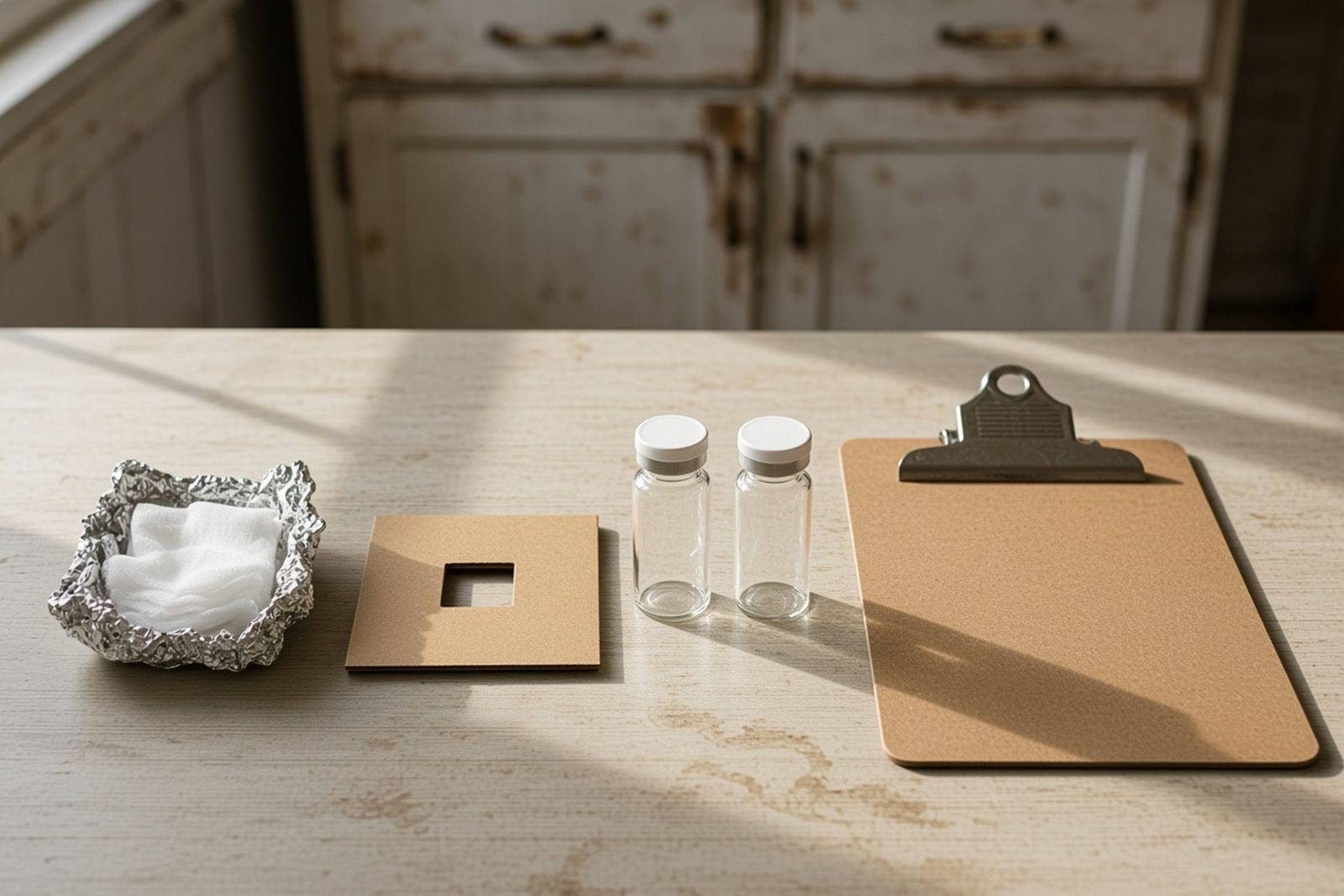
Wipe-sampling supplies on a counter: gauze in foil, a sampling template, vials and a clipboard
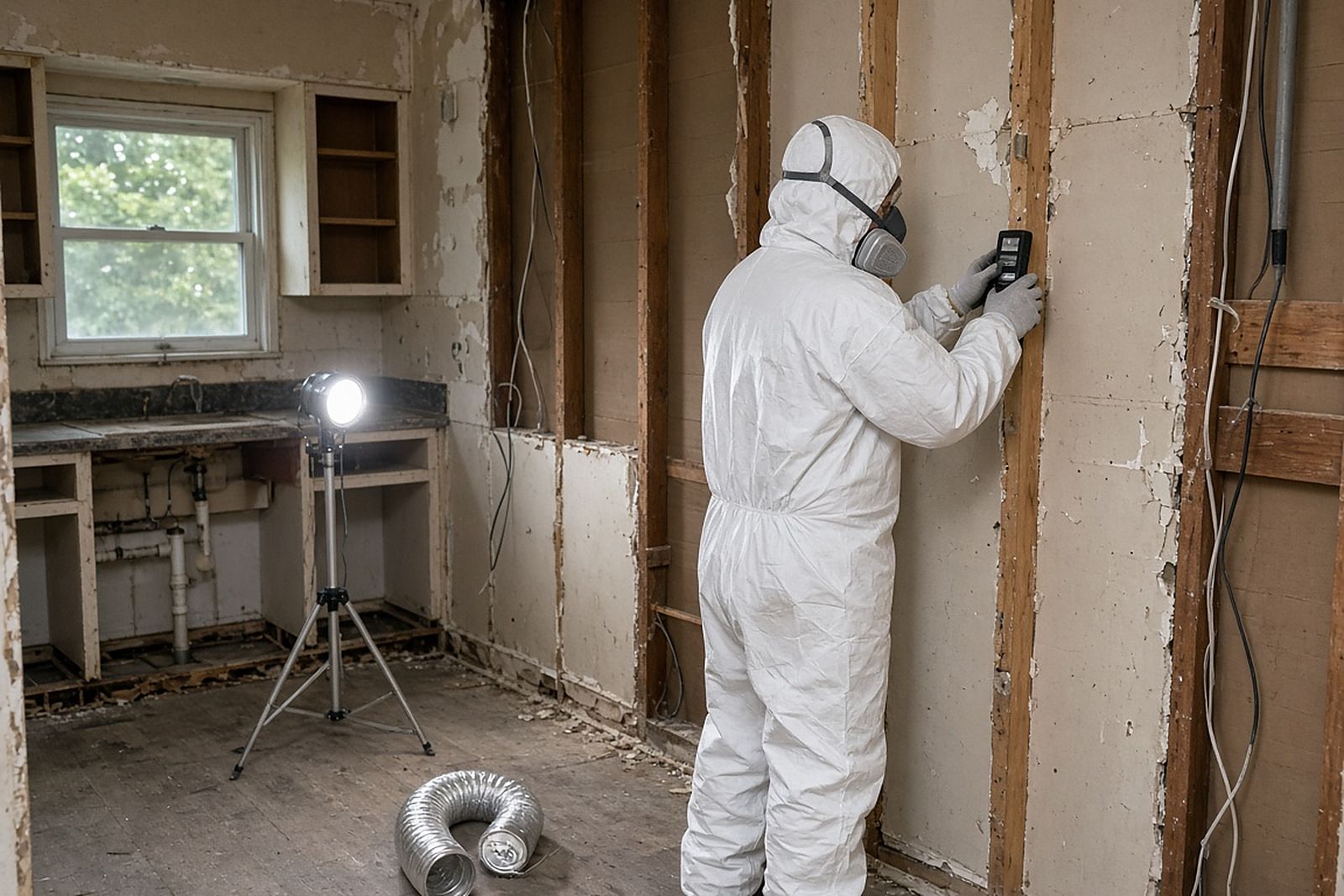
Technician in a respirator checking exposed studs in a gutted kitchen with a work light and duct

Facts worth knowing

  • EPA's voluntary cleanup guidelines for meth and fentanyl labs were first issued in 2009, revised in 2013 and updated in August 2021 to add fentanyl.

    Why it matters: Ask whether your cleanup company follows the current EPA guidelines, keeping in mind they are voluntary and set no national cleanup limit.

    Source: US EPA, 2021

  • As of April 2025, 18 states plus D.C. had no laws on cleaning up properties contaminated by illegal drugs.

    Why it matters: Check with your local health department, because local orders or seller disclosure duties may still apply to you without a state law.

    Source: Legislative Analysis and Public Policy Association, 2025

  • In one Australian home where meth was cooked, researchers found extremely high contamination more than five years after cooking stopped, even though people had lived there since.

    Why it matters: Do not assume time or normal housekeeping has made a former lab safe; ask for testing before you move in or rent it out.

    Source: International Journal of Environmental Research and Public Health, 2019

Tools that help right now

What would you do?

Poll results

Vote to see how other people answered. You can change your answer at any time.

Your experience

If a house you wanted had a documented lab cleanup that passed clearance, what would you most likely do?

Be the first to vote
Industry

Which factor would you weigh most when choosing a meth cleanup contractor?

Be the first to vote

Need help in New Canaan?

Send a short message about the property to the follow-up inbox. A coordinator can reply by email with next steps.

Your request is sent to the follow-up inbox. A coordinator can reply by email.

If anyone is hurt or in danger, call 911 first.