Santa Monica, CA

Meth Lab Cleanup in Santa Monica, CA: Alley Load-Outs, Rentals, and Wipe Clearance

What to do, who to contact, and what to ask in Santa Monica.

Meth residue in a Santa Monica apartment or condo? See the state limit, how alley load-outs and damp air affect the job, and what to keep on file.

Get an email reply about meth lab cleanup

Send a short message to the follow-up inbox. A coordinator can reply by email. This form does not send emergency help; call 911 first if anyone is in danger.

Tell us what you need help with. Share a short description; please leave out medical details, access codes, and other sensitive information.

A request does not confirm a booking. For immediate danger, contact local emergency services.

Or email info@propertydeconguide.com

The short answer for Santa Monica, CA

If your Santa Monica apartment or rental has a meth history, hold the next lease until accredited wipe tests pass. California Health and Safety Code section 25400.16 applies at the beach too. After meth lab activity, wipes must read 1.5 µg/100 cm² or lower. Where a fentanyl lab was run, the unit also needs fentanyl results below detection.

What to do, step by step

  1. 1

    Hold the rental ad until the unit is on a sampling plan

    Take photos of the unit and its storage cage. Note anything that points to a cook, and anything that points to smoking only. Then ask for a written sampling plan, with pass-fail rules set by HSC 25400.16 for the chemistry found. Hold your listing photos until that plan is in place. Every set of wipes should go to an accredited lab with signed tracking forms, called chain of custody. If the company cannot tell you which lab it uses, ask again before you sign anything.

  2. 2

    Book the alley slot and have everything bagged first

    A good crew seals your apartment door where it meets the hallway. Soft goods are bagged inside the unit before your alley time arrives, so nothing waits in the hall. If there are signs of a cook, the solvent waste must be sorted and labeled under California hazardous waste rules before it goes out the alley. Ask your building manager about garage and curb rules early. A missed slot can leave bags sitting where your neighbors walk, and that is how a moving mistake turns into a chemical one.

  3. 3

    Ask about the air system and drying time

    The unit's air system should be off during tear-out. Ask that the filters be swapped and any PTAC covers within reach be wiped. Washed surfaces need time to dry in the damp sea air before clearance testing, so expect a pause between the washing and the last wipes. Drying helps the fieldwork, but drying is not clearance. A good crew also keeps clean and dirty zones for its tools. If you are told the job can be tested the same day it is washed, ask how they know the surfaces are dry.

  4. 4

    Keep the clearance folder with the unit's records

    Ask for a folder that holds the wipe map, the lab reports, and a sheet comparing your results to HSC 25400.16. If wipes fail, more is removed or washed, and new wipes are taken. Keep the folder with the unit's records, and give your board or HOA a copy if they ask. Share the last clearance pages with a new tenant who wants to see them. Talk of ocean breezes does not meet HSC 25400.16. The lab pages in that folder are what protect you.

What cleanup is like in Santa Monica

Apartments near the beach, courtyard buildings, and condo towers all fight over narrow alleys and timed curb zones. That shapes your job from the first day, since everything removed has to leave through those tight spaces. Residue cases tend to show up in a few places. One is a studio left empty after heavy smoking. Another is a storage cage holding solvent cans. A third is a sale where buyers want wipe PDFs before they drop contingencies. Sea air keeps soft goods damp and smelly, but it does not answer the state's testing questions. Only lab results do that for you.

The Los Angeles County Department of Public Health handles health-officer questions once police have been told. DTSC removes bulk lab waste found during seizures. The carpet pad and the dust in the air returns stay your problem as the landlord. A cook means more testing for solvents and lab ingredients. Smoking alone still fails wipes on futons and bathroom fans in closed-up beach units. How things are carried out matters to your neighbors too. Open mattresses dragged through parking garages spread residue into hallways, and those halls may later draw complaints from the people who live along them.

Pressure to re-rent may push you to paint first. Do not go in that order. Paint goes on last, after the unit has been tested, cleaned, and cleared. Ask the company to write your alley booking times into the work plan and to close off the unit before work starts. Keep a disclosure folder ready for your board and for new tenants. And watch your ad wording. Under California law, you should not market a unit as “beach-fresh” as if that proved it was clean. Lab numbers are what a careful tenant or buyer will ask to see.

What to expect for your type of home

  • Buildings with alley or garage loading: Book an alley or parking-garage time slot before any bagged soft goods leave your unit. Without a slot, bags end up waiting in the hall.
  • Studios and one-bedrooms: Ask for wipes in the bathroom, the kitchen pass-through, and the return grilles. The corner where people smoked is only one of the places residue settles.
  • Units with damp carpet: Budget to throw out damp, coated carpet and pad. Shampooing it and then failing clearance costs you more time than replacing it would.
  • Apartments with wall units or central air: Find out if a PTAC wall unit or a central return serves your apartment. The company needs to know before any fans run mid-job.
  • Units with a storage cage: Solvent cans found in a cage are not the same as smoking foils. Ask that they be kept apart, since the waste paperwork treats them differently.
  • Condos and rentals with a board: Give your board and buyers sheets that compare results to HSC 25400.16. A receipt for an ozone machine tells them nothing about the surfaces.

Papers and records to keep

  • Alley or parking-garage booking notes, matched to your load-out photos
  • The Santa Monica police release letter, plus any LA County health-officer order for the unit
  • A unit floor plan showing wipe spots, including bathroom fans and returns
  • Certified lab results on meth, fentanyl, or both in the apartment, showing detection limits
  • A sheet comparing the rental's results to HSC 25400.16 for the chemistry in that unit
  • Tickets for discarded carpet and pad, and records of where the waste went
  • A dated log of PTAC cleaning or filter changes
  • Your re-rental folder for the landlord or HOA, with the last clearance pages inside

Local offices and official help

Common questions in Santa Monica

Why book the alley load-out before washing starts?

Because curb space is tight, and timing slips are what cause trouble. If the slot is missed, soft goods often end up sitting in hallways. Open piles spread residue in the halls. That can lead to failed wipes later, even inside a unit that was cleaned. So book the alley slot, have things bagged first, and then let the washing start. Take photos of the hallway protection for your board.
Does damp air change the California clearance number?

No. A Santa Monica apartment passes only when meth wipes read 1.5 µg/100 cm² or lower. After any fentanyl lab, fentanyl must not be found at all. Damp air may slow drying and keep smells around, so allow drying time before testing. But do not treat humid air as a reason for a different rule. The number on the lab report is what counts, whatever the weather is doing outside your window.

Should our condo board sign off on a paint-only package after smoking residue?

No, a paint-only package skips the state comparison. Your board should ask for mapped wipe results compared to HSC 25400.16. It should also ask for waste records and HVAC notes. Require new tests after any failed round. Keep the association's copies with the remodel files. Lab proof protects the neighbors better than promises about smell.

How do solvent cans in my storage cage change the job?

They point to a cook, and that means more work. Solvent cans and lab-ingredient packaging mean more hazardous waste testing. Lead or mercury testing could be added as well, if the cook used those metals. Smoking foils alone point to use only, but they still need indoor wipe proof. Take photos of the cage before removal through approved channels. Never pour unknown liquids into alley drains.

Can I re-list a studio after only an ozone treatment?

No. Ozone and air freshener do not show that a unit meets HSC 25400.16. Children are the main reason to hold off on the next lease until accredited wipes show the unit meets state limits. Keep the chain-of-custody forms in the unit file. Rushing a listing after ozone saves a little vacancy time. But it raises the risk of a bigger disclosure problem.

I am a rent-controlled tenant. What should I know if my unit needs cleanup?

Start by putting things in writing. If you have to leave your apartment for cleanup, ask your landlord about the timeline and where you will stay. Santa Monica has local tenant protections, and the city's rent control office can explain how they apply to you. Ask for the sampling plan and the final lab results before you move back. Keep copies of every notice. For legal questions about your own rights, contact a tenant lawyer or a local legal aid group.

Do beach sand and sea air affect wipe results?

Sand can, and sea air does not help. Sand tracked in from the beach can mix with surface dust, and it can throw off wipe tests if floors are not cleaned first. Sea air does not break down meth. Open windows mostly move the smell, not the residue on surfaces. Windows should stay shut during tear-out to protect your neighbors. Ask for shoe covers at the doors and a good floor cleaning before the last round of tests.

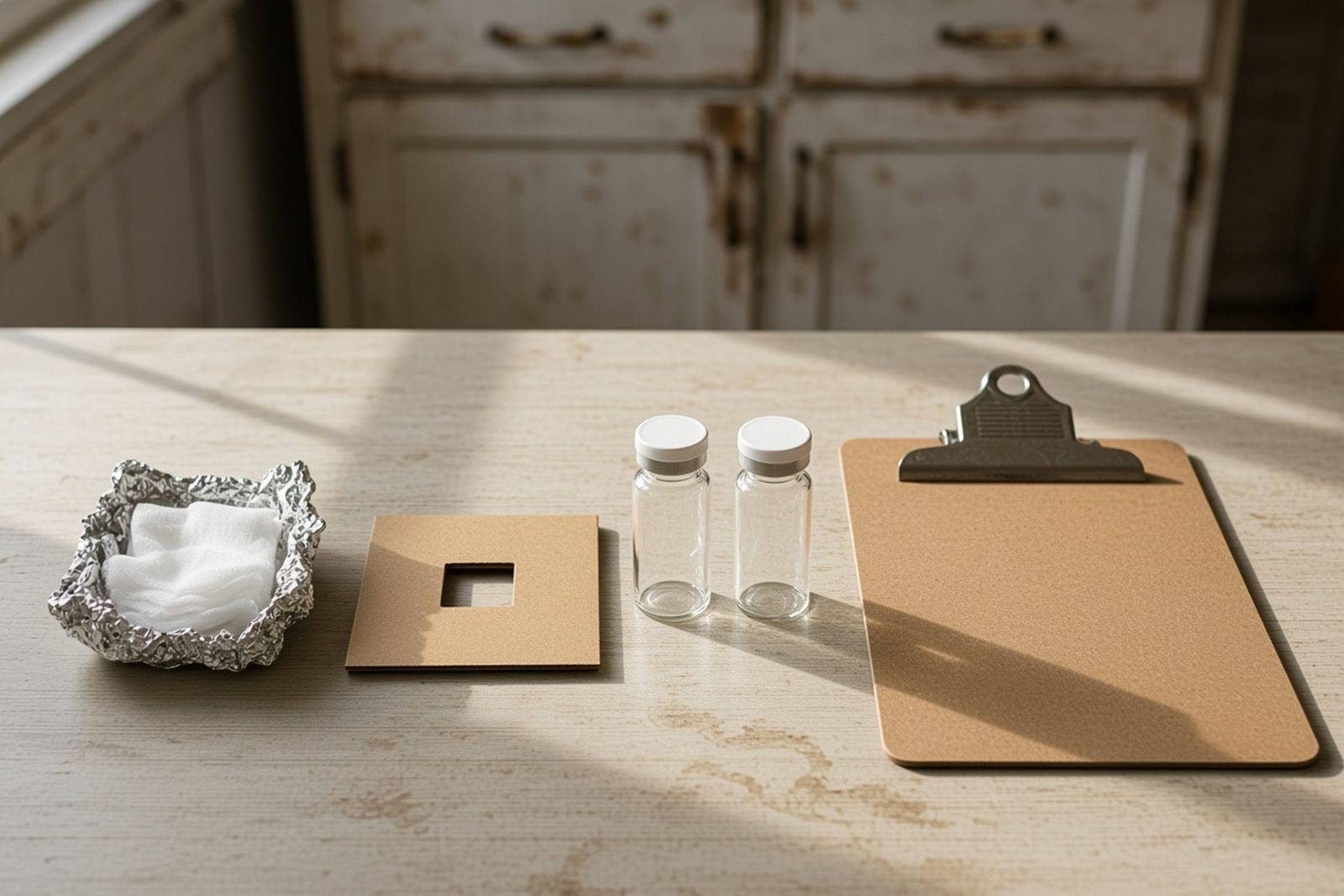
Wipe-sampling supplies on a counter: gauze in foil, a sampling template, vials and a clipboard
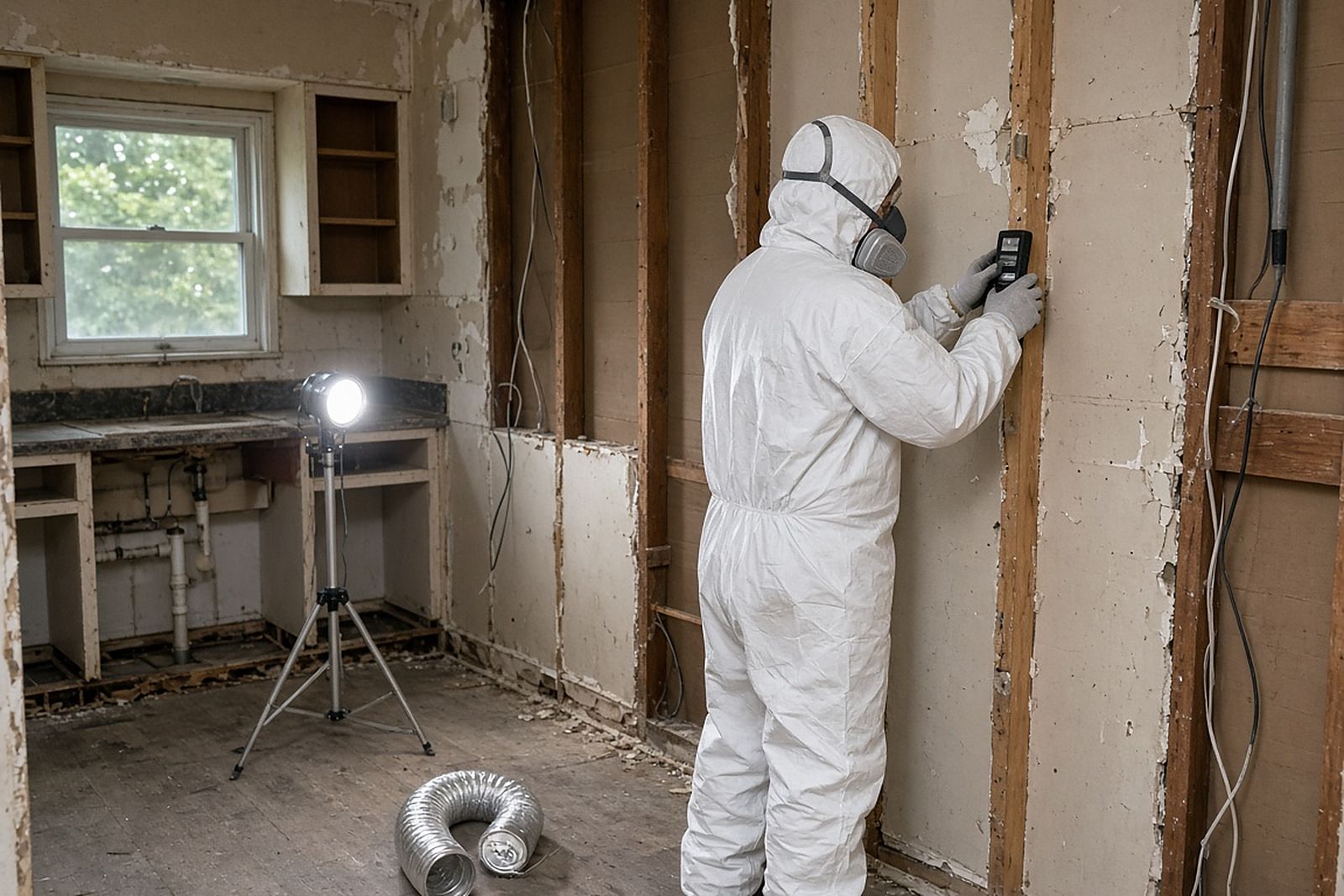
Technician in a respirator checking exposed studs in a gutted kitchen with a work light and duct

Facts worth knowing

  • A federal review found the most common state limit for meth left on surfaces after cleanup is 0.1 micrograms per 100 square centimeters.

    Why it matters: Compare the numbers on your after-cleanup test report with this limit or with your own state's limit.

    Source: NIOSH (CDC), 2020

  • As of March 2013, 25 states required or recommended cleaning former meth labs to set limits, ranging from 0.05 to 1.5 micrograms of meth per 100 square centimeters.

    Why it matters: "Clean" means different things in different states, so ask which limit applies to your property and get test results showing it was met.

    Source: Ohio Department of Health, 2016

  • Washington State requires meth-contaminated properties to be cleaned down to 1.5 micrograms of meth per 100 square centimeters of surface.

    Why it matters: If your property is in Washington, ask for final test results at or below this level; other states often use stricter limits.

    Source: Washington State Department of Health, 2025

Tools that help right now

What would you do?

Poll results

Vote to see how other people answered. You can change your answer at any time.

Your experience

If a house you wanted had a documented lab cleanup that passed clearance, what would you most likely do?

Be the first to vote
Industry

Which factor would you weigh most when choosing a meth cleanup contractor?

Be the first to vote

Need help in Santa Monica?

Send a short message about the property to the follow-up inbox. A coordinator can reply by email with next steps.

Your request is sent to the follow-up inbox. A coordinator can reply by email.

If anyone is hurt or in danger, call 911 first.