Newton, MA

Crime Scene Cleanup in Newton Villages, Two-Families and Condos

What to do, who to contact, and what to ask in Newton.

A violent crime in a Newton two-family, condo or house needs trained cleanup. Learn about shared porches, village loading and the records to keep.

Get an email reply about crime scene cleanup

Send a short message to the follow-up inbox. A coordinator can reply by email. This form does not send emergency help; call 911 first if anyone is in danger.

Tell us what you need help with. Share a short description; please leave out medical details, access codes, and other sensitive information.

A request does not confirm a booking. For immediate danger, contact local emergency services.

Or email info@scenerecoveryhelp.com

The short answer for Newton, MA

In Newton, a violent crime may touch one unit of a two-family, a condo or a single-family house. Newton police must release the home before any cleanup, and a trained biohazard company should do it. Read on for how shared porches, village sidewalks and tight curbs affect you, and which papers owners and insurers need.

What to do, step by step

  1. 1

    Learn who approves work in your kind of home

    After Newton police release the unit, find out whether an owner, a landlord or a condo trust must approve any cutting. Sort each unit's own rooms from the shared porches and halls. Before finishes are cut, write down who controls the keys and alarms and where the crew may set up. In a two-family, talk with the other household early. A short, calm call now prevents an argument on the porch later.

  2. 2

    Plan quiet loading for a village street

    In a two-family, ask the company to sketch the route from the affected unit to the curb before work starts. It should avoid the other household's entry. Sealed bins belong off busy village sidewalks, and workers should suit up somewhere other than a shared porch. Ask about timing for your street too. Midday is often calmer than the commute hours near the train stops.

  3. 3

    Ask for reasons behind each keep-or-remove choice

    Once the heavy soil is off, a good crew keeps a registered product wet on tile, wood finishes and fixtures worth saving for the full label time. Cold rooms in winter can stretch that step. What cannot be saved is packed up and carried out. Ask the company to record the reason for each choice. You may need to explain it to a board, a landlord or the family upstairs.

  4. 4

    Wait for plaster and floors to dry before repairs

    Your kitchen and baths should get their final check only after the plaster and floors dry. Then ask for a list of openings to give your repair crew. Keep the waste and product records for your insurer and, in a condo, for the board. If you share the house, give the other household a short note on which rooms and shared areas are ready to use again.

What cleanup is like in Newton

Newton is a close-in city of about 88,000 people that works like a cluster of villages: Newton Centre, West Newton, Newtonville and the edges of Chestnut Hill. You may live in a single-family colonial, a two-family, a condo conversion or a denser lot near village shops and train stops. That means shared porches, narrow drives and stacked units can matter as much as your own rooms. The core of the job is still blood that has soaked into the layer under your floor. Newton adds people on village sidewalks and tight curbs at commute times.

Walkable village centers make an open cart easy to spot, more than in the wooded estate towns farther west. Even on Newton's quieter colonial streets, houses sit only a driveway apart. A good crew will use bags no one can see into and covered bins, and will say little on a shared porch. That spares your neighbors extra distress while you, a board or a landlord plan the work. In the denser villages, quiet hours and overnight parking rules often decide the order of work. Blood exposure rules from OSHA and EPA label directions apply throughout.

Your file may be read by a unit owner, a condo board, a two-family landlord and an insurer. City websites and Massachusetts health resources give local facts. Before any runner goes down, ask for pictures of each bare porch and landing the two households share. If a condo trust policy and your own policy could both pay, ask that unit work and hallway work be shown on separate lines. That one step can save you a lot of back-and-forth. It also lets the other household see exactly what was done in the spaces you share.

What to expect for your type of home

  • Two-families and conversions: Ask that the written plan and photos clearly split each unit's rooms from the shared porches, stairs and laundry. It affects who approves and who pays.
  • Homes near village shops and stations: Curb space is short. Expect loading from a driveway or alley, and do not count on a fixed arrival hour for the truck.
  • Two-families with a shared driveway: The drive is narrow and both households use it. Ask that bags move when the other household and commuters are not around.
  • Third-floor conversions and attic bedrooms: Soaked-in fluid can hide in the short knee walls under the roof. Tell the company if anyone went upstairs after the incident, even briefly.
  • Plaster halls and open kitchens: Residue hides one way in a plaster-walled hall and another way in a gutted, open kitchen. Ask the crew to follow the floor from room to room.
  • Carpeted rooms: Thick carpet over wood or slab often has to come out once the pad is soaked. Ask to see the pad before you agree the carpet can stay.
  • Multi-unit buildings with entry systems: The system keeps a record of who came in. Log every temporary code you hand out and when you canceled it.
  • Winter jobs: Snow emergency parking rules can take away overnight curb space. Before demolition day, confirm with the city where the truck may legally park.

Papers and records to keep

  • The release date and the Newton owner, landlord or trustee who gave the go-ahead.
  • Photos of rooms, attic conversions, porches and shared laundry if anyone went there.
  • Notes on driveway or curb choices, commute-hour timing and codes given out and canceled.
  • A list of removed soft materials that keeps each unit apart from shared areas.
  • Each disinfectant used in your unit and the wet time it was given.
  • How fingerprint powder was vacuumed off plaster and painted trim.
  • Waste tracking notes to pass to your insurer.
  • Photos of shared porches, stairs or halls before and after they were covered.
  • A note for both households in a two-family on which rooms are ready.

Local offices and official help

Common questions in Newton

We live in a two-family. Does the shared porch need checking?

Yes, it may. In a Newton two-family, shared porches, stairs and laundry can pick up tracked residue even when the stains are inside one unit. Ask for photos of the unit and of the shared porch or stairs, kept apart. Approval may take a landlord or board working together. Labeled bins should never sit on a shared landing. Ask the crew to record how the halls were covered, so the shared-area photos make sense later.
Does it matter what time of day waste is carried out?

It can. Walkable centers and the streets near the stations raise the chance that someone sees sealed waste or an open door. Moving bags in the quiet midday hours draws less notice from people heading to the train. Covered bins and carts are still needed at any hour. Ask the company to note the timing in its access log. If a neighbor asks, the work hours are all you need to share.

Should the attic conversion be looked at?

Yes, when police or residents went upstairs, or when the knee walls and soft items there were used for short-term storage. Fluid can look faint on painted plaster while it soaks the insulation behind. Adding the upper rooms keeps the plan from stopping at the first floor. Ask for photos before any cleaning starts up there. If the attic turns out clean, have that written down for your landlord or a later buyer.

How should my condo board be shown in the approval records?

First confirm the release and find the person named on the deed or lease. Then have it written down who may approve removing soft materials inside the unit and who may approve it in shared areas. Ask for photos of the halls and stairs that link them. The board can require product names and wet times, and the waste records should go in the file. Clear authority keeps the crew from getting mixed orders.

What will the insurer want from us?

Start with photos from before and after, pinned to a simple plan, and a list of what was hauled out. Add the disinfectant names with wet times, notes on powder removal and the waste records. If the back porch, the stairs or the basement washer area was involved, show those too. List the repair work still to come. A fresh scent is not evidence, so do not let anyone offer it as a sign the job is done.

Our house has old plaster walls. Can they be saved?

Sometimes. Many Newton houses have original plaster over wood lath. Plaster is harder than drywall but still soaks up fluid, and cracks can let liquid reach the space behind. The contractor may be able to clean and seal plaster that is intact, or may need to cut out sections that stayed wet. Cutting old plaster makes heavy dust, so ask how the room will be sealed off. That matters most when another household shares your stairs.

What about our children's schedules while the work goes on?

Plan for your children to stay with relatives or friends during the work, most of all during cutting and dusty steps. Keep school and activities as normal as you can. Village sidewalks are busy at school times, so ask the contractor not to move sealed bins during drop-off and pickup. Children often notice more than adults expect. A simple, honest word that the house is being repaired may help.

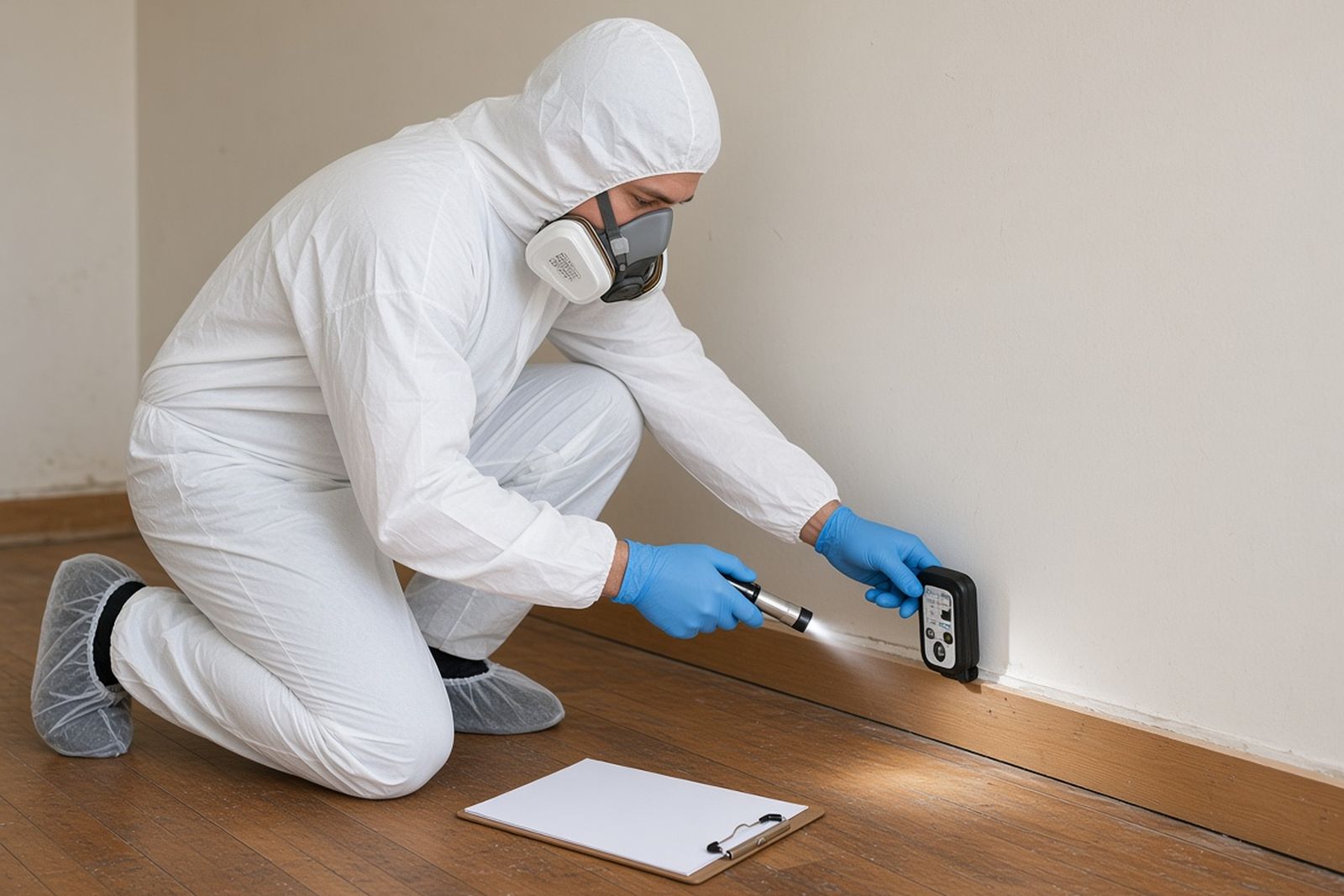
Technician in coveralls and a half-face respirator checking a baseboard with a flashlight and moisture meter
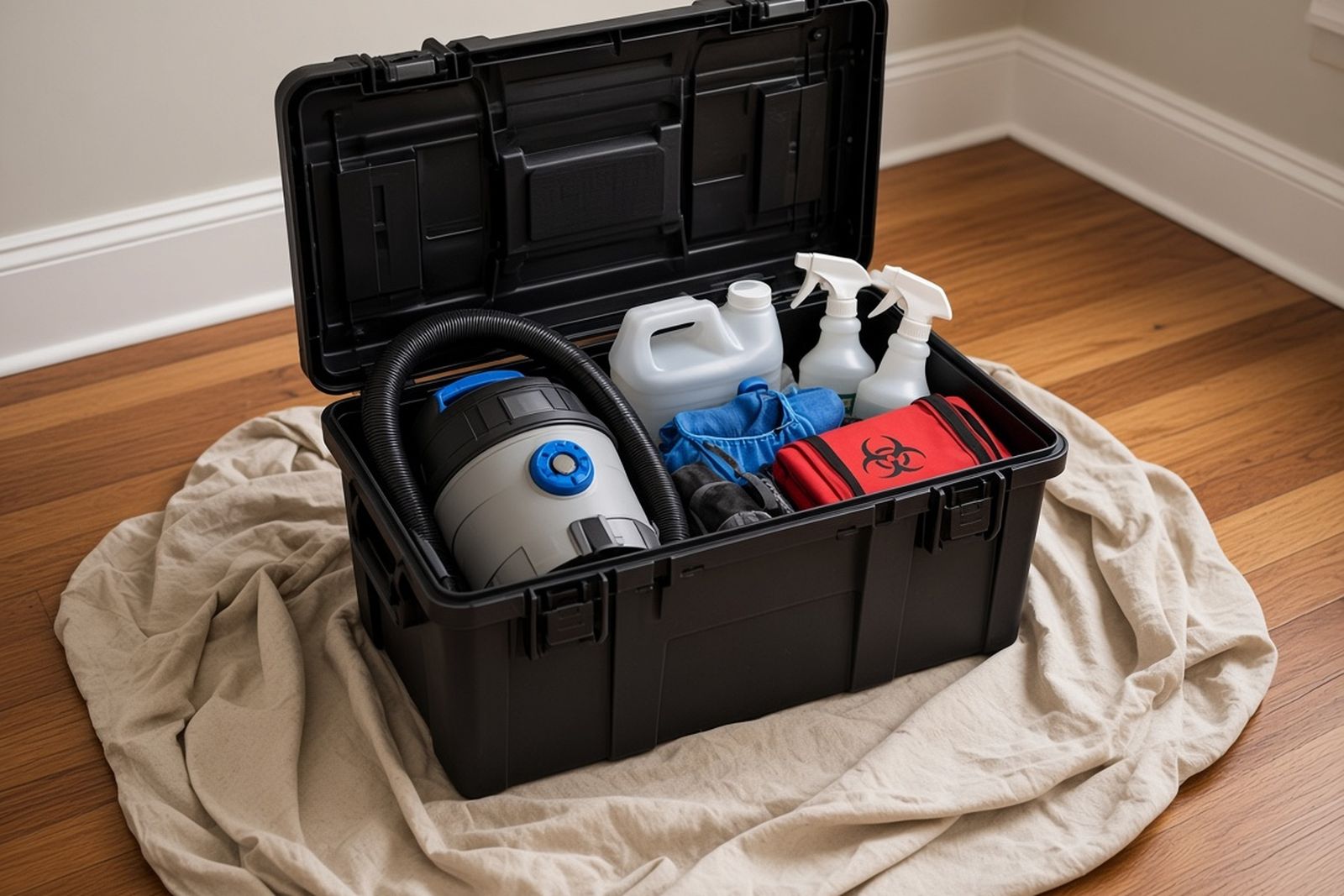
Open equipment case on a drop cloth holding a HEPA vacuum, disinfectant jugs, spray bottles and red biohazard bags

Facts worth knowing

  • In interviews with 15 grieving German adults, some valued company that came with no pressure to talk.

    Why it matters: If you are supporting someone, you may help just by sitting with them; you do not have to find the right words.

    Source: Marek et al., 2025

  • In interviews with 18 people in Germany who lost someone to suicide, some said others with a similar loss understood them without long explanations.

    Why it matters: If explaining yourself is tiring, you may find a suicide-loss support group easier than talking with people who have not been through it.

    Source: Marek et al., 2024

  • In a survey of burglary victims in three English areas, published in 2005, 18% of those who claimed on insurance said it did not cover their loss well enough.

    Why it matters: A claim may not pay for everything, so check your policy limits and what it leaves out before you plan around it.

    Source: Victim Support et al., 2005

Tools that help right now

What would you do?

Poll results

Vote to see how other people answered. You can change your answer at any time.

Your experience

What was the hardest thing to figure out in the first day after the scene was released?

Be the first to vote
General

Which type of incident brought you to this topic?

Be the first to vote

Need help in Newton?

Send a short message about the property to the follow-up inbox. A coordinator can reply by email with next steps.

Your request is sent to the follow-up inbox. A coordinator can reply by email.

If anyone is hurt or in danger, call 911 first.