Weston, MA

Weston Crime Scene Cleanup on Woodland Lots and Private Drives

What to do, who to contact, and what to ask in Weston.

A violent crime at a Weston home needs trained cleanup. See how wooded lots, long drives and converted barns shape the job and what to keep on file.

Get an email reply about crime scene cleanup

Send a short message to the follow-up inbox. A coordinator can reply by email. This form does not send emergency help; call 911 first if anyone is in danger.

Tell us what you need help with. Share a short description; please leave out medical details, access codes, and other sensitive information.

A request does not confirm a booking. For immediate danger, contact local emergency services.

Or email info@scenerecoveryhelp.com

The short answer for Weston, MA

Once police hand your Weston property back after a violent crime, a trained biohazard company should do the cleanup. On a wooded lot, that can mean the main house plus a barn, cabana or garage apartment. Here is how long drives, cold shade and outbuildings change the job, and what your family, trustee and insurer will want on file.

What to do, step by step

  1. 1

    List the main house and every outbuilding

    After police release your land, make a list of every building on it. Include any barn, cabana or backyard unit. Ask for photos of the granite doorsteps, the mudroom and the paths between buildings before furniture is moved. If a backyard unit is leased, sort out who can approve work there. In an open remodel, point out the air returns, which can carry fingerprint powder dust from room to room.

  2. 2

    Keep loading deep on your private drive

    Agree on a single route for dirty items. The truck should back up the side spur, not sit in the front turnaround. Sealed bins can wait under the trees, far from where your drive meets the public road. Ask the workers to suit up out of view of the neighbors' kitchens across the wall. Give out gate or door codes one at a time, and cancel them at the end.

  3. 3

    Ask what stays, what goes and why

    Granite, slate and tile that can stay are disinfected as the label directs once the soil is lifted. Soft things past saving leave in sealed biohazard boxes. Ask the company to record why each piece stayed or left. In a home full of things your family chose, those reasons matter. They also answer most questions an insurer or trustee will raise later, without anyone having to rely on memory.

  4. 4

    Wait for the dry check before repairs begin

    Shaded houses in the woods dry slowly. Ask that the final check happen only after the rooms are dry, then get a list of every hole left open. Hand that list to your floor layers and trim carpenters. File the waste and product records with the deed and trust papers for the property. If you sell someday, or a trustee reviews the house, the answers will already be there.

What cleanup is like in Weston

About 12,000 people live in Weston, a MetroWest town of estates. Your home likely sits on several wooded acres, behind dry-stacked walls, with town forest next door and a long private paved drive. Most houses are large colonials, mid-century compounds or old carriage barns turned into living space. After police release the property, blood may have gone under rugs and behind walls. Tell the company about every barn studio, pool cabana and apartment over a garage. New England freeze and thaw also leaves unheated wings damp, which adds days to your drying time.

Hill roads hide your house, and few people walk by. Still, Weston is a town-meeting-sized community where neighbors recognize who comes and goes. A box truck that lingers sticks in their minds. The good news is that loading can happen far up your private drive, not at a public curb. A good crew will use covered bins and one marked path across the gravel. You will not have sightseers to worry about. Your privacy mostly depends on where the truck waits and how long it stays in view of the road.

Weston's town offices can answer questions about roads and trash pickup. Your family, a trustee and your insurer may all want the same records, so ask for one complete file. In the woods, slabs stay cool overnight, even after bright winter days. That means rooms can feel dry before they are. Ask the company to hold the final check until the house has truly dried out through the freeze and thaw swings. It may take longer than you hope. Waiting protects you from closing up a wall or laying new carpet over damp.

What to expect for your type of home

  • Long paved drives: Ask the crew to mark off one lane of your drive for dirty loads. That way nothing drips across flower beds or the rest of the pavement.
  • Converted barns and garage apartments: Each one needs its own list of what was checked, cleaned and removed. Tell the company about every building someone may have entered.
  • Lots beside town forest and trails: Walkers may notice open doors or odors while rooms air out. Talk with the crew about which windows get opened and for how long.
  • Homes behind dry-stacked walls: The walls block the view from the street. Odor can still hang under the trees while rooms air out, so ask how the crew will limit it.
  • Split-level houses: Fluid can hide where the halls change level. Before anyone tells you what stays, the baseboards beyond the first stain need a look.
  • Mid-century compounds: Family rooms often have carpet and heavy pad over a concrete slab. Once fluid reaches the tack strips at the edge, removal is usually the safer choice.
  • Three-season porches: Cushions and blankets kept there may have been used after the incident. Point them out so they are checked and not put back in the house.
  • Large quiet lots: Your neighbors expect calm. Ask for pickup times to be noted in the job log, and choose hours that keep trucks off the road end.

Papers and records to keep

  • The date police released your Weston property and who let the crew onto it.
  • Pictures of every outbuilding someone walked into: studio, barn, cabana or garage flat.
  • Notes on where trucks waited on the drive and temporary codes given out and canceled.
  • Every rug, pad or wall piece taken out, marked on a map of the lot.
  • Products used in the house and outbuildings, with their wet times.
  • How powder was vacuumed from barn beams, paneling and window sashes.
  • Waste tracking notes from the hauler to give your insurer.
  • Pictures of the mudroom, fieldstone walks and the side drive.
  • A memo for your carpenters listing what the cleanup crew finished and what is left.

Local offices and official help

Common questions in Weston

How is cleanup on a wooded Weston lot different from a closer-in suburb?

The safety steps are the same. The way in and out is not. Here the job turns on your long drive, the stone walls and cool shade under the trees, not on curb loading beside village sidewalks. Loading usually happens far back on a service spur. Freeze and thaw and unheated wings make drying harder than any parking fight nearer Boston. A good crew will still trace where shoes went, out to the carriage barn if need be.
Why does the barn studio need checking?

Outbuildings often share laundry paths or air returns with the main house, and residents or police may have walked between them before the release. A lease may treat a garage apartment as its own unit, which can muddle who approves work. Skip the barn or cabana, and an odor may greet whoever uses it next. Ask for photos of the paths between buildings. Even a one-line all-clear for the barn is useful to a future buyer.

How do we keep things private on a quiet road next to town forest?

Distance is your best tool. A strange truck stands out on these roads, so ask that bags stay far up the drive. People on the trails may notice open doors or strong odors while rooms air out, so ask the crew to choose with care which windows to open. Workers can keep any talk to the schedule and access facts. When the job ends, cancel every temporary code. You do not owe anyone on the road an explanation.

Which finishes are usually lost?

Carpeted family rooms, soaked wallboard and upholstered chairs are usually lost. Oak strip floors may look fine even when blood has run into the joints, so ask how the crew will check them. Where spatter reached the walls, the baseboards need a look as well. Hard surfaces that do not soak up fluid can often be cleaned in place, as long as the soil is removed and the product stays wet for its label time.

Will these records help if we sell or a trustee reviews the property?

Yes, if they are complete. Have every building on the Weston property written up, one by one. It should pay extra attention to often-touched hard surfaces in baths, kitchens and exit paths. Have it state what was found in each barn, cabana or garage apartment, even when the answer is nothing. It should also say that sofas and beds stay out until the cut-outs are patched and dry.

What do we tell the landscapers and other regular workers?

Tell them which days to skip and which areas are closed. You do not need to describe what happened. Large Weston properties often have landscapers, pool services or housekeepers on a set schedule, and shifting their visits can cut down on questions from the road. Ask regular staff not to enter any affected building until the contractor confirms the final check is done. Give them one contact for scheduling.

The incident was in our converted barn. What should we know?

Old barn wood soaks things up and can be hard to check. Wide plank floors, exposed beams and gaps between boards let fluid travel. If liquid reached the planks, ask the contractor to check the floor below or the framing under it. Beams and posts can sometimes be cleaned and sealed. If the barn is used as a studio or guest space, keep it closed until the final check is complete, even if it looks clean.

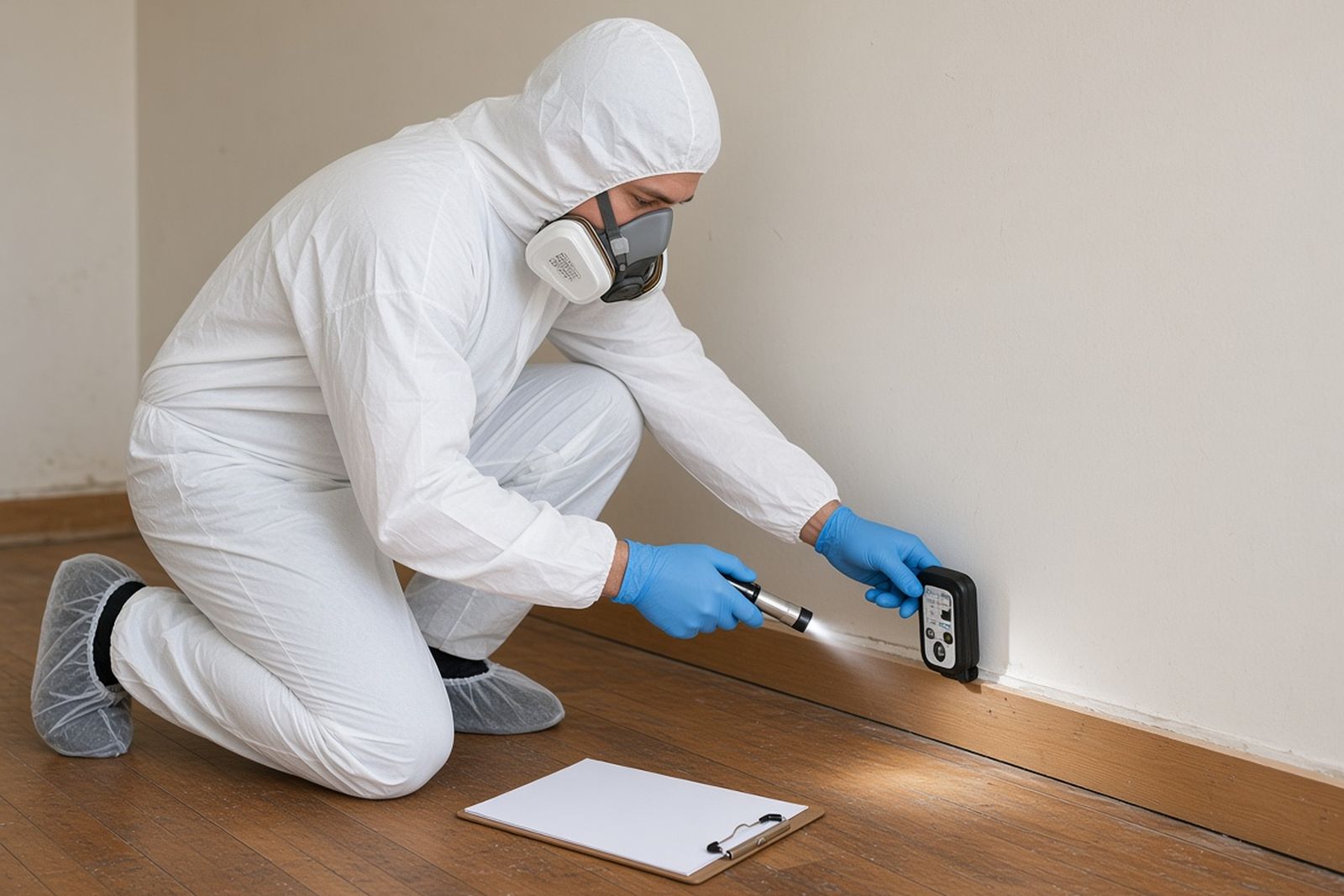
Technician in coveralls and a half-face respirator checking a baseboard with a flashlight and moisture meter
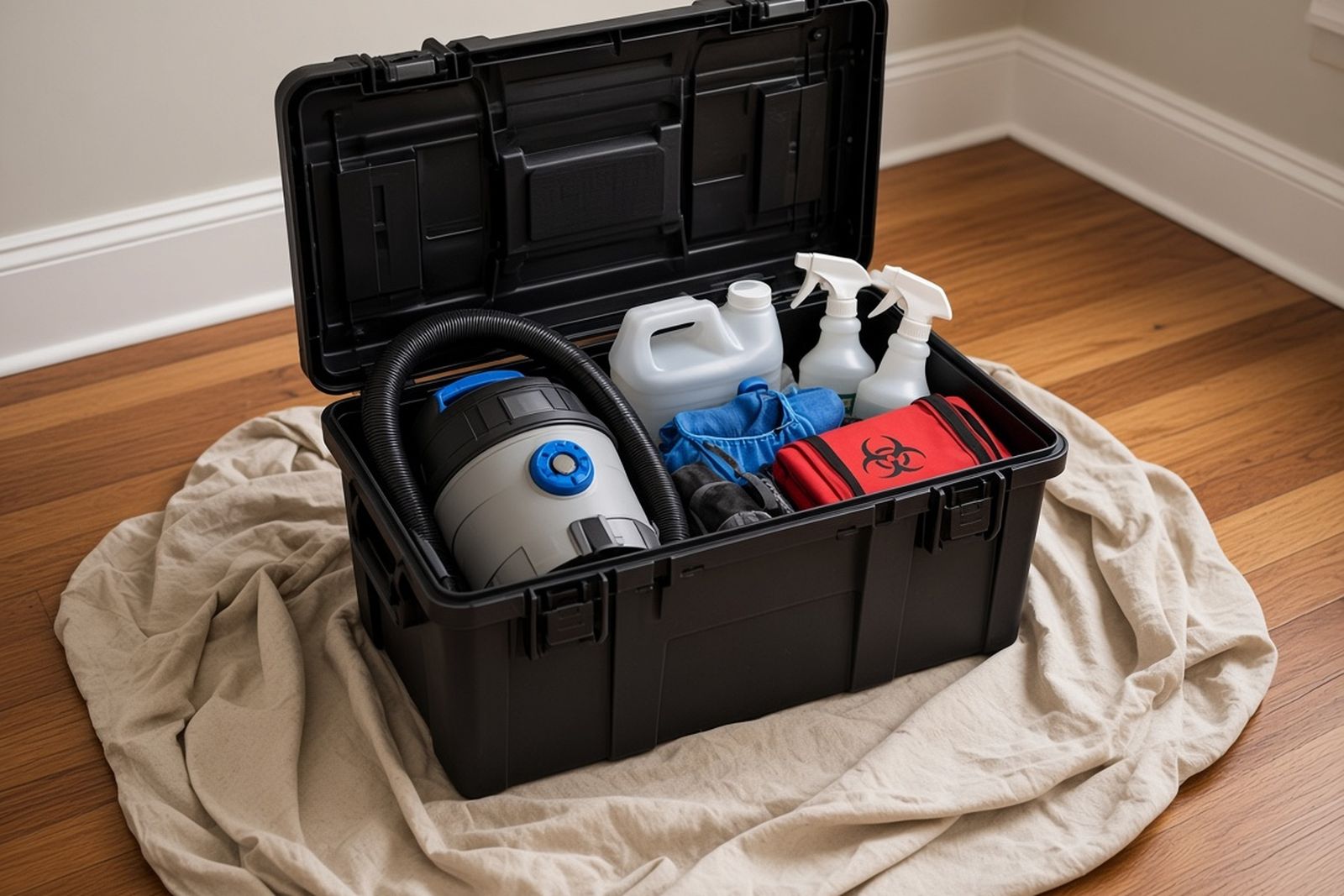
Open equipment case on a drop cloth holding a HEPA vacuum, disinfectant jugs, spray bottles and red biohazard bags

Facts worth knowing

  • Flooded residents in New Brunswick focus groups said the paperwork for insurance and government compensation was confusing.

    Why it matters: Expect the forms to take effort, and ask your adjuster or a local aid office to walk you through them.

    Source: Woodhall-Melnik et al., 2019

  • Insured flood victims in a study published in 2022 said slow insurance inspections held up their cleanup.

    Why it matters: Ask your insurer how soon an adjuster can come, and whether you may start urgent cleanup after taking photos.

    Source: McKenzie et al., 2022

  • Utah's Office for Victims of Crime paid $4,869 in total for crime scene cleanup across all claims in its 2024 reporting year.

    Why it matters: Cleanup help from these programs may go unclaimed, so ask your state's victim program whether you qualify.

    Source: Utah Office for Victims of Crime, 2024

Tools that help right now

What would you do?

Poll results

Vote to see how other people answered. You can change your answer at any time.

Your experience

What was the hardest thing to figure out in the first day after the scene was released?

Be the first to vote
General

Which type of incident brought you to this topic?

Be the first to vote

Need help in Weston?

Send a short message about the property to the follow-up inbox. A coordinator can reply by email with next steps.

Your request is sent to the follow-up inbox. A coordinator can reply by email.

If anyone is hurt or in danger, call 911 first.