Palo Alto, CA

Crime Scene Cleanup in Palo Alto Eichlers, ADUs and Rentals

What to do, who to contact, and what to ask in Palo Alto.

After a violent crime at a Palo Alto home, see when cleanup can start, what to ask about Eichlers, ADUs and condos, and which records to keep.

Get an email reply about crime scene cleanup

Send a short message to the follow-up inbox. A coordinator can reply by email. This form does not send emergency help; call 911 first if anyone is in danger.

Tell us what you need help with. Share a short description; please leave out medical details, access codes, and other sensitive information.

A request does not confirm a booking. For immediate danger, contact local emergency services.

Or email info@scenerecoveryhelp.com

The short answer for Palo Alto, CA

Palo Alto police have to release your home before cleanup can begin, and blood should be left to a trained biohazard company. Below you will find what to ask if you live in an Eichler, a ranch house, a condo or a home with an ADU. You will also see which records later tenants or insurers want.

What to do, step by step

  1. 1

    Confirm the release and sketch your whole lot

    Confirm the official scene release with Palo Alto police. Then sketch your rooms, atrium, ADU, carport and any garage conversion. Photograph the edges of glass walls and slab seams before furniture moves. Find out whether a landlord, the tenant or an HOA board signs off on each space, including a shared carport. In an open layout, mark where the air returns are, since they could pull in dust while powder is cleaned up. Give the sketch to the company before work begins.

  2. 2

    Agree on a driveway or elevator plan that guards your privacy

    Ask which single route dirty items will take out of your home. On a single-family lot, that is usually your driveway or side yard. Sealed bags should not be carried past atrium glass that faces the neighbors. In an apartment building, stairs or the elevator should be covered, and waste should not move when the sidewalk is busiest. Labeled bins stay covered and out of sight. You do not owe neighbors details. A short note about truck days and a clear driveway is enough.

  3. 3

    Learn what can be saved and what must go

    On radiant slabs, atrium glass and tile, a good crew disinfects only after heavy soil is off and keeps the product wet for the full label time. Soaked carpet, pad, cork or drywall that cannot be confirmed clean is removed and packed as regulated waste. Powder on post-and-beam trim and wood ceilings is vacuumed with a HEPA filter before anything gets wet. If your slab has heating pipes, keep the heat off in affected rooms until the plan is agreed. Ask for a record of each keep-or-remove choice.

  4. 4

    Let the Bay air do its drying, then keep the file

    Damp Bay air needs time. Ask that the final check and the closing of any openings wait until things are dry. Then gather your photos, product lists, waste notes and a hand-off that lists finish work still to come. Whoever rents or owns your Palo Alto home next will benefit from that file, most of all in areas where people move in and out often. Hand a copy to your landlord, trustee or leasing company as well.

What cleanup is like in Palo Alto

Palo Alto is in Santa Clara County and has about 67,000 people. Your home may be a mid-century ranch or Eichler-style house with a radiant heated slab and an open atrium. It may be a two-story home, a backyard unit (ADU), or a condo or rental near transit and job centers. After police release your home, the check has to follow the paths inside the house. It also has to follow the outdoor links common on Peninsula lots, like carports, atriums and side yards. Warm afternoons, cool nights and seasonal Bay dampness all affect drying. Expect bloodborne pathogen and regulated waste work, not a quick fix for odor.

Your privacy depends on the kind of neighborhood. On a single-family street, the crew can often set up in your driveway, but the work is in view of the atriums and low fences next door. Near job centers and the campus, apartment buildings squeeze elevator, stair and sidewalk plans into tight spaces. Ask the company about its dirty exit route and for waste bins no one can see into. Notices to your neighbors should cover only the schedule. Students and transferred workers come and go here. So a new tenant, landlord or relocation manager may read your file later. They need clear written checks, not someone's memory.

Your records may go to a landlord, an HOA, an insurer or an estate representative, or simply stay with you as the owner. Santa Clara County health resources and City of Palo Alto information can help with local questions. Federal OSHA blood safety guidance and EPA disinfectant lists guide the methods a company should use. Ask for photos of the atrium, the slab and the ADU if you have one. Your paperwork should show two lists: what got wiped and disinfected, and what got cut out. In an open mid-century layout, have the air returns noted too. Odor and dust travel farther there than from one closed bedroom.
What to expect for your type of home

  • Eichler-style and open mid-century homes: Atriums, floor-to-ceiling glass and radiant slabs change where fluid goes. Ask the crew to check doorways and nearby carpet or cork past the stain you can see.
  • Lots with ADUs and garage conversions: Have each one listed on its own when it shares walls, laundry or air returns with your main house. Separate locks do not mean separate air.
  • Condos and rentals near Caltrain and University Avenue: The sidewalks outside are busy. Ask for covers on the elevator or stairs and a quiet path for carts.
  • Homes with carports and side yards: When these serve as quick setup spots, shoes can carry residue back inside. Make sure they are part of the area the crew checks.
  • Mid-century remodels with cork or carpet: Soft underlayment often must come out when fluid soaked into the fiber layers. Ask which layers the crew found wet.
  • HOA communities and rentals: Quiet hours and street parking limits restrict when demolition and waste pickup can happen. Have those limits written in your access log.
  • Post-and-beam homes with vaulted ceilings: Gaps high on the walls can hide residue. If police used sprayed or dusted powders, ask that upper walls and air returns be checked.
  • Apartment buildings with a shared laundry room: Dirty items should stay out of it. The one exception is when it is covered on purpose, then cleaned and recorded like your unit.

Papers and records to keep

  • The date police released your Palo Alto home and the name of whoever let the crew in.
  • Photos of rooms, atriums, ADUs, carports and garages if anyone went inside.
  • A floor or site sketch tying photos to places, including open areas and air returns.
  • Two short lists: what was hauled away, and what was kept and disinfected.
  • Products used on radiant-slab floors, atrium glass and kitchen surfaces, with label wet times.
  • How powder was removed, and whether the furnace or ADU mini-split filter showed dust.
  • Building access notes: elevator or stair covers, parking approvals and quiet hours.
  • A waste record showing how sealed bins left by the carport or side yard and who took them.
  • A memo naming Eichler-style rooms or ADU spaces to keep empty until floors or panels are replaced.

Local offices and official help

Common questions in Palo Alto

I live in an Eichler or open-plan home. Does that change the cleanup?

Yes. Open layouts, atriums and radiant slabs change what people can see and where fluid travels. Fluid can run along slab edges into nearby soft flooring. Glass walls let neighbors see in, so ask about screens and careful timing of open doors. The check should not stop at the first stained room. It should follow the floor from room to room and include air returns under high ceilings. Soaked cork or carpet often comes out. Your rebuild crew will need notes on what was opened at slab edges.

The incident was in the main house. Why check my ADU?

Because Palo Alto ADUs and garage conversions often share laundry paths, side yards or air returns with the main house. Residents or police may have walked between the buildings before release, carrying residue along. If your lease treats the ADU as a separate unit, make sure both parties are contacted. Ask for photos of the path between buildings and any shared utility room. If no one used the ADU, a short note saying nothing was found still helps your insurer. A separate lock is not proof the space was untouched.

How does drying affect the timing here?

Drying sets the pace. Peninsula evenings cool off fast, and damp Bay air can keep opened floors and walls wet longer than a warm afternoon suggests. If a wall is sealed or a floor goes down over damp wood, smells and mold can follow, even after every trace of blood is gone. The final check should come after real drying time. Windows should open only as the cleaner's label allows. Ask for notes on the weather while things dried. They help you decide when grandparents or a newborn should return.

I'm a landlord or on an HOA board. How do we set up approval?

Confirm the release first. Then read the lease or association papers to see who can approve cutting carpet or drywall inside the unit and who controls shared carports and walkways. Take pictures of the carport, walkways and front door area before work. Get the plan on paper, naming each cleaner and its label wet time. Keep the waste records with the file. A short note to other Palo Alto tenants about work hours and which carport or walkway is closed is plenty.

Which records matter most if the home is sold or rented later?

Keep the ones a stranger could follow. People move in and out of Palo Alto rentals often, many through job moves, so someone who was never there will likely read the file. Include photo keys, removal lists, disinfectant names with wet times, waste records and a statement about rebuild work still to do. Note what was found in the atrium, the ADU and the air system. Smell is not proof. Hand the file to whoever manages the home next, whether a family member, trustee or leasing company.

Our floor is a radiant-heated slab. How is that handled?

With care, because many mid-century Palo Alto homes have heating pipes set in the concrete. Cutting or grinding that slab is a much bigger choice than pulling up carpet. Ask the contractor to see whether sealed concrete or tile can be cleaned in place first. If carpet or cork on top was soaked, it may need to come out while the slab is cleaned and disinfected. Keep the heat off in affected rooms until everyone agrees on the plan, and photograph any cracks.

What should we tell the neighbors on our street?

You do not owe neighbors details. A short, calm message is usually enough: work is being done at the house for a few days, and your family would appreciate privacy. Share the days trucks will park on the street, and ask neighbors not to block the driveway. If children nearby ask questions, their parents can decide what to say. Keep talks away from the curb where the crew is working. Let the contractor answer only practical questions about timing.

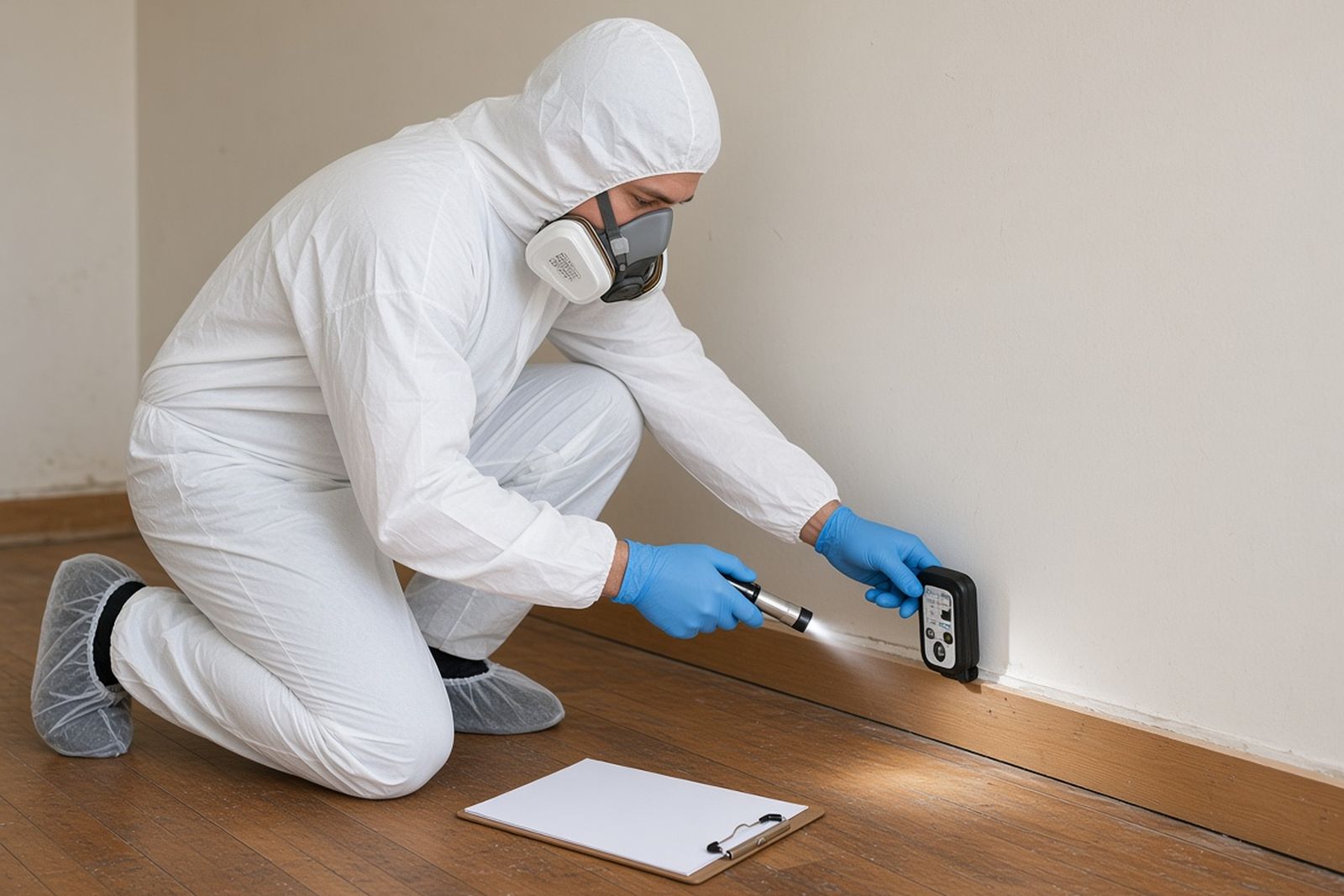
Technician in coveralls and a half-face respirator checking a baseboard with a flashlight and moisture meter
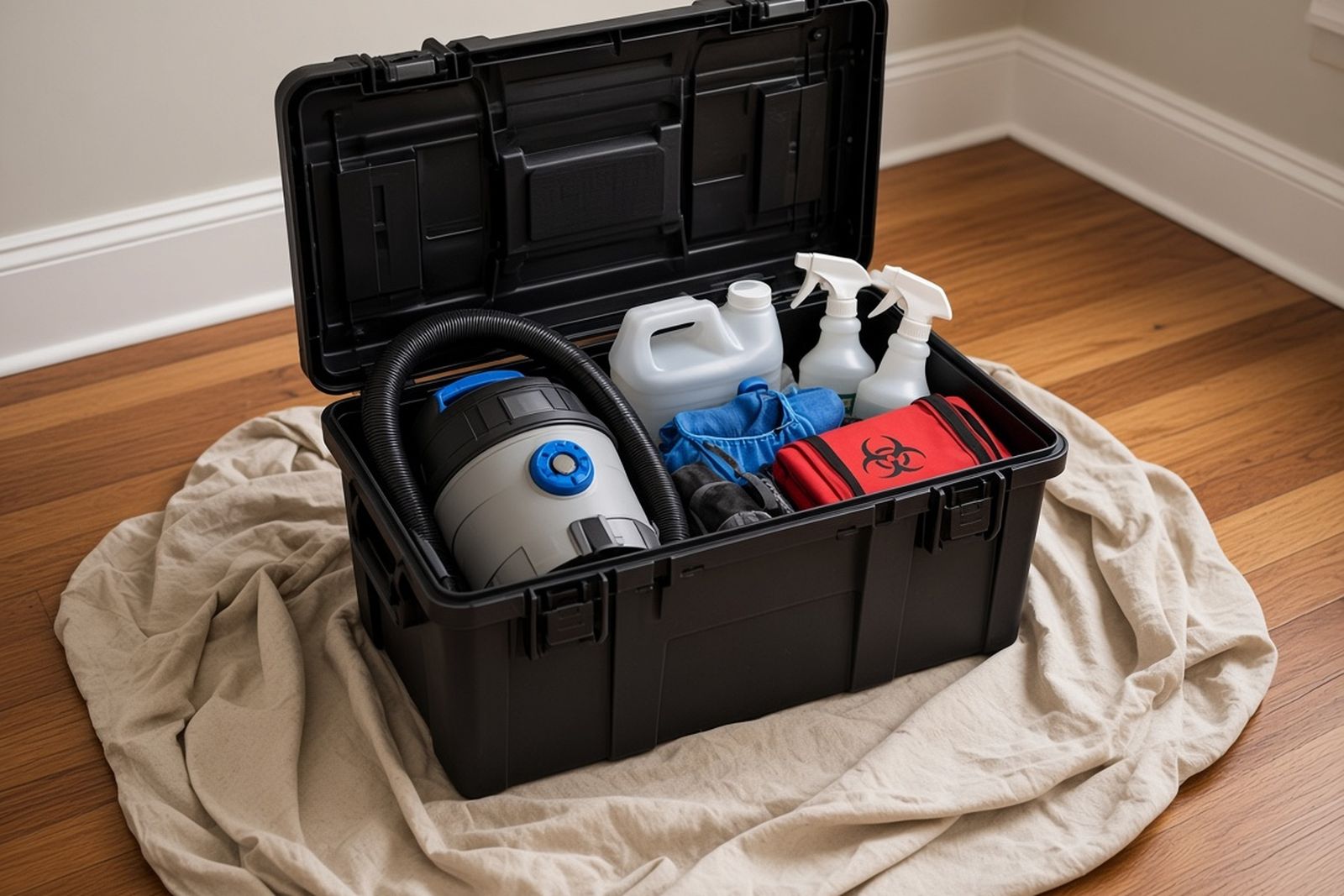
Open equipment case on a drop cloth holding a HEPA vacuum, disinfectant jugs, spray bottles and red biohazard bags

Facts worth knowing

  • In interviews with 18 people in Germany who lost someone to suicide, some said others with a similar loss understood them without long explanations.

    Why it matters: If explaining yourself is tiring, you may find a suicide-loss support group easier than talking with people who have not been through it.

    Source: Marek et al., 2024

  • In interviews with 15 grieving German adults, some valued company that came with no pressure to talk.

    Why it matters: If you are supporting someone, you may help just by sitting with them; you do not have to find the right words.

    Source: Marek et al., 2025

  • In a survey of burglary victims in three English areas, published in 2005, 18% of those who claimed on insurance said it did not cover their loss well enough.

    Why it matters: A claim may not pay for everything, so check your policy limits and what it leaves out before you plan around it.

    Source: Victim Support et al., 2005

Tools that help right now

What would you do?

Poll results

Vote to see how other people answered. You can change your answer at any time.

Your experience

What was the hardest thing to figure out in the first day after the scene was released?

Be the first to vote
General

Which type of incident brought you to this topic?

Be the first to vote

Need help in Palo Alto?

Send a short message about the property to the follow-up inbox. A coordinator can reply by email with next steps.

Your request is sent to the follow-up inbox. A coordinator can reply by email.

If anyone is hurt or in danger, call 911 first.