Brooklyn, NY

Hoarding Scene Cleanup Planning in Brooklyn, NY

What to do, who to contact, and what to ask in Brooklyn.

Brooklyn hoarding cleanup help: reopen bedroom paths, seal bags before the stoop, and keep the owner's written say over what is kept or let go.

Get an email reply about hoarding scene cleanup

Send a short message to the follow-up inbox. A coordinator can reply by email. This form does not send emergency help; call 911 first if anyone is in danger.

Tell us what you need help with. Share a short description; please leave out medical details, access codes, and other sensitive information.

A request does not confirm a booking. For immediate danger, contact local emergency services.

Or email info@roombyroomrecovery.com

The short answer for Brooklyn, NY

In a Brooklyn brownstone or walk-up, every bag has to pass a stoop railing or a courtyard gate that your neighbors use too. So begin inside. Reopen a way out of each bedroom that's in use, seal bags before they reach the stoop, and get the owner's choices in writing. FDNY and NYC Health post advice you can check yourself.

What to do, step by step

  1. 1

    Walk from each bedroom to the stoop

    Start at each bedroom in use, on the parlor floor or in the garden apartment, and walk to your unit door. Keep going to the stoop railing or the courtyard entrance. Take photos wherever you can't get through your own rooms. Ask the crew to uncover smoke alarms and panels buried under paper, and to ease back the leaning hallway stacks. A cleared front hall doesn't free someone at the back of a long railroad flat. Before the fullest rooms are opened, name the way bags will leave: stoop, courtyard gate, trash alley, or dumbwaiter shaft.

  2. 2

    Plan the handoff around sheds, bus lanes, and school times

    Ask the crew to bag things inside your home and move them only in allowed curb times. A sidewalk shed, an Atlantic Avenue bus lane, school dismissal on Prospect Park West, or a BQE ramp can take away the stoop edge you counted on. Have a backup handoff spot written down before the first bag leaves. The units next door only need the hours and where not to leave their things. Measure any bin against your narrow curb lane. Most Brooklyn blocks have no driveway to fall back on.

  3. 3

    Put the owner's choices in writing

    Your super's keys give access. They don't give the power to discard. Ask the owner or the estate's representative to sign off on what is kept, donated, or let go. Prescriptions and IDs go into the sealed tote, no debate needed. Disputed albums and ID papers wait in hold boxes. Send photos to your family across the river or out of state. Relatives without masks can work on keepsakes at the front of the flat, away from droppings. Log each disputed item that leaves, with a date a board or probate court could use.

  4. 4

    Sort special waste and get a plain report

    Ask the crew to sort outgoing bags on the parlor floor by where they're headed: DSNY trash night, recycling, donation pickup, needle drop-off, or chemical disposal. Any nest should be soaked before it's touched. That matters most once canal-side damp shows on uncovered plaster. Brownstone cellars and shared party walls let mice travel between houses, so bring in a licensed pest company if they keep coming. Stained subflooring and damp plaster belong on a separate repair list. The final report should say your rooms can be walked through and the hazards are gone.

What cleanup is like in Brooklyn

Park Slope limestone stoops, Bed-Stuy courtyard walk-ups, Greenpoint warehouse lofts, Red Hook rentals by the piers, and Brighton Beach railroad flats have one thing in common. Your sealed bags must pass painted stair railings long before they reach the curb. A vault under the stoop or a trash alley gate can give you a second way out that skips the parlor. Sidewalk sheds, the school backpack rush, and trash set-out times all shrink your curb time. Humid weeks swell cardboard against the plaster, and cold snaps seal the storm windows shut. Expect the job to take longer than it would with a driveway.

You can look up fire safety advice from FDNY and pest or sanitation facts from the city health department. Housing Preservation and Development, known as HPD, adds context on property conditions that many boards expect you to know. None of these departments sorts your things or labels the person who lives there. A super's key ring doesn't let anyone toss a tenant's belongings. If a notice arrives, check it on the official city sites. The right to let things go stays with the owner, trustee, executor, guardian, a landlord with legal authority, or someone a court has named in writing.

Siblings across the East River, heirs in other states, and a co-op board may all want a say when a sale is near. Keep each day's target small for your family. Ask your crew for labeled sorting stations indoors. Dated hold boxes protect albums, immigration papers, or military keepsakes while you talk it over. On day one, lock prescriptions, eyeglasses, IDs, and mobility aids in a sealed tote. Your block adds its own limits too: damp near the Gowanus Canal, Atlantic Avenue bus lanes, school dismissal on Prospect Park West, and curb time under the BQE ramps.
What to expect for your type of home

  • Parlor-floor brownstones: You need a walkable path from the bedrooms and bathroom to your unit door. Ask for that before any keepsakes are pulled. Have the old dumbwaiter shaft checked too.
  • Courtyard walk-ups: Ask your super which hours and hallways the crew may use, and whether the building allows a container out front. Get the answer before you book a date.
  • Greenpoint warehouse lofts: You may have a freight elevator or wide stairs. Tell the company which, so it doesn't bring a plan made for a narrow limestone stoop.
  • Railroad flats: Each room opens into the next, so one blocked middle room can cut off the back bedroom. Ask for that chain of rooms to be cleared first.
  • Row houses with a vault under the stoop: Old paint and solvents often end up down there. Ask for the vault to be checked apart from the papers on the parlor floor.
  • Century-old houses with decades of books: Old floor beams can sag under that weight. If a floor dips or a door sticks, ask the crew to stop work in that room.

Papers and records to keep

  • A signed letter from the owner or estate representative covering what is kept, donated, or let go
  • Photos of each bedroom path and the stoop or courtyard gate, before and after
  • Notes from your building agent or super on hours, floor covers, and dumpsters
  • A list of the day-one box: pills, IDs, phone, and the deed or lease
  • A log of what went to DSNY trash, recycling, donation, needle disposal, and chemical drop-off
  • Notes on nests and canal-side damp found behind outside walls or in the vault under the stoop
  • The hold-box ledger, with the date set aside and a photo number for each box
  • A contractor list for the row house: floors, plaster, and mouse-proofing along the party walls

Local offices and official help

Common questions in Brooklyn

Why clear the bedroom path before we sort keepsakes in our brownstone?

Because a blocked bedroom or bathroom can stop EMTs or firefighters from reaching someone in a narrow row house. That matters more than any album. In a railroad flat, one blocked middle room can cut off the back bedroom. Take a picture of the blocked hallway on day one and again once it's clear. Ask the crew to uncover smoke alarms early and to take tall stacks down from the top, so nothing falls on the stairs.

There's a sidewalk shed and a bus lane out front. How do we load?

Pick a backup handoff spot before the first bag leaves your apartment. Sheds and Atlantic Avenue bus lanes take away the stoop edge you'd like to use and cut your curb time. Trips should be brief and covered. Ask for a photo of the limit for your records. Keep every bag out of the bike lane. Scaffolding may slow the loading, but bags still can't wait in your shared entry.

Our super in Bed-Stuy has the keys. Can he tell the crew what to toss?

No. Keys give access, not the right to choose. Whoever owns the brownstone, or has legal power over the estate, signs off before anything goes down the stoop. When siblings disagree about a piece, it gets photographed and stored in a dated box. Medicine and ID are boxed right away, no matter who disagrees about the rest. If the lease or trust wording is fuzzy, the disputed items wait until an attorney answers.

How is loading from a Greenpoint loft different from a limestone stoop?

A loft may have a freight elevator or wide stairs for carrying. A limestone stoop sends sealed bags past railings your neighbors use all day. Use the loft plan on a stoop, or the reverse, and your day grinds to a halt. Have the company measure the real doorway, pad the railings, and do all the bagging indoors. Ask for those limits in writing. They explain why a stoop job takes longer than one with a freight elevator.

When is a Red Hook or Park Slope cleanout really done?

Your row house is safe when the bedroom floors connect to the stairs and the front door, the bathroom works, and the hazards are packed out. Comfort may still take plaster patching, new floors, or sealing the gaps where mice got in. Don't let anyone tell a buyer or landlord that NYC signed off unless an agency really issued something. Dated pictures at each step settle later questions. Emotional support is separate, and it comes from the person's own doctor or counselor.

The cleanup uncovered old problems in the house. What now?

Photograph each one and add it to your property file. Clearing a brownstone can turn up cracked plaster, leaks, old wiring, or damaged floors that sat hidden behind stacks. Ask a licensed contractor, electrician, or plumber to inspect before those rooms are used again. If your building is in a landmark district, check with the city before any repair to the outside. Cleanup and repair are two separate jobs, and they should be billed that way.

How do we make sure religious and cultural items are treated with respect?

Tell the company early which items need special care. Brooklyn households come from many traditions, and a home may hold religious texts, altars, prayer items, and family heirlooms. Say whether each should be kept, returned to a place of worship, or disposed of in a certain way. Ask the crew to set them aside in a clean spot. Clergy or community leaders can often advise you on items your family isn't sure about.

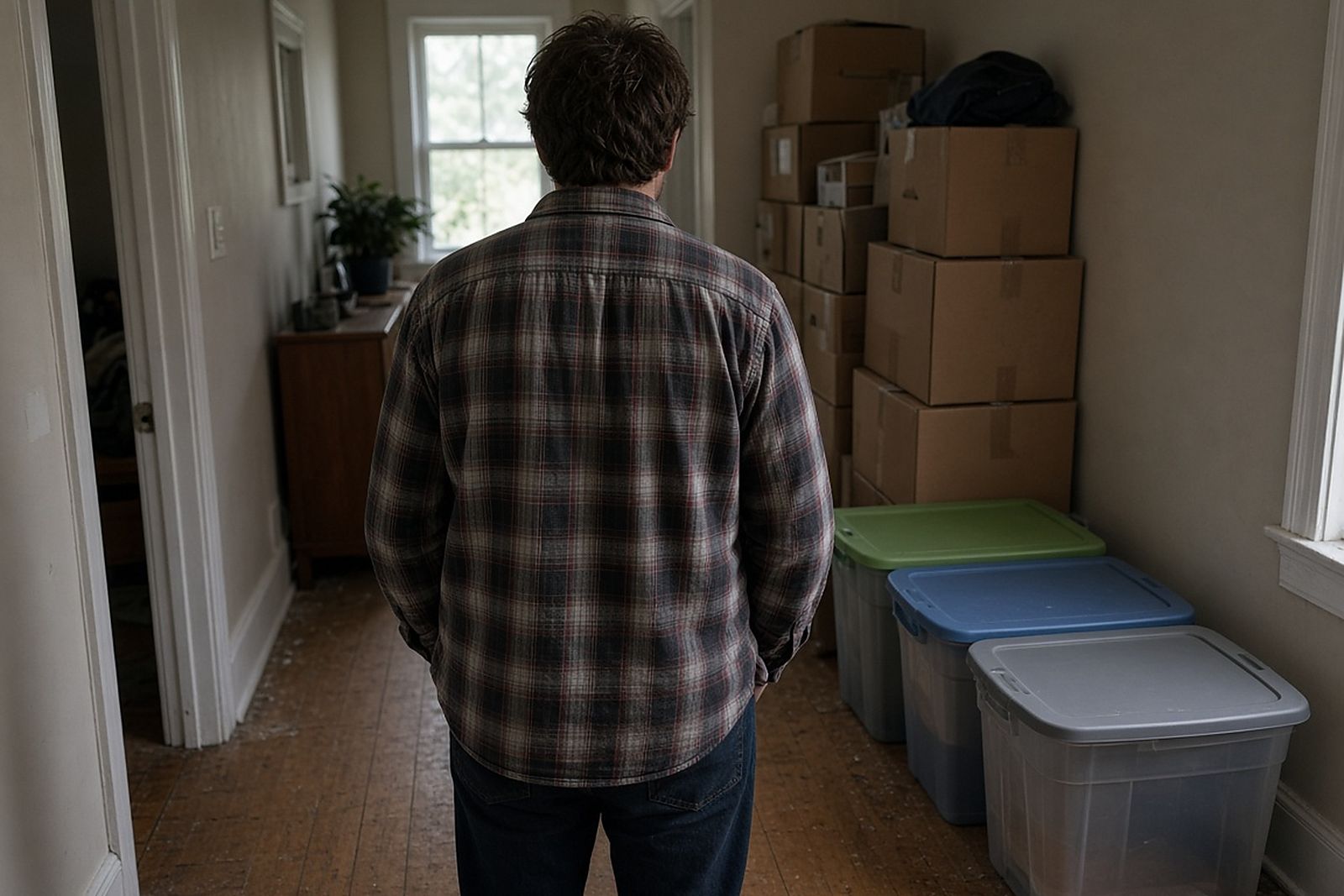
Person seen from behind in a hallway beside stacked boxes and three colored sorting bins
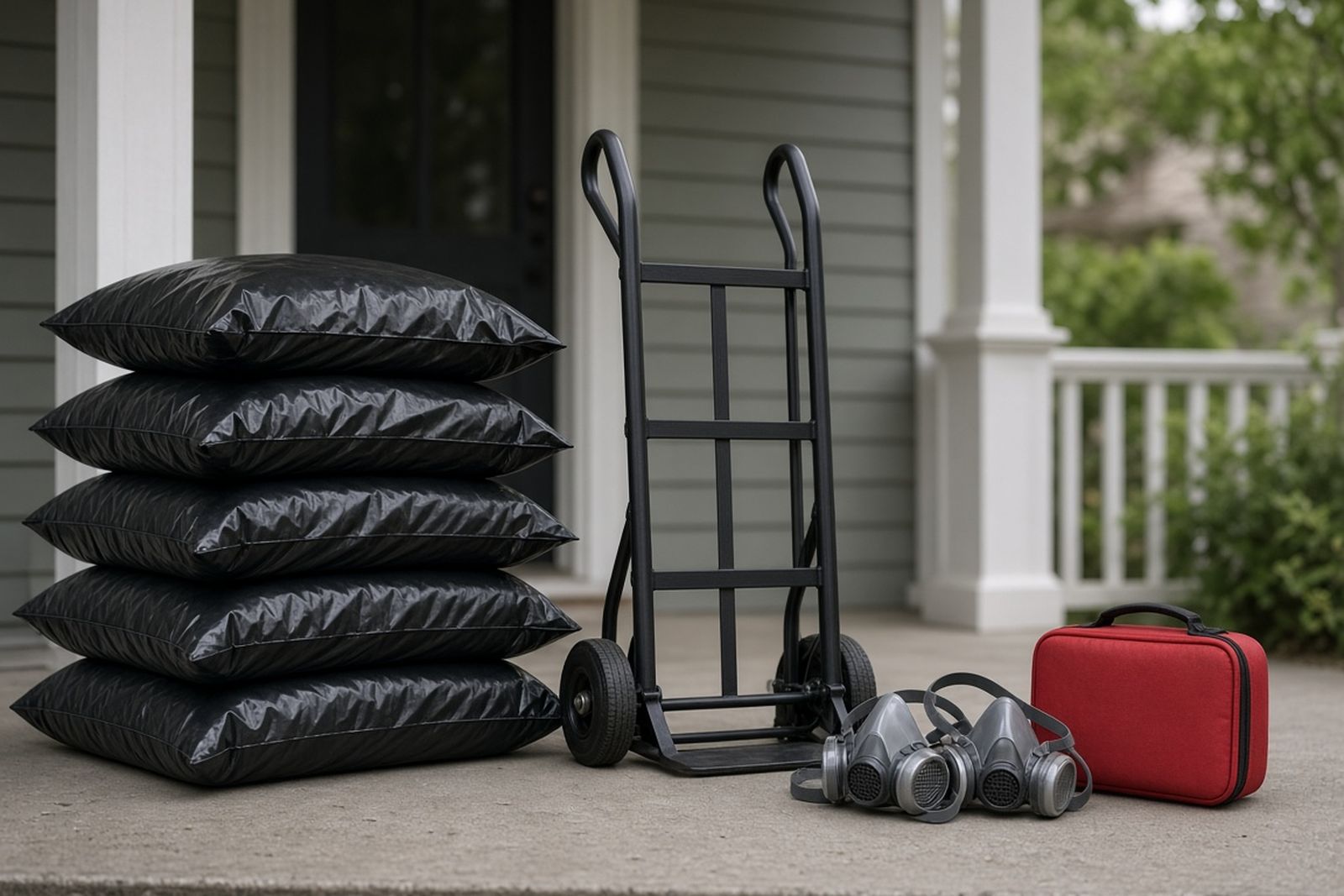
Contractor bags, a hand truck, respirators and a first-aid kit staged on a porch

Facts worth knowing

  • Claims professionals say standard home insurance policies have exclusions for neglect, failing to protect property and poor upkeep that can complicate hoarding-related claims.

    Why it matters: Read your policy's exclusions and ask your insurer before you assume damage in a hoarded home will be covered.

    Source: CLM Magazine (Claims and Litigation Management Alliance), 2011

  • In interviews with 21 Australian widows over 65, paperwork and official tasks made the early period after a death harder.

    Why it matters: You may want to ask a relative or friend to help with forms, calls and claims in the first weeks.

    Source: DiGiacomo et al., 2015

  • In a large online survey, 8–12% of people who hoard and their family members reported an eviction or eviction threat due to hoarding.

    Why it matters: If you rent, hoarding may lead to an eviction notice, so ask your landlord exactly what must be fixed and by when.

    Source: Tolin et al., 2008

Tools that help right now

What would you do?

Poll results

Vote to see how other people answered. You can change your answer at any time.

Your experience

If a relative's home had become unsafe, what would be your first step?

Be the first to vote
Process

How much control should the occupant keep over what leaves the home?

Be the first to vote

Need help in Brooklyn?

Send a short message about the property to the follow-up inbox. A coordinator can reply by email with next steps.

Your request is sent to the follow-up inbox. A coordinator can reply by email.

If anyone is hurt or in danger, call 911 first.