Plano, TX

Hoarding Scene Cleanup Planning in Plano, TX

What to do, who to contact, and what to ask in Plano.

Hoarding cleanup help in Plano, TX. Where to start, how HOA rules and summer heat shape the work, and the questions to ask before you hire a crew.

Get an email reply about hoarding scene cleanup

Send a short message to the follow-up inbox. A coordinator can reply by email. This form does not send emergency help; call 911 first if anyone is in danger.

Tell us what you need help with. Share a short description; please leave out medical details, access codes, and other sensitive information.

A request does not confirm a booking. For immediate danger, contact local emergency services.

Or email info@roombyroomrecovery.com

The short answer for Plano, TX

If rooms in a Plano home are blocked by belongings, begin with safety, not with the whole house. Get one clear path to an outside door and move things away from heat sources. From there, a good cleanup company works with you through HOA rules and North Texas heat, and you stay in charge of what goes.

What to do, step by step

  1. 1

    Start with a safe path and the heat

    Ask the crew to open your outside doors and bedroom paths first. Anything that burns should be moved well back from your water heater and breaker panel. In North Texas heat, garage work belongs in the cooler hours, and the one air-conditioned room you rest in should never be filled with trash bags. Ask for a photo each time an exit is cleared. If you see sagging under attic or high-shelf storage, tell the crew so no more weight goes on it.

  2. 2

    Tell your association the plan, not the details

    Find out where the bin may go, what the street parking limits are, and whether the alley can be used. A good crew protects HOA landscaping and sidewalks and keeps fire lanes and mailboxes reachable. Give your property manager the timing. You do not owe anyone a list of what is inside. If the outdoor setup is delayed, sorting tables can still go up indoors, placed where they do not block your exits. That way your project keeps moving while approvals come through.

  3. 3

    Sort indoors, with your rules posted

    Sorting works best inside the cooled house, at labeled tables, with the rules for each pile posted where you can read them. Ask that your medicine, IDs and work devices be handled first. Keepsakes you are unsure about can wait for a slower look. If you are the person with legal authority, relatives without it should not throw things out over your objections. Ask the crew to record the day's choices before they leave. Those notes protect you if questions come up later.

  4. 4

    Ask about hidden hazards and the wrap-up

    Needles and body waste need to stay apart from other trash, and droppings must be handled the safe way. Once areas are uncovered, look with the crew for water damage from AC drips and for mold near vents and returns. Hard surfaces get cleaned. Ask for soft materials, like your carpet and couches, to be listed separately so you can choose. Bring in pest control if it is needed. Finish with a to-do list that separates cleaning from remodeling. That list is what you will hand to the next trade.

What cleanup is like in Plano

Your Plano home likely sits in a planned community with firm rules about the outside and about parking, even though the real danger is indoors. Summer heat here is a safety issue for anyone hauling, so expect the crew to take water breaks and to stage in shade. Inside, piles in closets and living rooms can block your air returns and make the air stale. North Texas heat is dry, yet drips from the AC and rooms kept shut still cause damp spots and mold. Once your paths are open, ask the crew to look at air quality next.

Plano Fire-Rescue and City Code Compliance are the official places to ask about safety and property upkeep. Collin County and Texas public health sources can help with questions about cleanliness. None of these offices will go through your belongings with you. If your association wants the house fixed by one date and your lease or family is pushing another way, ask the company for a written plan in steps. Your exits are opened first and progress is recorded. Be wary of anyone who promises you an empty house in one day.

Many Plano garages have turned into storage rooms. Yours may hold chemicals, fuel, and attic pull-down stairs loaded with more weight than they should carry. Tell the crew if you see sagging there. If the kitchen is blocked, pet food and trash bring in mice and insects. Houses here sit close together, so think about privacy for your mail and electronics. Ask that bags by the dumpster stay closed. Your neighbors and the HOA need the schedule. They do not need a description of your home.

What to expect for your type of home

  • HOA single-family homes: Confirm the rules on bins and parking before a container lands on your driveway or alley. Ask for approval in writing and give the company a copy.
  • Townhomes and apartment communities: Line up what the tenant, the owner and the association are each told. Make sure it is clear in writing who has the right to decide what goes.
  • Homes with garage storage: Garages in Plano get very hot. Ask the crew to check fuel, paint and spray cans first, and to haul from there in the cooler hours.
  • Homes with attic pull-down stairs: A sagging ceiling or a shaky ladder under attic boxes is a warning sign. Point it out, and expect the crew to keep off it until an expert checks.
  • Homes with blocked air returns: After the first exit path is clear, ask that the AC unit and its returns be uncovered. Look for drip damage and mold near vents that were buried.
  • Homes with pets: Pet waste and hidden food draw pests in suburban houses. Tell the crew where animals have lived, so they bring the right gear and check the floors.

Papers and records to keep

  • Your HOA or property manager's written approval for the bin
  • Signed permission showing who decides for each sorting group
  • Exit photos, including the garage side door if you use it to get out
  • The crew's heat plan and break times for each hauling day
  • A dated log of keepsakes held for you to look at later
  • Waste records listing trash, donations, needles and any medical waste
  • Notes on AC drips, damp and mold found once the air returns were uncovered
  • The closing list of pest-proofing and repairs for other trades to price

Local offices and official help

Common questions in Plano

How does the heat change the way a cleanup is done here?

Heat sets the order of the day. Garages and rooms without AC become risky places to work, so the crew should open a path to a cool room first and do heavy carrying in the cooler hours. Everyone needs water and rest. Blocked air returns make your home hotter and smellier, so uncovering them early helps. Fuel and chemicals in a hot Plano garage need care, because pressure builds. Heat is never a reason to toss your things without asking you.

What mistakes do people make with the HOA?

The common ones are putting a dumpster where it is not allowed, blocking a fire lane, breaking shared sprinklers at drop-off, and starting loud work outside allowed hours. Telling neighbors graphic details is another. Read your Plano association's rules and get bin approval in writing. Inside, the big mistake is a manager throwing out a tenant's things without the right to. If the HOA's deadline clashes with a safe pace, show photos of clear exits and steady progress.

Is the stuff stored in our attic a danger?

It can be. Packed boxes or loaded plywood platforms may show warning signs: ceiling cracks below, doors that rub upstairs, or beams you can see sagging from the opening. Stop walking on those areas and do not drag heavy loads across them. Many Plano homes reach the attic from the garage, where shaky pull-down stairs and falling boxes add risk. Ground-floor exits can still be cleared while the attic waits for an expert. A newer house is no guarantee.

What about pet waste and food hidden under the piles?

Pet urine and droppings in living areas are a health hazard. They change the gear the crew wears and whether your floors can be saved. An ammonia smell may mean urine has reached the carpet pad or subfloor, and cleaning alone will not fix that. Pet food and bird seed feed mice and insects, so they leave in sealed bags. If there are many animals or they seem to be suffering, animal care agencies have their own role in Collin County.

What should be in my records before I call the job complete?

Keep your permission papers, dated exit photos, the sorting rules, and notes on held items and where waste went. Add the to-do list for pests, moisture, flooring and air filters, plus the HOA bin approval. Write down what complete means for this step: exits usable, piles removed with consent, hard surfaces cleaned. Do not accept a certificate that hints the City of Plano approved the home unless an official issued it. These records also protect you if relatives later argue.

Do storms and hail get in the way?

Sometimes. Spring storms in Collin County bring hail, strong wind and sudden downpours. An open dumpster can fill with rain, which makes it heavier and harder to haul away. Loose bags on your driveway can tear. Watch the forecast with the crew. Bins should be covered or closed when storms are coming, and bags can wait in the garage until pickup. If an earlier storm damaged the roof, check attic boxes for water stains before lifting them.

Our garage is full and very hot. How should we handle it?

Open it early in the day and let it air out before anyone works. Summer heat in a Plano garage can warp photos, melt candles and plastics, and make spray cans swell or leak. Have the crew check cans and chemicals first. Old paint and bug killers should go to a household hazardous waste drop-off. Photos and papers found there may be fragile. Handle them gently, and think about scanning the ones you care about most.
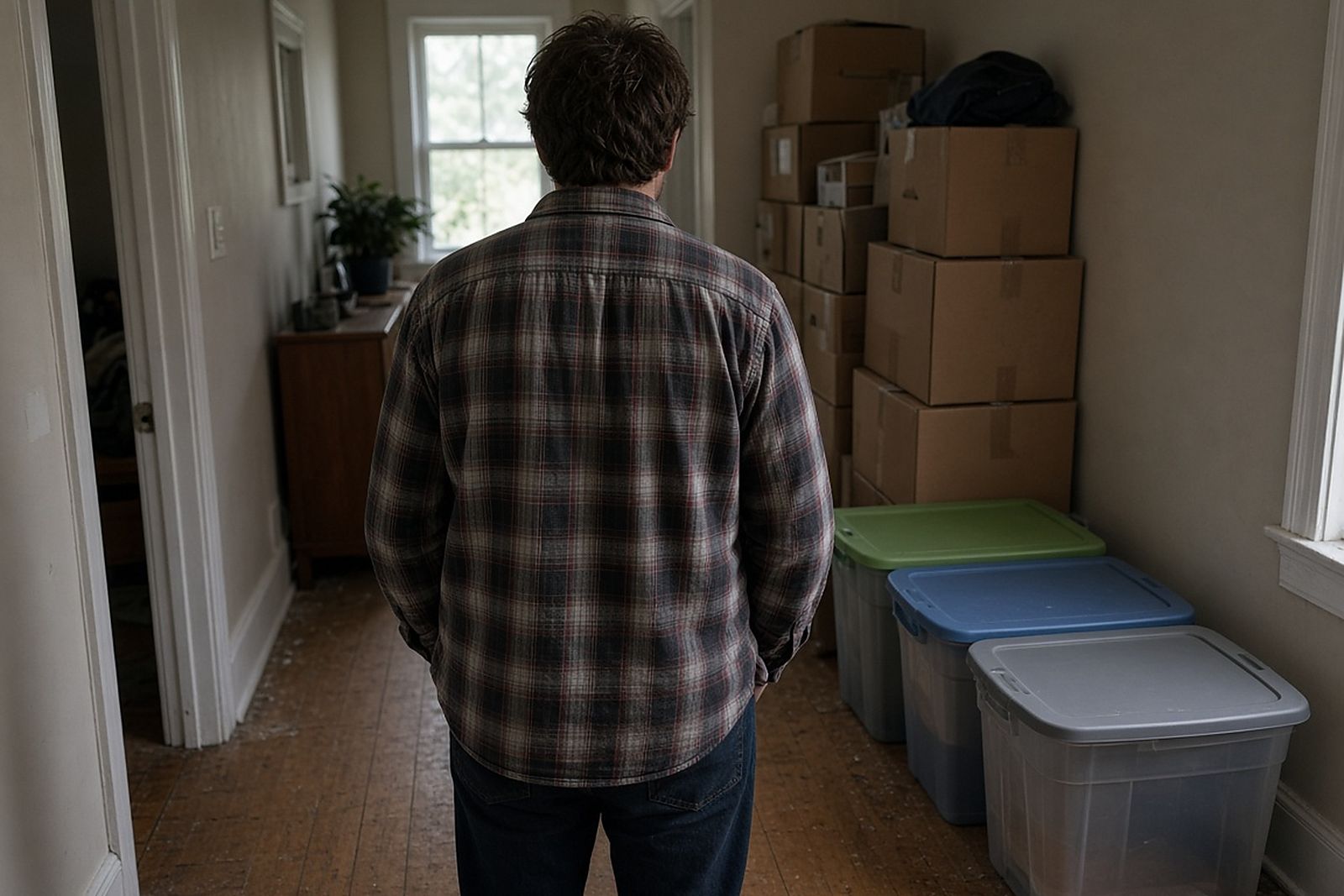
Person seen from behind in a hallway beside stacked boxes and three colored sorting bins
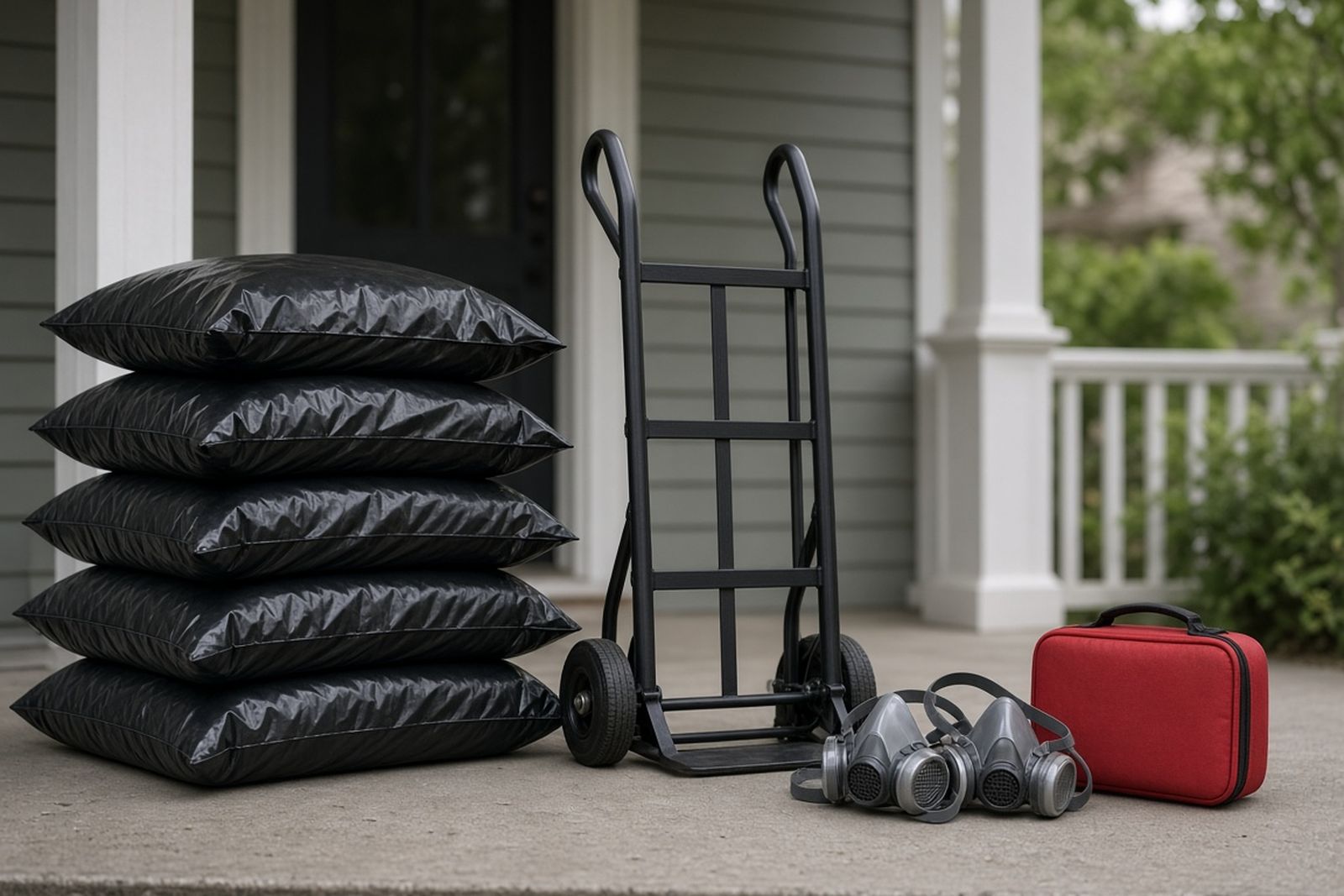
Contractor bags, a hand truck, respirators and a first-aid kit staged on a porch

Facts worth knowing

  • In focus groups with 17 English housing, health and care professionals, participants said forced clear-outs were traumatic for some residents.

    Why it matters: A forced clear-out can do harm, so you may want a company that works at the person's pace where safety allows.

    Source: Haighton et al., 2023

  • At one New York City eviction-prevention group, 32% of the 25 clients with hoarding were in legal eviction proceedings at the time.

    Why it matters: Hoarding can put a tenancy at risk, so if you get a notice, act quickly and ask for help before a court date.

    Source: Rodriguez et al., 2012

  • In one English council's 38 recorded hoarding cases in 2021, 34% were noted as a fire and environmental risk.

    Why it matters: Ask that your cleanup starts with exits, walkways and areas near heat sources, where fire risk may be highest.

    Source: Porter et al., 2022

Tools that help right now

What would you do?

Poll results

Vote to see how other people answered. You can change your answer at any time.

Your experience

If a relative's home had become unsafe, what would be your first step?

Be the first to vote
Process

How much control should the occupant keep over what leaves the home?

Be the first to vote

Need help in Plano?

Send a short message about the property to the follow-up inbox. A coordinator can reply by email with next steps.

Your request is sent to the follow-up inbox. A coordinator can reply by email.

If anyone is hurt or in danger, call 911 first.