Jacksonville, FL

Meth Lab Cleanup in Jacksonville, FL: St. Johns Ranches, Crawl Hatches, and Duval Lab Files

What to do, who to contact, and what to ask in Jacksonville.

Meth residue in a Jacksonville home or rental? Florida has no clear state number. See how crawlspaces, storms and lab results shape your cleanup.

Get an email reply about meth lab cleanup

Send a short message to the follow-up inbox. A coordinator can reply by email. This form does not send emergency help; call 911 first if anyone is in danger.

Tell us what you need help with. Share a short description; please leave out medical details, access codes, and other sensitive information.

A request does not confirm a booking. For immediate danger, contact local emergency services.

Or email info@propertydeconguide.com

The short answer for Jacksonville, FL

If your Jacksonville house, rental or bank-owned property may have meth residue, hold off on paint and ask for wipe tests that include the crawlspace. Florida has no clear state meth number. So honest proof for your next owner or tenant comes from wipe data for your address, with FDEP and Florida DOH as state contacts.

What to do, step by step

  1. 1

    Walk the house before the shutters open

    Before the shutters come off, have the crawl hatches and sump corners photographed. Ask that any drums and foils be listed separately. Then get the wipe methods for your address, the detection limits and the mapped spots in writing. Hard surfaces near the crawl space should be included. The file should be plain that it leans on no Florida meth law. Hold off on paint until the sampling plan is signed, even if a bank or buyer is pressing you for a date.

  2. 2

    Have the house sealed and bags staged on the limestone pad

    A good crew stages sealed totes on the packed limestone driveway pad. Totes stay off soft riverbank shoulders and boardwalk edges. Your house is sealed off from the chain-link yards next door. Carpet over the crawl space is torn out if early wipes show residue. Hard surfaces that stay are washed with detergent, and the crew uses HEPA filters, which catch fine dust from the air. No one should dry sweep near an open crawl hatch.

  3. 3

    Ask about the sump, crawlspace and air handler

    Before tear-out, the air handler in your Jacksonville house goes off. The filters should be replaced and the coils checked, since Northeast Florida humidity keeps the drip pans wet. If your home is a duplex, crawl openings that join the two halves should be sealed. If unlabeled drums show up with household foils, washing should pause for hazmat testing. The crew’s safety plan must match the solvents and fine dust found in your house.

  4. 4

    Gather the file a lender or buyer will read

    Your file should hold the wipe reports on a map of the house, the custody forms and the crawl photos. Waste papers go in as well. Add a short account of any drums versus the foils. Label every result as proof for this one Duval address. They are not proof of meeting a Florida microgram law, since none exists. Failed spots should be retested before the home is listed again. If industrial containers were on the lot, keep the notes on that port-area waste with the rest.

What cleanup is like in Jacksonville

Jacksonville is spread out. Homes along the St. Johns River, Arlington bungalows with crawlspaces and Southside ranch tracts make up much of Duval County’s housing. Houses often stay shut up after Atlantic storm watches, which traps dust inside while the cooling system keeps running. You may be dealing with residue after a bank-owned ranch home was cleared out, after a rental sat vacant or after a police release. EPA’s voluntary guide to meth and fentanyl lab cleanup shows how to take wipe samples. It does not put any federal microgram rule on Duval houses, so your pass level has to be written down for your address.

Crawl hatches, lots next to port-area industry and long single-lane driveways each cause problems for you. Residue can spread, and there are few places to stage bags. Carpet over crawl spaces and return grilles can hide buildup that a living-room-only map misses. FDEP runs the hazardous-waste programs, and Florida DOH and Duval environmental health offices look at exposure questions. DEA guides explain the dangers of a cook. A cook on your property means more waste to sort and test. Smoking alone still calls for wipe data before a new tenant moves in.

Duval’s sprawl means ranch homes on half-acre lots with chain-link side yards. Bank-owned closings here slow down when the seller’s file is only paint receipts. So save your wipe reports, crawl photos and the dates of each retest. Ask the crew to set sealed bags on the packed limestone pad next to where your driveway narrows. Open laundry baskets should never be carried along the riverwalk boardwalk. If your lot is near the port and industrial drums turn up with household foils, extra waste testing may be needed.

Not every Jacksonville house is built the same way. Arlington bungalows and Mandarin river lots differ from Southside ranches built on slabs. Some crawl spaces hold sump pumps and moldy fiberboard, which soak up residue like sponges after tropical downpours. Railroad spurs near port-area lots make overnight dumpster permits harder to get. Ask for staging on your limestone driveway pad, not the soft riverbank shoulder. If a foreclosure list shows both household foils and unlabeled drums, residue washing should pause until hazmat testing is done.
What to expect for your type of home

  • Any Jacksonville home: Agree on a written wipe pass level for your house before work starts. Florida has no clear state meth number for moving back in that could stand in for it.
  • Bungalows and ranches over crawlspaces: Your sample map needs the crawl hatches and the bedrooms. Baths and cooling return grilles go on it too, so ask to see the map before testing.
  • Carpeted ranch houses: Plan to remove carpet, pad and padded furniture if early wipes or stains show residue. Ask what the company expects to pull before you agree on a price.
  • Homes with signs of a cook: Florida DEP expects cook chemicals to be sorted on their own, away from smoking debris. Ask the crew how it will keep the two apart on your lot.

Papers and records to keep

  • Photos plus notes on whether the clues point to a cook or to smoking only
  • The sampling plan for your Jacksonville house and its agreed pass level
  • A sample map covering return vents, crawl hatches and rooms above the crawlspace
  • A list of soft materials removed from the house, with the waste shipping records
  • Duval, FDEP or DOH letters, if any office wrote to you about the house
  • Buyer packet holding the last lab reports for your Duval home

Local offices and official help

Common questions in Jacksonville

Can I cite a Florida meth wipe number when I sell a bank-owned ranch?

No. California has a re-entry figure in Health and Safety Code section 25400.16, but no Florida law like that is cited for Duval homes. EPA’s voluntary guide shows good practice. It does not set a limit. Set goals for your Duval address, then use an accredited lab. Have the crawl spots mapped and the detection limits listed. Nobody should quote a “Florida number” for homes in Mandarin or Arlington.

Why does the tester photograph the sump corners in my bungalow?

Because that is where dampness and fine dust collect. Crawl spaces with sump pumps and fiberboard often hold residue that living-room maps miss, and tropical downpours push grit into those corners. Ask that hard surfaces near the crawl space go on the wipe map. An estimate that skips the hatches makes the risk in your home look smaller than it is. The real record is a lab check against your written goal, not a smell after a storm vacancy.

My lot is near the port and the railroad. Can a dumpster stay overnight?

Probably not easily. Lots near the port and railroad setbacks make overnight dumpster permits harder to get. Sealed hauls from your limestone pad on the same day are the better choice. Open laundry baskets carried along the riverwalk boardwalk spread residue back into clean rooms and lead to neighbor complaints. Ask for pictures of the covered entry where your drive meets the street, because lenders ask for them.

The foreclosure list shows both foils and unlabeled drums. What happens now?

Residue washing waits until hazmat testing is done. Household smoking debris and industrial drums are different kinds of waste. Tossing them together into regular building dumpsters leaves gaps in your records. Keep the drum and foil waste shipping records beside every later wipe report. That way a buyer of a Duval bank-owned home sees the full timeline and can trust the file.

What paperwork lets me put my Southside ranch back on the market?

You need a wipe plan for your address, custody forms and lab reports with detection limits. Put in crawl photos and coil notes. Include the waste forms and a list of discarded carpet and other soft goods, plus a short account of any drums versus foils. Tell your buyer these numbers describe this ranch house only, with no Florida meth law behind them. Keep the failed rounds and the retests.

The residue is in a manufactured home. Is it worth cleaning?

Get a clear estimate before you decide. Manufactured homes are common in parts of Duval County. They have thin wall panels, small ducts under the floor and many soft, soaking materials, so residue spreads fast. Removing carpet, paneling and even ducts is often more practical than cleaning them. Ask that the duct runs under the floor and the ceilings be sampled. Sometimes cleanup costs come close to the home’s value.

My rental turns over with military moves. Can I skip testing to meet a report date?

No. Naval Station Mayport and NAS Jacksonville are nearby, so many rentals turn over when service members transfer. If residue is found between tenants, pause the next move-in and finish sampling first. Military families may ask base housing offices for advice, so a clear file helps you. Share results honestly with the next household. Tight report dates are not a reason to skip testing.

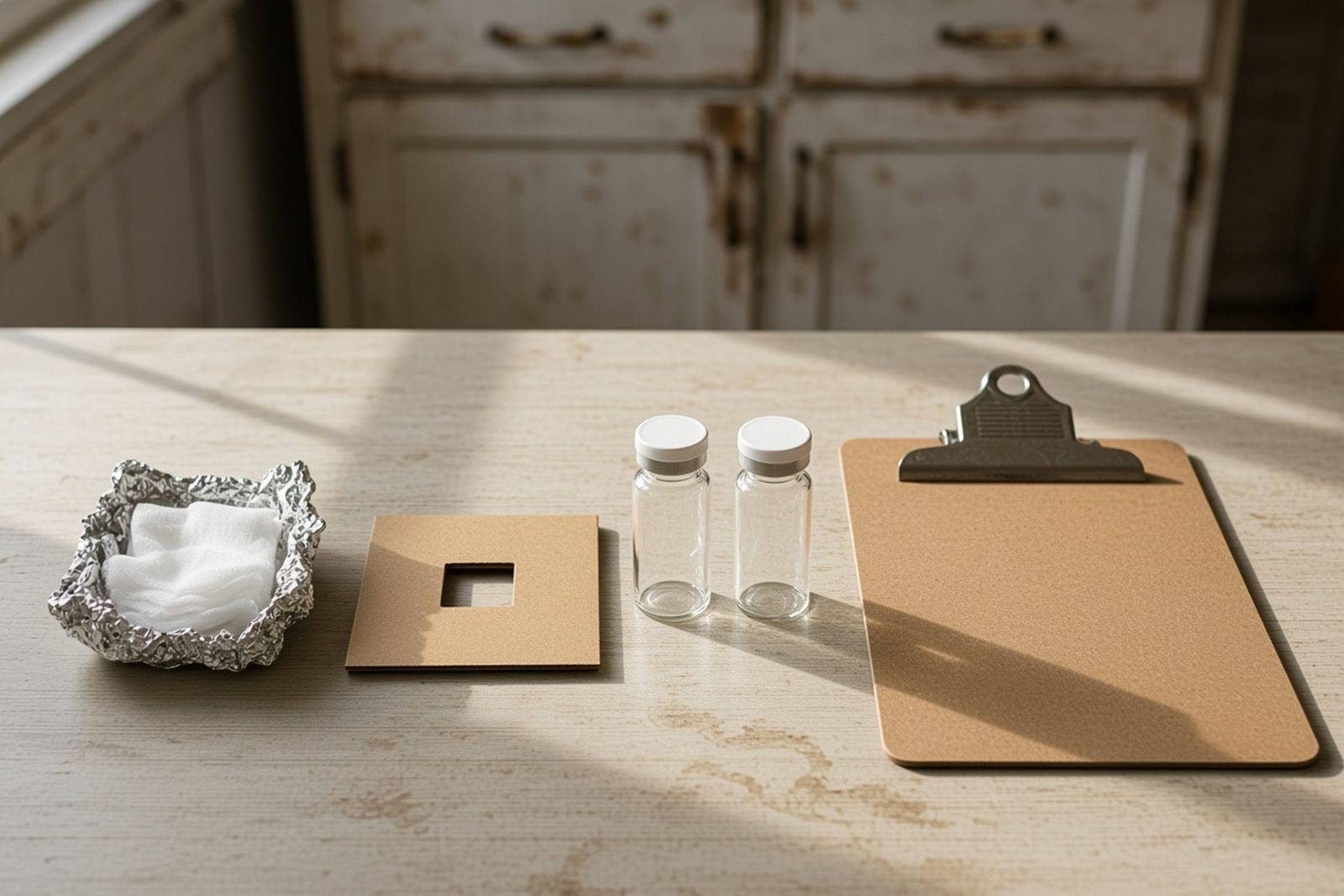
Wipe-sampling supplies on a counter: gauze in foil, a sampling template, vials and a clipboard
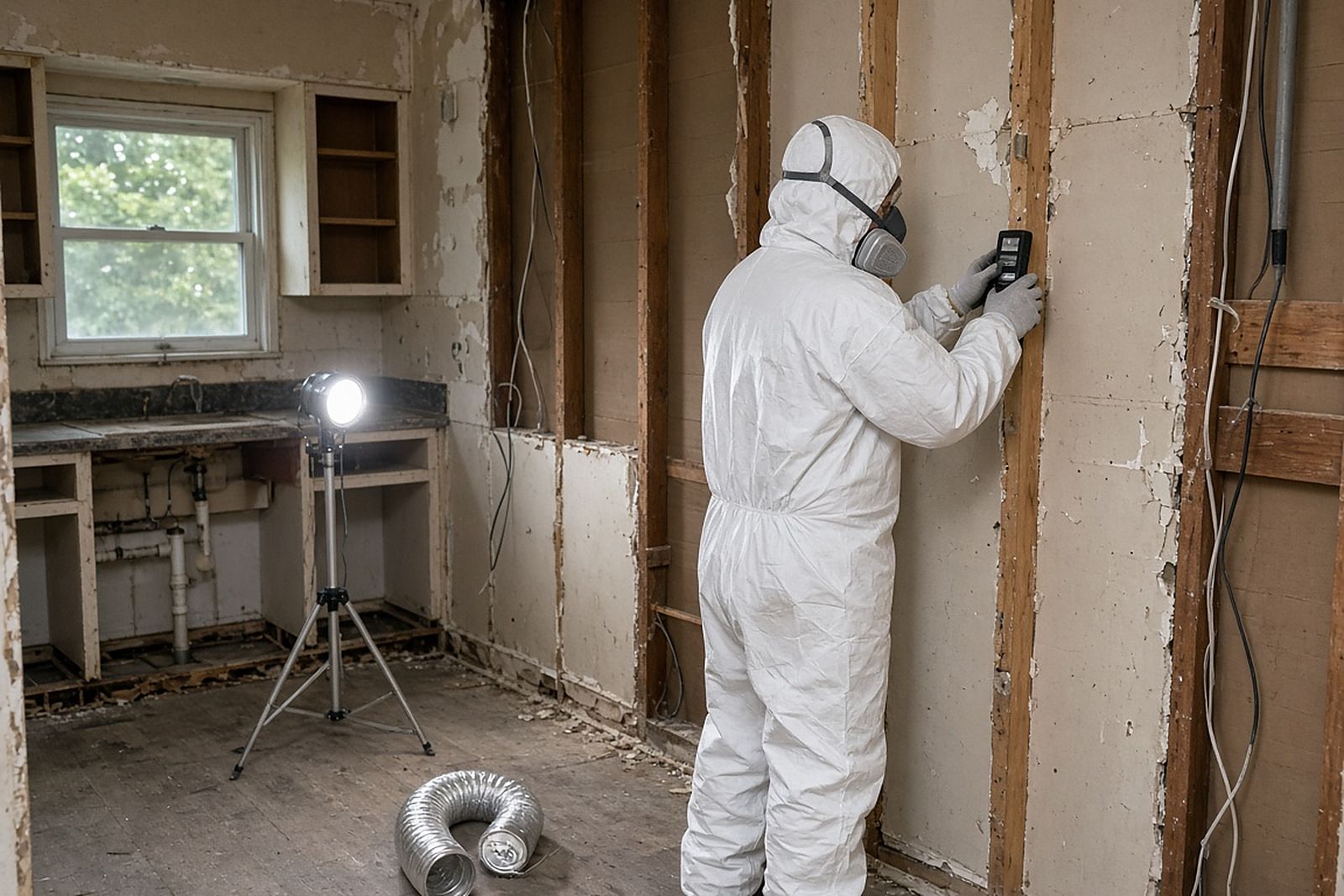
Technician in a respirator checking exposed studs in a gutted kitchen with a work light and duct

Facts worth knowing

  • A study of 63 people in 25 Australian homes contaminated by meth making or use found sleep, behavior, breathing, skin and eye problems and headaches.

    Why it matters: If you have these symptoms in a home with a drug history, ask about testing; homes where meth was only used caused problems too.

    Source: Toxics (Wright et al.), 2020

  • Oregon meth lab cleanups, as reported by Ohio's health department in 2016, averaged $6,500 per 1,000 square feet plus a $1,400 up-front assessment.

    Why it matters: Expect to pay for testing before cleanup starts, and treat these older figures as a rough guide, not a quote for your property.

    Source: Ohio Department of Health, 2016

  • Washington State requires meth-contaminated properties to be cleaned down to 1.5 micrograms of meth per 100 square centimeters of surface.

    Why it matters: If your property is in Washington, ask for final test results at or below this level; other states often use stricter limits.

    Source: Washington State Department of Health, 2025

Tools that help right now

What would you do?

Poll results

Vote to see how other people answered. You can change your answer at any time.

Your experience

If a house you wanted had a documented lab cleanup that passed clearance, what would you most likely do?

Be the first to vote
Industry

Which factor would you weigh most when choosing a meth cleanup contractor?

Be the first to vote

Need help in Jacksonville?

Send a short message about the property to the follow-up inbox. A coordinator can reply by email with next steps.

Your request is sent to the follow-up inbox. A coordinator can reply by email.

If anyone is hurt or in danger, call 911 first.