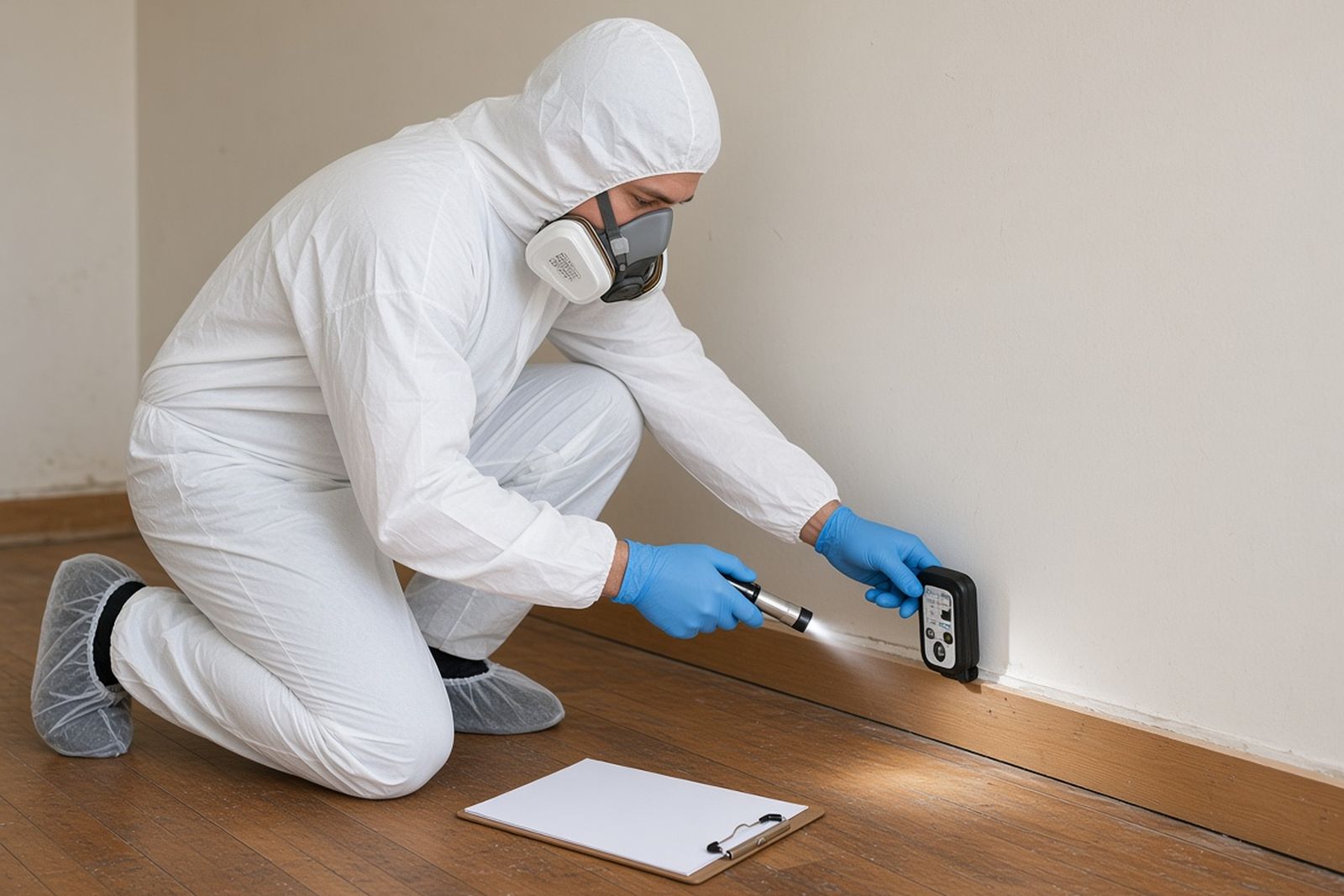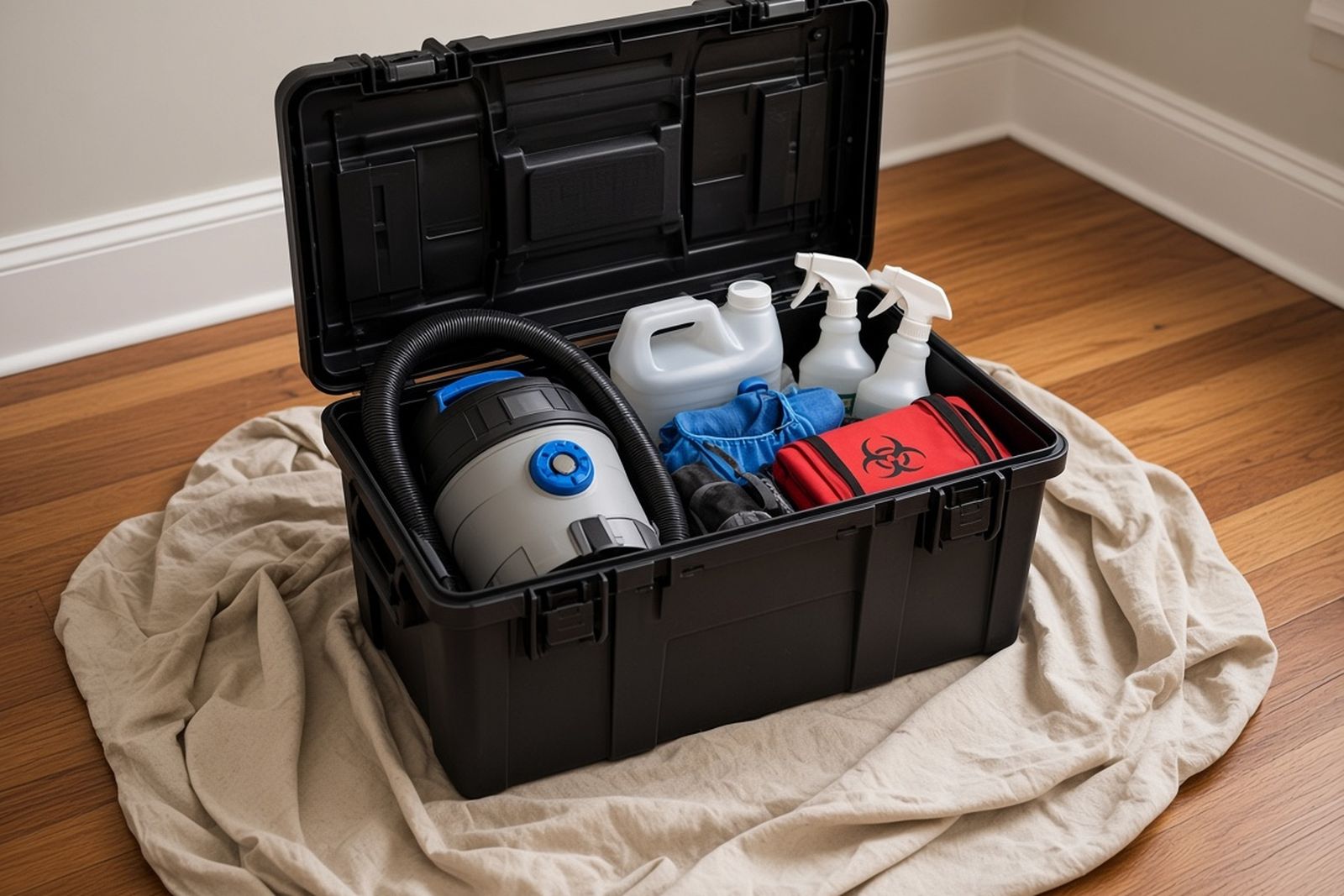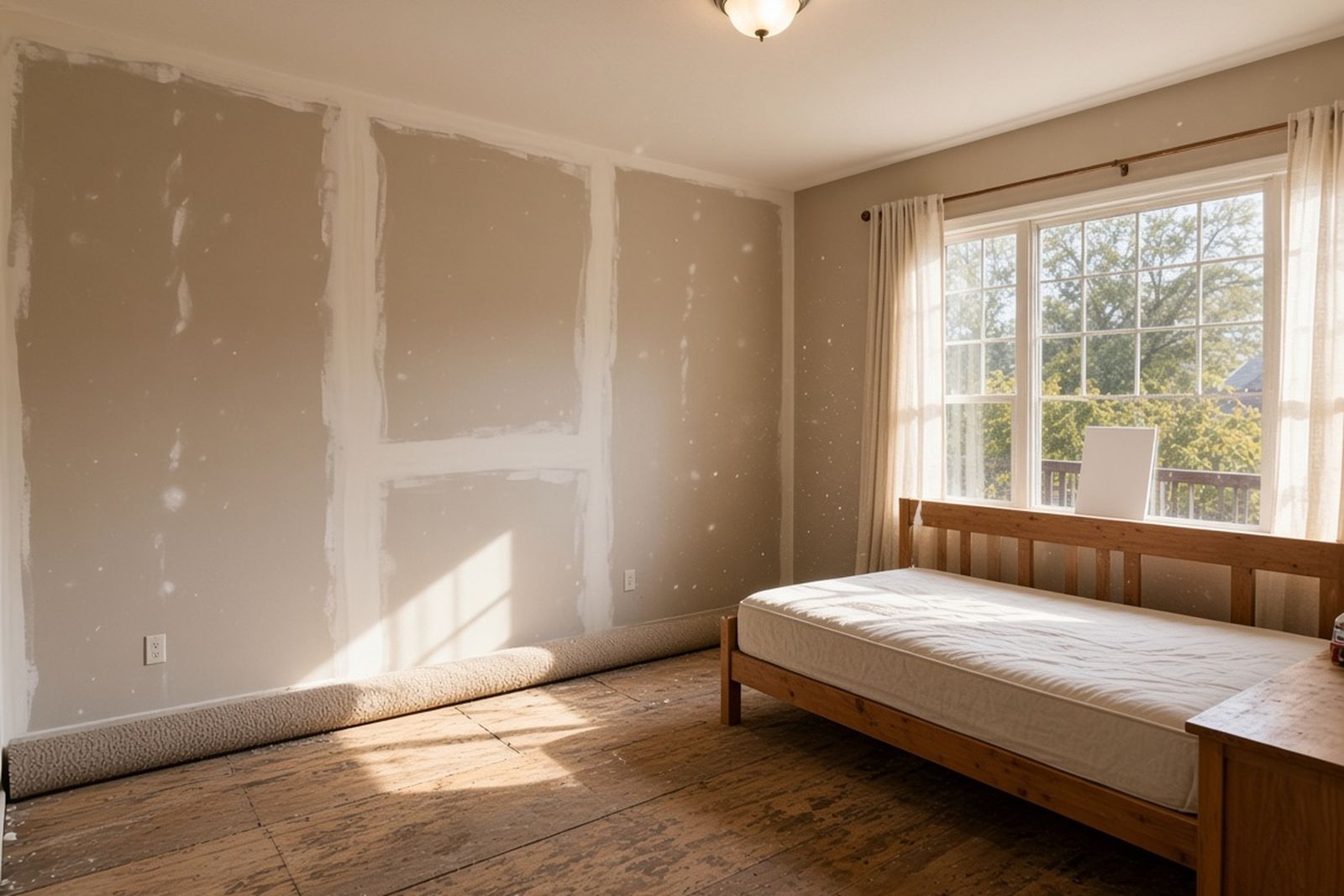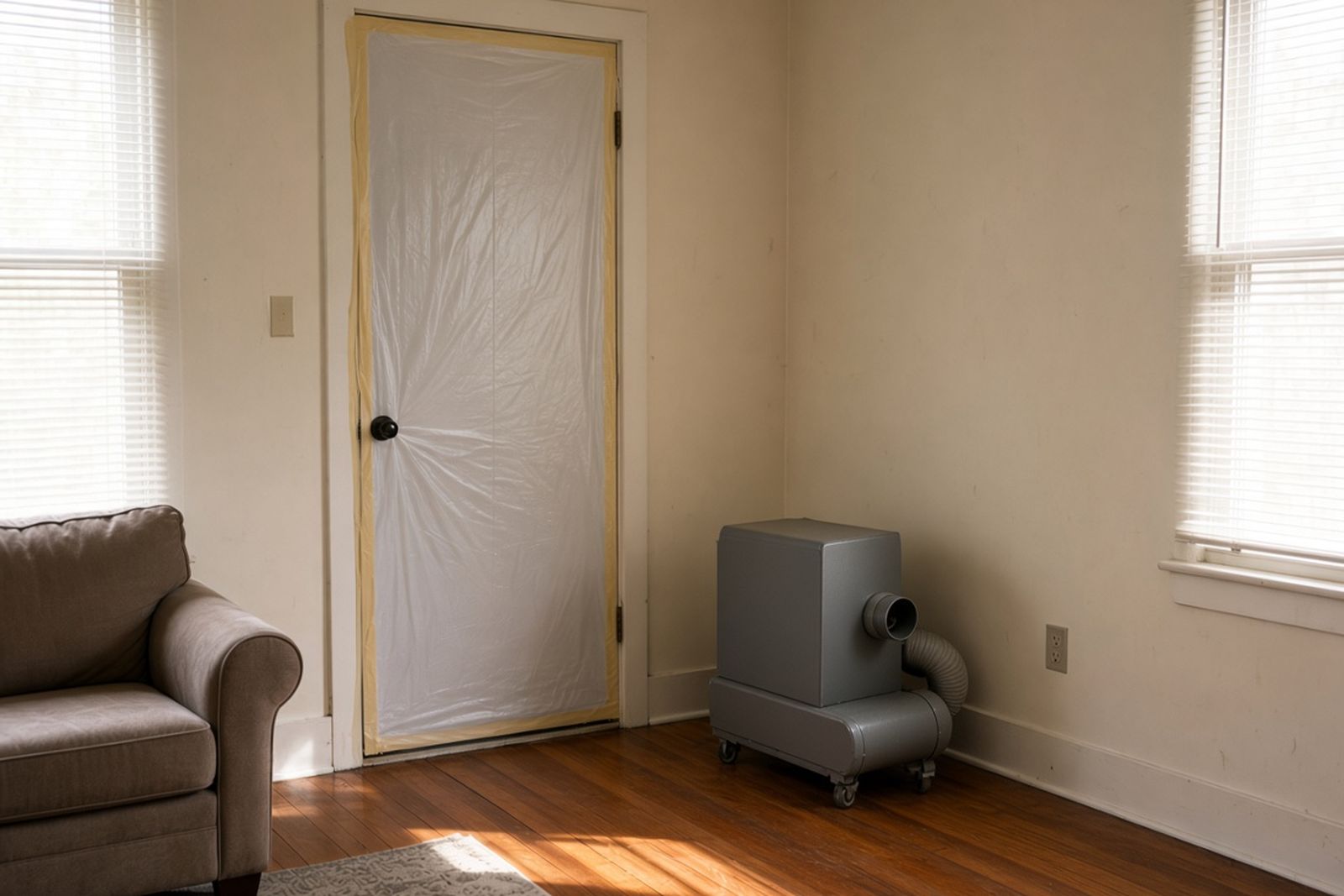
Short answer
The cleaning itself is the same in a home and a business. Almost everything around it differs. A home job centers on your household, your belongings and feeling safe again. A business job adds employees who may have been exposed, customers and tenants, and pressure to reopen. It also adds larger building systems, health department or landlord rules, and more people who need paperwork.
Same blood, different surroundings
At the level of blood and police residue, not much changes. Blood can carry disease wherever it lands. Soft or absorbent materials that soak it up usually need to come out. Hard surfaces need cleaning before they are disinfected. Fingerprint powder and police test chemicals behave the same in a jewelry store as they do in a bedroom.
The surroundings are where the two part ways. A business has different materials, different people who care about the outcome, different time pressures and often different rules. A home has a family, personal belongings and a private space that someone has to feel safe in again. Those differences shape the work plan, the schedule and the paperwork far more than the chemistry does.
Knowing which set of concerns applies to you helps you ask the right questions before you sign anything.
Who signs off: a household vs a business
In a house, the owner or the household usually decides. In a rental, the landlord controls the building while the tenant controls the belongings. Either way, only a few people are involved. You can make the decisions at the kitchen table.
In a business, authority often comes in layers. A store manager may be the first person on site but may not be allowed to sign a contract. A franchise owner, a corporate risk department, a building landlord and a property management company can all have a say. In shopping centers and office towers, the lease may say who handles incidents in common areas and who handles them inside a tenant's space.
Before a business job starts, get clear written confirmation of two things: who approves the work plan and who pays. That single step prevents the most common disputes afterward.
What do employers need to think about that homeowners do not?
When something happens at work, employees may have been hurt. They may have given first aid, or been asked to clean up afterward. If your workers could reasonably be exposed to blood, you have federal workplace-safety duties. These include training, protective gear and special handling for regulated waste, such as items caked with dried blood and blood-soiled sharp objects. Those duties are one reason cleanup is usually handed to trained professionals and not to staff.
Tell employees who helped during the incident how to report any exposure, such as blood on broken skin or in the eyes. A medical provider can then check it promptly. Do not ask untrained staff to wipe up blood or pick up broken glass just so you can reopen faster.
There is also the human side. Your staff may have seen violence or known the person who was hurt. An employee assistance program can help. So can a talk led by a counselor and flexible schedules in the days afterward. These steps can mean a great deal to people who have to walk back into that room.
Reopening and public access
Businesses often feel intense pressure to reopen. A restaurant loses income every hour it is closed. A store owner may worry about what customers will think. That pressure is easy to understand. But it cannot shorten the time a disinfectant needs to work, and it cannot skip the removal of soiled materials.
A good commercial cleanup company will plan around your business where it can. That might mean working overnight. It might mean closing off one area while the rest of the business opens, or finishing the spaces customers see first. Temporary walls or screens can keep the public from seeing work in progress.
Some businesses answer to other agencies too. Food businesses, child care centers, health care settings and lodging may answer to a health department or licensing agency. That agency may want to know what happened and what was done about it. Call your county health department's environmental health office, or the agency that licenses your business. They can tell you whether they must be notified or must inspect before you reopen.
- Confirm the police release covers every affected area, including parking and back rooms
- Decide which spaces can safely open while others stay closed
- Schedule the work so the public sees little and your staff are disrupted as little as possible
- Ask whether an agency must be notified or must inspect before you reopen
- Prepare a short, factual statement for customers or tenants if you need one
Building materials and systems
Homes usually have wall-to-wall carpet with pad, painted drywall, wood trim and home heating and cooling. Business spaces bring other challenges. They may have carpet tiles glued to concrete, drop ceiling tiles, vinyl floor tile and stainless steel fixtures. They may have large rooftop air units and ductwork shared across several tenants.
Some business materials are easier to deal with. A few carpet tiles can be replaced without tearing out a whole room, and stainless steel is simple to clean. Others are harder. Ceiling tiles above the incident can absorb spatter and must usually be replaced. A shared heating and cooling system may have carried fingerprint powder or odor into other suites. So the work plan may need to include an inspection beyond the obvious area.
In your home, the crew often has to work around personal furniture, bedding and clothing. In your business, they may work around checkout registers, inventory, medical equipment or records. Some of these must be protected or handled under privacy rules.
Belongings vs inventory
Home cleanups involve personal possessions, and those carry emotional weight. A blood-stained quilt might be a family heirloom. A good crew will photograph each item, list it and ask you before throwing anything away. They will give your household time to decide.
Business cleanups more often involve stock and equipment. Soiled goods, food, uniforms or office furniture may need to be thrown out and listed for the insurer. Business records and electronics may need special care to protect customer data. The person who decides is usually a manager following company policy, not a grieving relative.
Both settings need a list of what was kept and what was thrown out. The difference is who reads it and why. It may be a family deciding what to keep, or an adjuster reviewing a business claim.
Two incidents on one street
Two illustrative incidents on the same street show the contrast. In the first, a convenience store clerk is hurt during a robbery. Police process the store overnight. The owner wants to reopen the next afternoon. The crew removes blood from the vinyl floor, the counter and a display rack. They replace stained ceiling tiles above the register and throw out soiled snacks and a floor mat. They work behind a temporary wall while the rest of the store is cleaned. Two employees were on shift. The owner arranges counseling for them through his insurer and keeps them away from the register area until the job is done.
In the second, a resident of a nearby house is hurt during a domestic incident. The family is staying with relatives. There is no rush to reopen, but there is a great deal of emotion. The crew spends extra time sorting belongings. They remove a bedroom carpet and pad and clean the hardwood hallway. They speak gently with the family about a child's toys that were in the room.
Neither story is real. Together they show that the same technical skills are used very differently. It depends on who owns the space and what they need next.
Should I look for a different kind of company for a business?
Not always. Many crime scene cleanup companies handle both homes and businesses, but their strengths can differ. When you compare companies, ask about work like yours. A company that mostly serves households may be excellent with grieving families. It may know less about after-hours scheduling, working with tenants in a building with many suites, or the paperwork a corporate risk department expects.
For a business, ask whether the company can work overnight or on weekends. Ask how they protect your equipment and records and whether they can supply certificates of insurance quickly. Ask how they keep in touch with a landlord or property manager who is not on site. Ask whether they have worked with the kind of ceiling, flooring and heating and cooling systems in your space.
For a home, focus on how they treat your household. Ask who will be your family's point of contact and how they handle personal belongings. Ask whether they can explain the process in plain words. Ask whether they can help your family understand the paperwork a victim compensation program may request.
In both cases, ask for a written work plan after an in-person visit. Ask for proof of training in bloodborne pathogens (germs carried in blood) and in breathing protection. Ask for a clear description of how waste will be hauled away and disposed of. Those basics do not change with the address.
Insurance and paperwork
Homeowners usually look to a homeowners or renters policy. If you are a crime victim, you may also look to a state victim compensation program. A business may have commercial property coverage, business interruption coverage, crime coverage or requirements in a lease. In either case, only the insurance company decides what it pays. A cleanup company should never promise payment.
Business jobs generally need more formal paperwork. Expect certificates of insurance, safety data sheets for the products used and waste disposal records. Expect a detailed invoice with line items, and sometimes a written statement for an agency or landlord. Home clients need the same core records, usually in a simpler form.
Whichever setting you are in, keep the police report number, the signed work plan, photographs and the final report together. Those records are your best protection if questions come up later.