Field guide
Crime Scene Cleanup: Documented Completion Plan
Learn how to judge when a crime scene cleanup is finished. Match the work to the work plan, and keep the material, label, waste, test, and privacy records.
Who this is for: Property owners, families, landlords, and building managers who need to judge whether a crime scene cleanup is truly finished.
Updated 2026-08-01. Rules differ by state and city, so check the details with your local authority.
Ask about your situation
Your request is sent to the follow-up inbox. A coordinator can reply by email. Not for emergencies; call 911 first if anyone is in danger.
In short
The short answer
A cleanup is finished when the final report answers the questions set in the work plan you approved. Before work starts, agree on what proof you will accept. The report should show the final work area, what was removed and kept, methods, products, label directions, access, and changes. Where it applies, it shows waste handling, plus inspection or targeted checks, photos, open problems, and who is responsible next. A finished job does not mean your home is sterile or free of every hidden or future risk. Save that proof before rebuilding covers walls and floors, and get a clear statement of scope, findings, actions, limits, and what stays off limits.
Write the finish-line questions before choosing proof
Start with the decisions you need the final report to support. Was the released work area fully checked, within stated limits? Were affected materials removed or treated the approved way? Were edges and opened wall or floor spaces inspected? Were the belongings you kept handled as approved? Did each type of waste go out the planned way? Is the area ready for rebuilding, limited use, or normal use, as the owner decides? When your questions are clear, a pile of photos and receipts can't be passed off as proof of an unclear result.
For each question, you then pick a type of proof and a person who decides. An area map can show you the boundaries, and photos can show what could be seen at one moment. Product records can show what was chosen, while a label sets how a product may be used. Waste receipts can record a handoff, and targeted measurements can answer only the question they were designed for. No single item proves everything. Write down who reviews the file, who can ask for fixes, and who accepts the contract scope. Official limits, building use, and insurance coverage stay separate decisions unless your plan clearly says otherwise.
Match the final boundary to every change
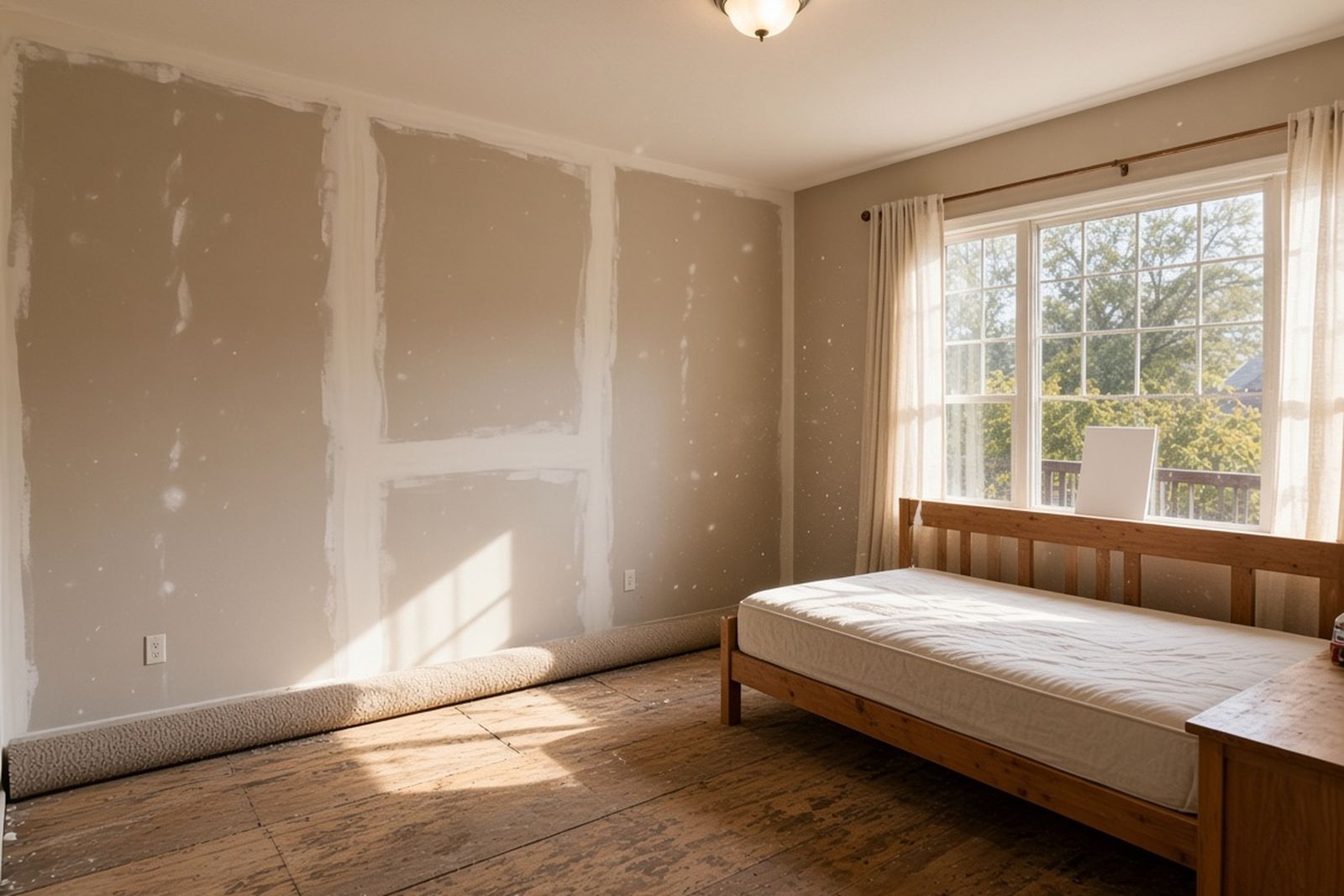
The final map lets you see how the job grew or shrank, so it should start with the boundary that was first checked. It should show every approved extension or cut. It should label rooms, wall and floor sections, paths people used, staging areas, and clean zones. It should also label removed materials, kept materials, places no one could reach, and areas another party controls. Each change should link to what was seen, a photo, an approval, and a date, with the price change when it matters. A final bill may list more square feet than the work plan you approved. Without this chain of records, you will find that bill hard to judge. A smaller finished area also needs an explanation.
It also helps you to know when each piece of proof was made. Photos can be taken before cleaning, after bulk removal, and after a wall or floor was opened. They can also be taken after final cleaning and before rebuilding, and each one answers a different question. Ask for fixed location labels and captions, so you don't have to rely on the order of the camera roll. The file should avoid graphic detail you don't need and limit who can see sensitive records. If limits on evidence or personal property affected the records, the report should say that plainly. It should not suggest the area was inspected when it was not.
Keep a record of what happened to each material
You should be able to trace each important material or wall or floor section from start to finish. The record gives its location, what was seen, the decision, the method, the result, and the final status. You will see materials sorted into groups. One group is soiled material that was removed, and another is material removed only to reach something. Others are cleaned material that was kept and untouched material that was protected. The last groups are contents sent for special restoration and items still undecided. The record should explain why a soaked-through or complex item was kept or removed, including how easy it was to reach and the agreed finish line. It should not suggest that every item leaving the room was the same kind of waste.
Your personal property needs more tracking than building materials do. The record should show each item's list number and the person allowed to decide about it. It should show how the item was packed and moved, where it went, and what finally happened to it. Some items may need a specialist or an official. These include valuable or sentimental items, legal or medical ones, digital items, firearms, and items tied to evidence. A good cleanup company describes condition and options within its skills, and it does not push families to look at graphic photos. Check the contents list against bills and storage, so that you find missing items before the work crew leaves.
Record cleaning products and worker safety steps accurately
The product record tells you what was used on your property and how, so it should be exact. You should see each cleaner and disinfectant listed by product name, with the EPA registration number where it applies. The record notes how it was mixed, the surface, how it was applied, and how long the label says it must stay wet. It adds any key rinse, fresh air, or safety step. The current EPA-approved label sets the allowed directions and claims. A receipt does not prove the product was used right. A vague phrase like “hospital-grade treatment” does not name the target or the method. Any changes from the plan should be recorded with the reason. Bulk removal and cleaning should not drop out of the record just because a disinfectant was used.
Your report does not need to reveal private worker records. But it can show you that safety steps were planned, and that problems or exposures that affected the work were handled. OSHA's Bloodborne Pathogens rule covers employers and their workers, so it is not a certificate for the customer. Worker medical details stay private. What you should see are the safety steps that matter to the property. These include access zones, needle and sharps handling, how dirty tools were moved, chemical limits, and changes to barriers. Be wary if a company claims that protective gear or training alone proves the job reached its agreed finish line.
Match waste records to each kind of waste
The final report should show you which materials went into which waste group, and why. Different items can need different handling. These include sharps and, where it applies, items soiled with blood and other body fluids that can carry disease. They also include chemical containers, liquids, building debris, reusable tools, and personal property. OSHA defines regulated waste as part of its worker safety rules. Transport rules and state or local rules can control packing, moving, and who accepts the waste. A careful company avoids both extremes. It does not treat everything as ordinary trash, and it does not call every removed surface regulated medical waste without looking at it first.
You should get the records that fit each kind of waste. These may be inside transfer logs, hauler records, or receipts from the place that took the waste. They may be the waste shipping record, when one is required, or custody forms for special contents. They should link to your job without sharing private details beyond what is needed. Sometimes the receiving site changes, a load is turned away, or wastewater goes a different way. If so, the fix should be recorded. Photos of sealed containers support the packing record. But they don't replace proof of where waste went, if your approved plan calls for that proof.
Use inspections and tests within their real limits
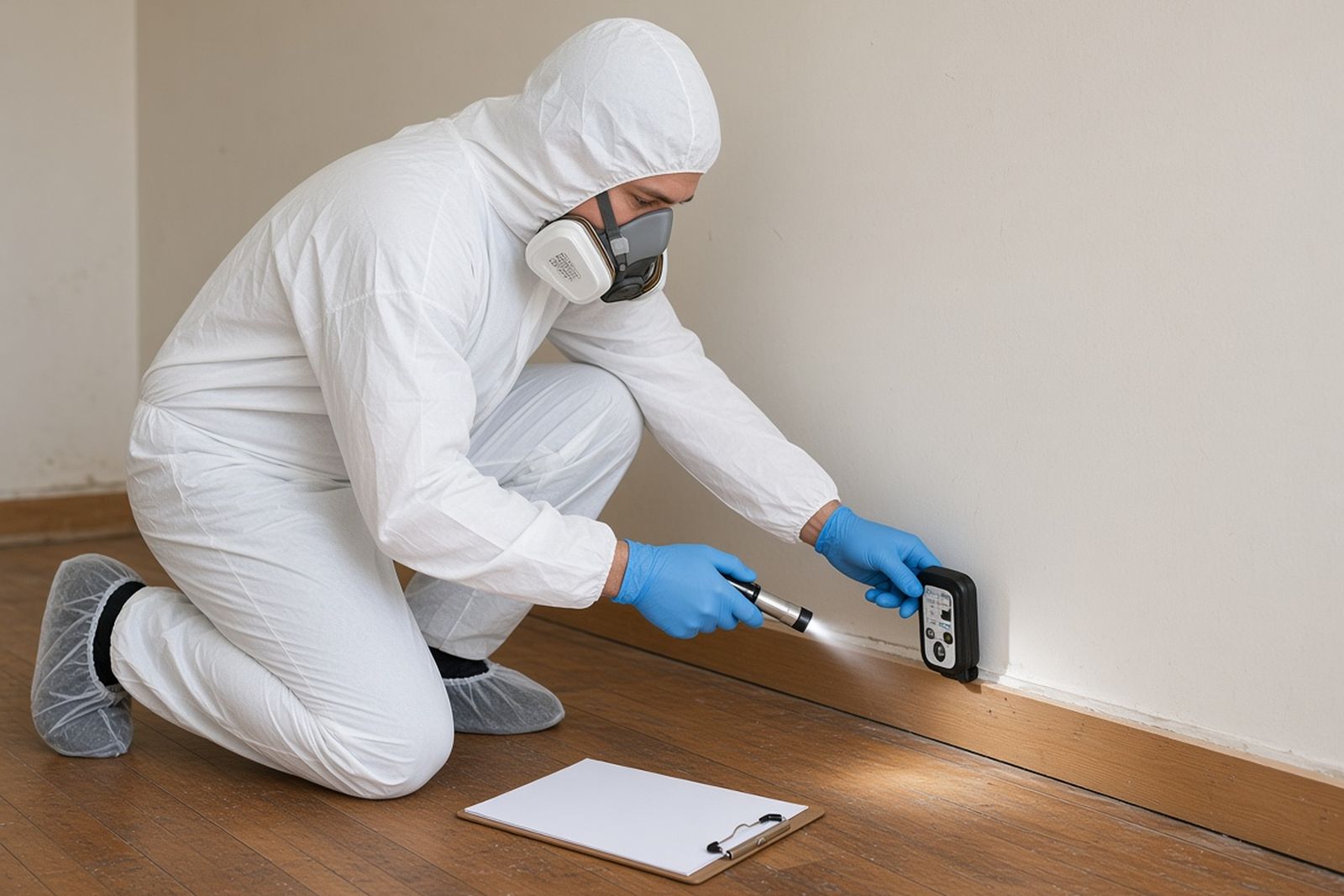
A final inspection tells you a lot, but only about what can be seen. It should go back over the original map and check edges, where surfaces meet, and opened wall or floor spaces. It should check kept materials, staging paths, tools, and common areas the work touched. An inspection can find visible residue, missed removal, damage, or records that don't match, but it cannot see inside closed walls or floors. A smell can prompt a closer look, yet no smell does not prove the material was removed. Some tests can help you when they are tied to a clear question, method, comparison, and action level. These include moisture, air, surface, or lab tests, and a quick swab test that shows leftover organic residue (it does not detect germs). None of them is a single all-clear test for crime scenes.
For each test, you should see the tool, place, time, and who took the sample. You should also see the method, the result, what it means, its limits, and what was done next. If you use an outside inspector, define what makes them independent and what they will check, because the title alone does not guarantee a result. Surprise findings should reopen that part of the decision record and lead to a fix. They should not be left out of your final report. If no test is justified, the report should explain the inspection and records used to accept the work. A meaningless number added just to help sales tells you nothing.
Give a clear completion statement and handoff file
The completion statement is the page you will rely on later, so its wording matters. It should sum up the approved work plan and final boundary, the dates, the major actions, and what happened to each material. It should give the basis for checking the work, changes from the plan, things left out, and remaining limits. Look for exact words like “the contracted work described in this report was completed”. Be careful with a claim like “the property is completely safe”. The statement should say whether the area is ready for rebuilding and whether certain rooms are still off limits. It should say which official or property decision still applies. You should be able to see who signed it and when, and there should be a way to fix real errors.
Not everyone needs the same file, so give each reader the version they need. As the owner, you may get the full file. A builder may need records about exposed surfaces and limits, and an insurer may need the work plan, bills, and proof. A tenant may need a move-back decision without graphic images. Set rules for how long your records are kept, where, and who can see them. Close your job with a list of who handles each next step. That may include rebuilding, utilities, structural work, personal property, insurer follow-up, monitoring, or official requirements. A lasting handoff gives a clear answer to anyone who looks it up later. It also protects the work, because it explains the agreed finish line without sales claims.
What to do in each case
Choose proof based on the decision it can support.
| Proof | What it can show | What it can't prove alone |
|---|---|---|
| Area map and change log | Final boundary, paths, places no one could reach, and approvals | What is inside a wall or floor no one opened |
| Photos and material record | What could be seen, what was removed or kept, and when | Every germ, chemical, or future problem |
| Product and label record | Which product was chosen and how the label says to use it | That cleaning was done right, or stayed wet long enough, without work records |
| Waste and custody records | Packing, transfer, where it went, or who received an item | That kept surfaces were cleaned |
| Inspection or targeted test | The set visual or measured question | That the whole place is sterile, or every hidden problem |
| Completion statement | Contract actions, proof, limits, and who is responsible next | Official, insurance, code, or move-in decisions outside its work plan |
Checklist
- 1Set finish-line questions and who decides each before work starts.
- 2Ask for a final boundary map tied to approved changes.
- 3Check that proof is labeled by place, stage, and purpose.
- 4Ask for a record of what happened to removed, kept, and undecided materials.
- 5Track who holds each belonging and its approved final stop.
- 6Ask for a list of products, registration numbers, label directions, and uses.
- 7Look for a record of access and safety changes that affect the property.
- 8Check that waste is sorted by type with the right handoff records.
- 9Ask for an inspection of first boundaries, edges, tools, and shared paths.
- 10Tie every test to a question and its limits.
- 11Get an exact completion statement with no total guarantees.
- 12Share handoffs that protect privacy, and assign what is left.
Common questions
What is a crime scene cleanup certificate of completion?
It is the company's statement, with records, that the contracted work was done under the stated conditions. It is not automatically a government certificate, a general safety ruling, an insurance decision, or a permit to move back in. It does not guarantee against every hidden and future problem. Look at the records behind it. You can check the map, the material record, how products were used, the waste records, inspection or targeted checks, exclusions, and who signed. Its value to you comes from clear records and scope, not from the word certificate.
Does a quick swab test prove a crime scene is clean?
No. Some companies use a quick swab test that shows leftover organic residue (it does not detect germs). Under a set method, it can show relative residue at chosen spots you can reach. But it does not name a specific germ, it can't see inside walls or floors, and it does not prove chemical safety. There is no one pass number for every material and device. If it is used, the plan should state the question, spots, method, comparison, limits, and what happens if a spot fails. Read the results together with source removal, material records, cleaning records, and inspection.
How many photos should be in the final report?
There is no set number. You need enough photos, labeled by place, to support the boundaries. They should show key starting conditions, what exploring found, what was removed, surfaces that were kept, edges, changes, and the final visible condition. Graphic or private photos you don't need should not be collected. Quality and the order of events matter more than how many photos there are. The report should say when photos were not allowed. Control who can see and download them, how long they are kept, and any sales use. Give each reader only the detail their decision needs.
Can rebuilding photos replace the cleanup report?
No. Finished surfaces show how things look after rebuilding, but they don't show what was found or fixed underneath. Save the cleanup map and photos of opened walls and floors before they are covered. Also save the material record, methods, products, waste proof, inspection, limits, and final report. Your rebuilding records should then show new materials, any permits or inspections where they apply, and that the finish work was accepted. Link both stages in one timeline, but keep each stage's finish line separate.
Who should get the full final report?
The person with authority over the property should decide who gets it. Base that on ownership, the contract, the claim, legal duties, privacy, and practical need. An insurer, builder, landlord, tenant, employer, lawyer, or official may each need a different part. Don't send out graphic images, medical details, or personal property details widely, and don't share alarm codes or anything that identifies people. Keep a log of who accessed the file and a rule for how long it is kept. Then write a practical handoff summary that states the limits and next duties without extra sensitive details.
Should the completion statement say the property was sanitized?
Only if the statement explains exactly what that means: which surfaces, what product, what label directions, and what limits apply. A single broad word can't describe what was actually done and can be taken as a promise. A useful statement describes the work boundary, the actions taken, the evidence collected, and any remaining conditions or exclusions. Ask the provider to replace broad terms with specifics.
What if some conditions are still unresolved at closeout?
List them plainly in the closeout and don't bury them. Each unresolved item should say where it is, why it wasn't resolved, what the next step is, and who is responsible. Examples include an inaccessible cavity, a contents decision still pending, or a system that needs another trade. An honest open-items list protects everyone better than a clean-looking report that leaves out known gaps.
Sources
These official sources back up the safety and process points above. Use them when you talk with your local office or a cleanup company.
Use this guide with the planning tools
Open the insurance claim organizer to keep the paperwork orderly from the first call to the carrier decision. When you are ready to compare providers, the vetting checklist turns the questions in this guide into a list you can send.
Related articles
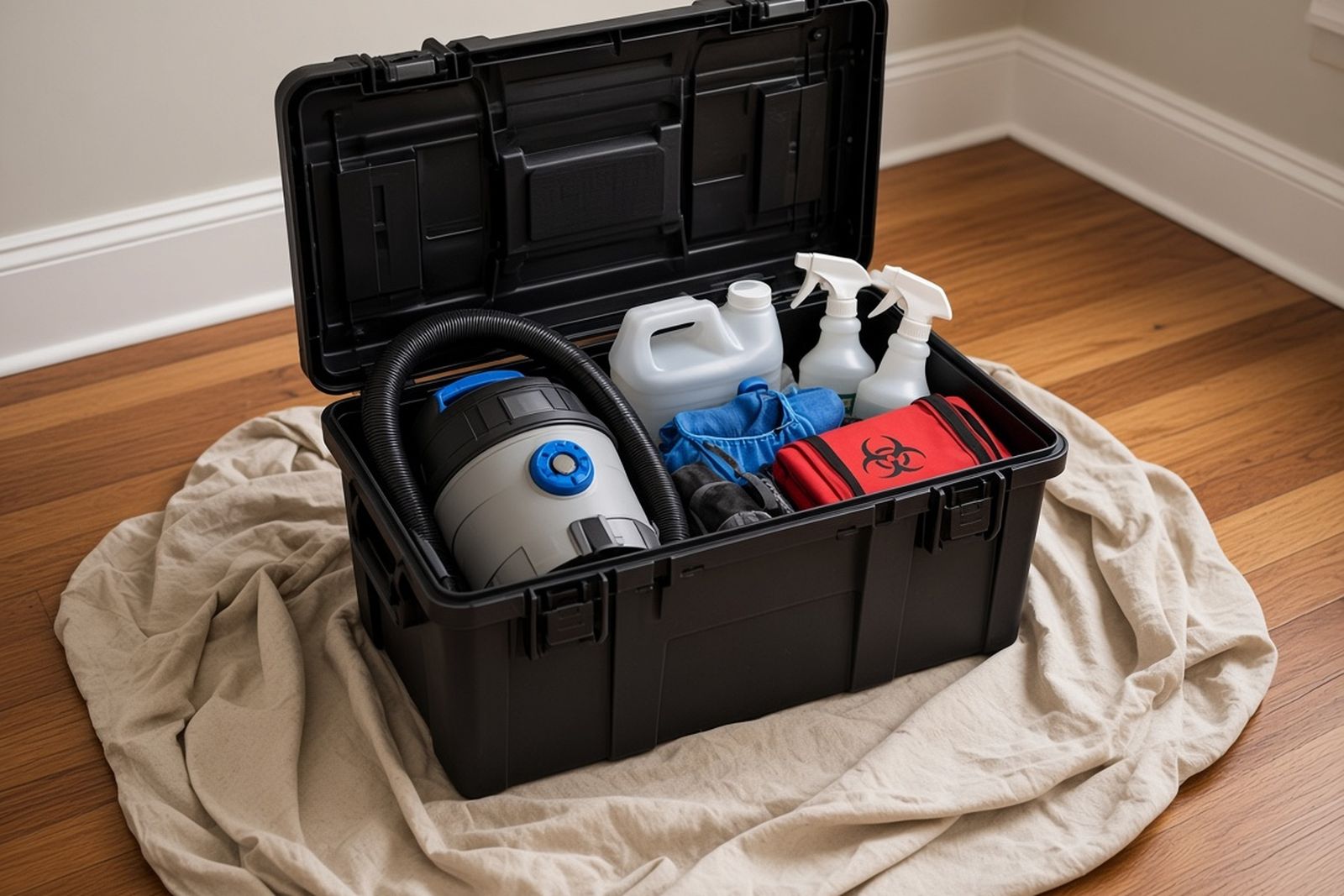 The Science Behind Crime Scene CleanupCrime scene cleanup rests on a few simple facts. Blood can carry disease. Liquids soak into soft materials faster than they dry. Leftover blood and soil block disinfectants, and every product must stay wet for the time on its label. So a good crew closes off the area and removes what cannot be made clean. It cleans before it disinfects. Then it checks the results so your room is safe to use again.
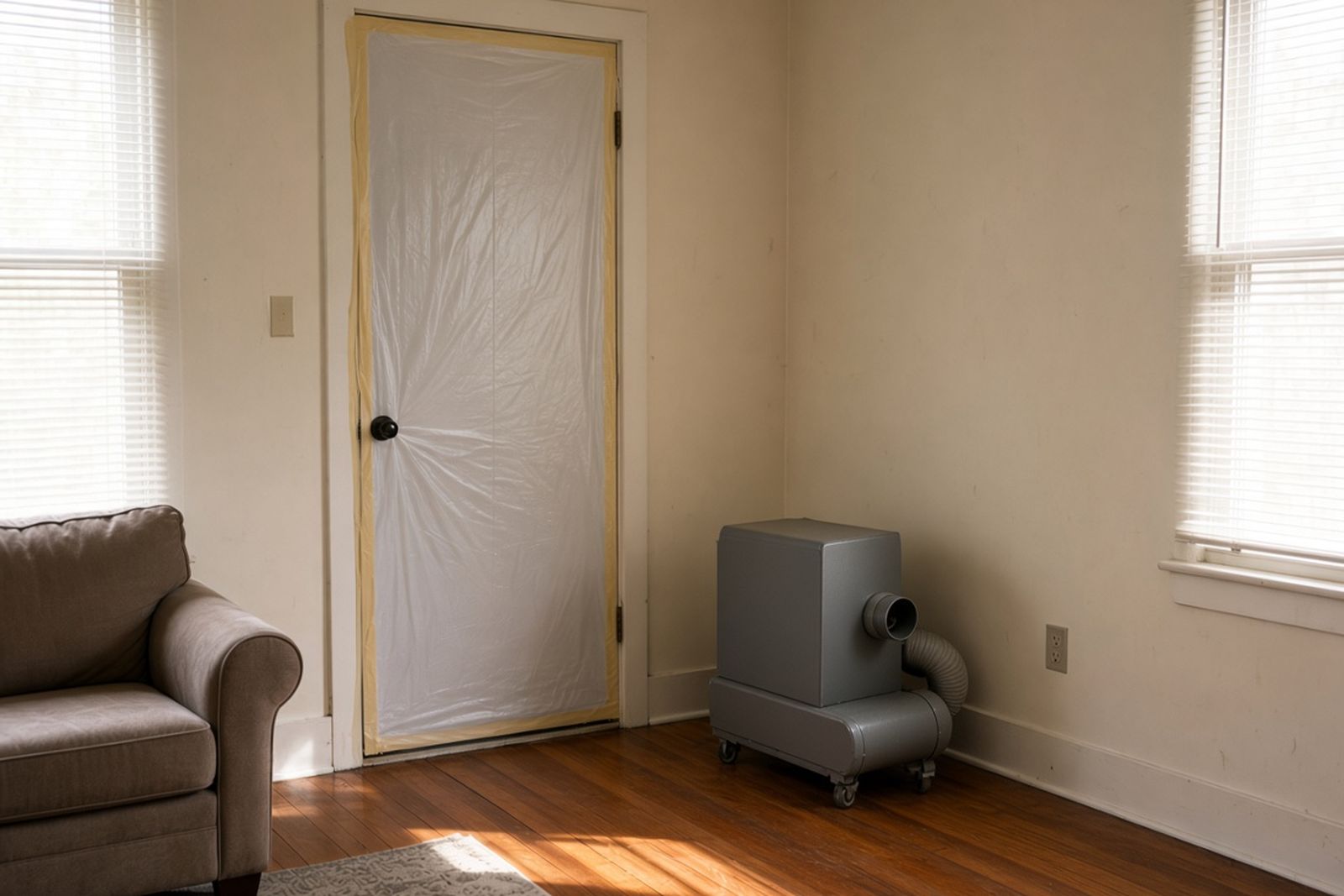 10 Crime Scene Cleanup Safety Risks to Assess Before Work BeginsBefore cleanup begins, someone should check ten risks. They are germs carried in blood, sharp objects and broken glass, hidden blood, chemical hazards and dust in the air. They also include damage to the building, site security and unexpected items, utility hazards, heat stress in protective gear and emotional strain. A good company finds each risk during its walkthrough. It tells you how it will control each one and writes the plan down before work starts.What Drives Crime Scene Cleanup Cost?Your cost depends mostly on how far blood and other fluids spread and which materials soaked them up. It also depends on how many workers and hours the job needs, whether police residue must be removed, and how much regulated waste leaves the site. Emergency timing and access matter too. Ask for a written, itemized work plan so you can see which of these shape your price.
 How to Research Waste Rules for Crime Scene CleanupStart by sorting what the job will produce: regulated waste, sharp objects, chemical waste and ordinary debris. Then find the state agency that oversees medical waste, since EPA's federal program ended in 1991. Check whether haulers must register, what packing and tracking records apply, and what your local landfill accepts. Last, ask each company to show how its disposal meets those rules.The Difference Between Cleaning and Disinfection in Crime Scene CleanupCleaning removes blood, residue and debris from a surface by hand. Disinfection uses a registered product to kill the germs that remain, and the product must stay wet for the full time on its label. Cleaning must come first, because leftover blood and soil block disinfectants. Soft items that soaked up blood are usually removed, not disinfected. The result should be checked and put in writing for you.How to Evaluate Technology Used in Crime Scene CleanupTo judge any tool, ask what problem it solves and whether it supports hand cleaning or claims to replace it. Ask what the product label or maker says, what its limits are and how the results will be recorded. Useful tools include HEPA air filters, moisture meters, sprayers used after cleaning and digital reports. No device makes up for removing blood and soiled materials by hand.