Field guide
Crime Scene Cleanup: Remediation Versus Reconstruction
Keep biohazard cleanup apart from tear-out and rebuilding. Set clear work plans, handoffs, records, prices, insurance roles, and sign-off points for each job.
Who this is for: Owners, families, landlords, and building managers who must restore a property with a cleanup company and a builder.
Updated 2026-08-01. Rules differ by state and city, so check the details with your local authority.
Ask about your situation
Your request is sent to the follow-up inbox. A coordinator can reply by email. Not for emergencies; call 911 first if anyone is in danger.
In short
The short answer
Cleanup and rebuilding each have their own finish line. Cleanup finds the affected materials, keeps people safe from exposure during the work, removes or cleans those materials, handles the waste, and records what is left. Rebuilding replaces what was taken out, restores looks and use, meets building codes, or makes the space livable again. One company may do both, but you should keep the scopes, prices, approvals, insurance, records, and sign-offs separate. Do not let new drywall, floors, paint, or cabinets cover an affected area until the cleanup boundary and final cleanup record are written down. A room that looks finished is not proof the biohazard work was done.
Set the two finish lines before work begins
Cleanup and rebuilding happen in the same spot, but they answer different questions for you. The finish line for cleanup answers several. What affected material was found? What was removed, and what stayed? Which method was used? What proof backs each choice? What limits remain? The finish line for rebuilding asks whether the building part has been replaced or fixed to the agreed standard. That standard covers the finish, how it works, code, access for people with disabilities, and warranty. A room can be cleaned yet unfinished. It can also look brand new with no solid record of what lies underneath. Write both finish lines into your project map before any tear-out begins.
It helps to label each room or building part by phase, so you always know where the job stands. The phases are review, careful opening, cleanup, and cleanup sign-off. Then come rebuild design, rebuilding, and final acceptance of the property. You should name who moves each phase forward and what proof is needed. This keeps schedule pressure from turning an open wall into a green light to rebuild. It also lets you compare cleanup-only companies with firms that do both. Neither business model is better by default. What matters is a clear boundary and a handoff you can trace, not the number of logos on the contract.
Approve a test opening without approving unlimited tear-out
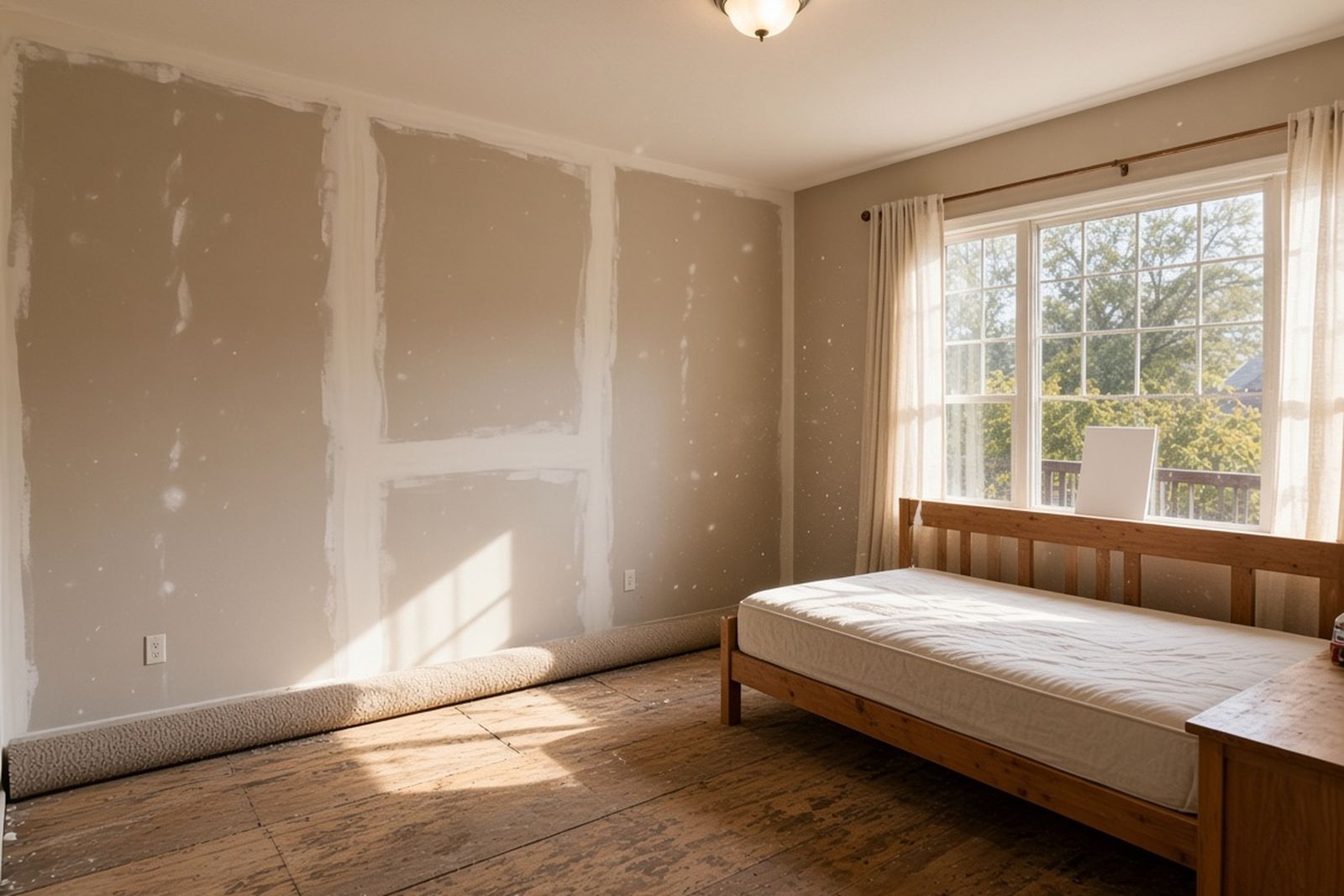
Fluid may have soaked in farther than you can see, and finding out how far takes a test opening. That may mean lifting carpet, taking off trim, making a small hole in a wall, or getting behind a cabinet. In a car, it may mean taking a part apart. The first scope you approve should set the place for the test opening, the most that can be opened, and the method. It should set the safety steps, the records, and when to stop. Once the material below is visible, a good company ties any more removal to what it sees and gets the agreed approval first. This admits the unknowns but stops a bid from using "as needed" as open-ended permission. Some issues may need a different qualified expert before opening goes on. These include problems with the structure, wiring, or plumbing, and asbestos, lead, or other concerns.
A careful record of the opening protects your choices later. It should show the original order of layers and every edge or seam that gets exposed. Photos should show where things are and how big they are, without more graphic detail than needed. The notes should say if a material is affected, damaged by getting to it, reusable, or removed on purpose to set a work boundary. Your saved trim, doors, hardware, belongings, and fixtures need labels and safe storage. Your rebuilding may depend on matching an item. That need should not override cleanup safety steps. But it should be known early enough to keep good options open for you.
Sign off on cleanup before anything is covered up
The cleanup sign-off should happen while you can still see key surfaces, seams, wall spaces, and edges. Review the final map of affected areas, the list of what was removed, what stayed, and the cleaning and product records. Review waste papers when they apply, along with the photos, inspection notes, and any focused tests. Each check must fit the question it was meant to answer. A visual check can record what you can reach but not hidden wall spaces. A quick swab test that shows leftover organic residue does not detect germs, so it cannot name every germ. An odor check cannot show what happened to a material. Ask for several methods to be used together, and do not treat any one tool as a blanket all-clear.
A hold point gives you that chance to review. It is a pause that stops insulation, subfloor, drywall, flooring, cabinets, or paint from covering the work. The pause lasts until the approved reviewer accepts the cleanup record. If the same company does the rebuilding, ask for an internal sign-off that shows the date, time, and person responsible. If another builder comes next, you give them a handoff packet and walk through the site together. The hold point protects you and both contractors. It shows what conditions existed before new materials changed the proof.
Treat rebuild design as a brand-new scope
Rebuilding starts with its own set of questions, and you should expect a fresh scope for it. What are the sizes, and how are walls and floors built? What finishes will you choose? Are there code or permit questions, or utility needs? Is there moisture or damage to the structure? What about access for people with disabilities, and wait times for materials? What do the people living there need? How will the cleaned areas be protected? The fact that something was removed does not decide what replaces it. A matching finish may not be sold anymore or may not meet code, and a bigger upgrade may not be covered by insurance. Your builder should name its own guesses, set budgets for items not yet chosen, and what is excluded. It should name the inspections and its process for changes, and it should not borrow vague wording from the cleanup bid.
The finished cleanup needs protection during building work, or you may end up with new problems. Dust, foot traffic, wet materials, open windows, stored debris, and shared tools can all cause them. Ask your builder to set clean ways in, places to stage materials, dust control, temporary barriers, and daily cleanup. You should decide who is responsible for damage to surfaces that were kept. Rebuilding may turn up a problem that is not in the cleanup record. If so, the work should stop, photos should be taken, and the problem should go back through the decision process. It should not be quietly covered up. And no one should blame the earlier contractor without first looking into it.
Keep prices, bills, and insurance guesses separate
Separate parts of the bid for each type of work let you see what you are paying for. On the cleanup side, the bid lists the review, steps to make the site stable, cleanup labor and materials, belongings, waste, and checks. On the rebuild side, it lists labor, new materials, permits, design, and storage. It also lists costs if people must live somewhere else for a while. A single total hides the gaps between bids and makes added charges hard for you to follow. Price units should show which amounts can change and who approves them. If emergency work is billed by time and materials, you should set the rates and the records needed. If rebuilding uses set budgets for items not yet chosen, state the deadline to choose and how the price will be adjusted.
Your insurance coverage is decided under the terms of the policy, and it is not a technical test of whether work is done. An insurer may look at the cause, what was needed, wear and tear, limits, exclusions, and fair cost. Meanwhile, the owner is still bound by the contract with the contractor. Neither the cleanup company nor the builder should promise you coverage. Neither should pad one phase to make up for another. Keep your bids, approvals, bills, payments, and claim messages lined up by phase. That way a payment fight does not wipe out your work record.
Track belongings, privacy, and access across companies
Your personal items and private records may pass through several hands, so each one needs a trail. They may go through cleanup, storage, special cleaning, and rebuilding. Give each of your items an ID number, and note where it was found and what shape it is in. Note the plan for it, who approved that plan, who has it, when it moved, and where it ended up. Share graphic photos and details about the cause of loss only with people who truly need them. A builder may need wall sizes and photos of the bare surfaces, but it does not need medical or police details. Decide which online system stores your records, who can download them, and when access ends.
Keys, alarm codes, and elevator bookings need one shared access plan, and so do parking, pets, the people living there, and talks with neighbors. Each company should sign in, respect the areas that are open and closed, and lock up your property at handoff. A subcontractor may handle tear-out, hauling, testing, or special cleaning of belongings. If so, its role should be shared with you. You should check its business details and that its insurance fits its part of the job. Clear tracking of who has what cuts down on theft claims and lost keepsakes. It also helps you avoid someone entering a closed area by mistake. And it helps settle fights over damage that happened between phases.
Finish with one property record and two clear warranties
At the end, you want one main record that keeps the phases easy to tell apart. For cleanup, it covers the release by officials, the review, the approved work plan, and changes. It covers material choices, products, waste, checks, and the cleanup sign-off. For rebuilding, it covers the design, permits and inspections, and acceptance of finishes, and it lists problems still open. You should be able to follow a removed part from the first note all the way to its replacement. Fix any real mistakes and keep the earlier versions. Do not let the rebuild photo album replace the cleanup proof. Do not let the cleanup report claim the rebuild met code.
Warranty wording should tell you which company covers which work, and for how long. It should list what is excluded and how to give notice of a problem. A cleanup warranty might cover the work that was done, while a building warranty covers the parts that were installed. Neither should promise a germ-free space or that odors will never come back. Neither should promise control over future leaks, people living there, pests, or hidden problems outside the work plan. Your final acceptance of the property should list what is left to do. That may include upkeep, monitoring, insurance, legal, or official tasks. It should name who is responsible for each one.
What to do in each case
Keep each choice with the phase that can truly answer it.
| Choice | Cleanup record | Rebuild record |
|---|---|---|
| Affected area | Material seen, how far fluid soaked in, openings, what is excluded | Building parts and finishes set to be replaced |
| Removal | Where, and the reason based on contamination | Tear-out only to reach or replace building parts |
| Sign-off | What happened to each material, cleaning records, inspection, limits | Finish, function, code, permit, and final fix-list sign-off |
| Price | Safety steps, labor, products, belongings, waste, checks | Labor, materials, set budgets, permits, design, upgrades |
| Handoff | Photos of bare surfaces and areas still closed | Plan to protect the area and a sign-off before covering up |
| Warranty | The cleanup work done and its stated limits | Installed parts and building terms |
Checklist
- 1Map separate finish lines for cleanup and for rebuilding.
- 2Name who approves and who accepts each phase.
- 3Set limits for test openings and when to stop.
- 4Ask for photos of layers, edges, and the reason for each removal.
- 5List kept fixtures, belongings, and materials that must match.
- 6Set a cleanup hold point before anything is covered up.
- 7Give the cleanup record to the builder and walk through the handoff.
- 8Ask for a new rebuild scope with permits and set budgets.
- 9Protect cleaned areas from building dust and foot traffic.
- 10Keep bills, added charges, payments, and coverage guesses separate.
- 11Control keys, records, privacy, belongings, and subcontractors.
- 12Get a warranty for each phase and a list of work still open.
Common questions
Does cleanup include replacing drywall or floors that were removed?
Only if the contract clearly includes rebuilding. Cleanup may need to remove an affected finish or open a wall or floor to reach material, which leaves a bare surface with records. Replacing it needs its own choices about materials, code, permits, finish, price, and sign-off. Ask for separate line items and a handoff point, even when one company does both. This keeps a finished look from being used as proof of cleanup. It also keeps you from assuming that matching finishes are included.
Can rebuilding start before test results come back?
It depends on what the test is meant to answer, and on whether covering the area would affect how results are read. The written plan should set the hold point ahead of time. Work in other, unrelated areas may be able to start. But covering the tested or inspected spot can destroy proof and make fixes harder. Write down who can lift the hold, what information is needed, and how delays to the schedule will be handled. Never order a test without a clear question, method, limits, and a plan for what to do with the results.
Who pays when more damage turns up after a wall is opened?
There is no one answer for every case. Payment depends on the contract, approvals, insurance policy, cause, and who is responsible. Before opening, set limits for test openings and the records needed. Set price units, who can approve changes, and when to notify the insurer. When a new problem shows up, the work should stop at the agreed point. The company should take photos, explain your options, and get approval. Do not assume coverage is certain, and do not assume the first contractor pays for every hidden problem.
Should the cleanup company pick the builder?
That choice is the owner's. You may think about a referral, a firm that does both, or a separate builder. Either way, check the builder's identity, skills, insurance, scope, and prices, and check for any conflicts of interest too. A referral does not prove good work. The cleanup sign-off should be usable by any qualified builder. If one company handles both phases, keep the internal hold point and separate sign-off records. That way rebuild crews do not cover problems before the cleanup choice is written down.
What must the builder get before closing up a wall or floor?
Give the builder the cleanup sign-off for that exact spot. Include photos of the open layers, the record of what was removed and kept, and areas still closed. Include what any tests or measurements mean, notes on utilities or the structure that fall within the work plan, and the approved acceptance. The builder should confirm it has seen the conditions and should protect the area. Share as few private details about the event as you can. If the builder finds a problem that does not match the record, it should stop and write down the issue rather than cover it up.
Can the remediation photos be used for the reconstruction estimate?
Yes, they're one of the best sources for it. Open-substrate photos and the removal record show the builder what's missing, what stayed, and where materials meet. Share them along with the closeout, and point out anything the builder should inspect in person. The builder should still visit the site to measure, check code needs, and make sure the photos match what's there.
What if the builder finds stains after remediation was closed out?
The builder should stop work in that spot, photograph it, and notify the property owner and the remediation provider before covering it or throwing anything out. The remediation provider should decide whether it's inside the original boundary, a condition that was hidden, or unrelated. Record the finding and how it was resolved. Then update both the remediation file and the construction records.
Sources
These official sources back up the safety and process points above. Use them when you talk with your local office or a cleanup company.
Use this guide with the planning tools
Open the insurance claim organizer to keep the paperwork orderly from the first call to the carrier decision. When you are ready to compare providers, the vetting checklist turns the questions in this guide into a list you can send.
Related articles
 How Long Does Crime Scene Cleanup Take?The time depends less on the crime than on the scene. It matters how many rooms and surfaces are affected and whether fluid got under the flooring. It matters how much police residue remains and whether you need odor treatment or help sorting belongings. The police release, your approval of the work plan and repairs add time outside the cleaning. A company can give a reliable estimate only after it visits.
 10 Crime Scene Cleanup Safety Risks to Assess Before Work BeginsBefore cleanup begins, someone should check ten risks. They are germs carried in blood, sharp objects and broken glass, hidden blood, chemical hazards and dust in the air. They also include damage to the building, site security and unexpected items, utility hazards, heat stress in protective gear and emotional strain. A good company finds each risk during its walkthrough. It tells you how it will control each one and writes the plan down before work starts.What Drives Crime Scene Cleanup Cost?Your cost depends mostly on how far blood and other fluids spread and which materials soaked them up. It also depends on how many workers and hours the job needs, whether police residue must be removed, and how much regulated waste leaves the site. Emergency timing and access matter too. Ask for a written, itemized work plan so you can see which of these shape your price.
 10 Questions to Ask Before Hiring a Crime Scene Cleanup CompanyBefore you hire, ask who does the work, how they are trained, and whether they will look at the scene before quoting. Ask what the written work plan covers, how they handle fingerprint powder, and how waste is recorded. Then ask how pricing and changes work, how they deal with insurance and victim compensation, and how they protect your privacy and belongings.The Difference Between Cleaning and Disinfection in Crime Scene CleanupCleaning removes blood, residue and debris from a surface by hand. Disinfection uses a registered product to kill the germs that remain, and the product must stay wet for the full time on its label. Cleaning must come first, because leftover blood and soil block disinfectants. Soft items that soaked up blood are usually removed, not disinfected. The result should be checked and put in writing for you.Urgent Crime Scene Cleanup: What to Do Before a Provider ArrivesFirst, make sure everyone is safe and police have been called. Leave the scene alone until investigators formally release it, keep people and pets out, and do not clean blood or residue yourself. Then write down the police report number and release time, call your insurer, and ask a victim advocate about support and compensation.